Flushing
Water-air flushing of heating systems and chemical cleaning of heat exchangers – removing sludge and sediment from pipes without dismantling radiators.

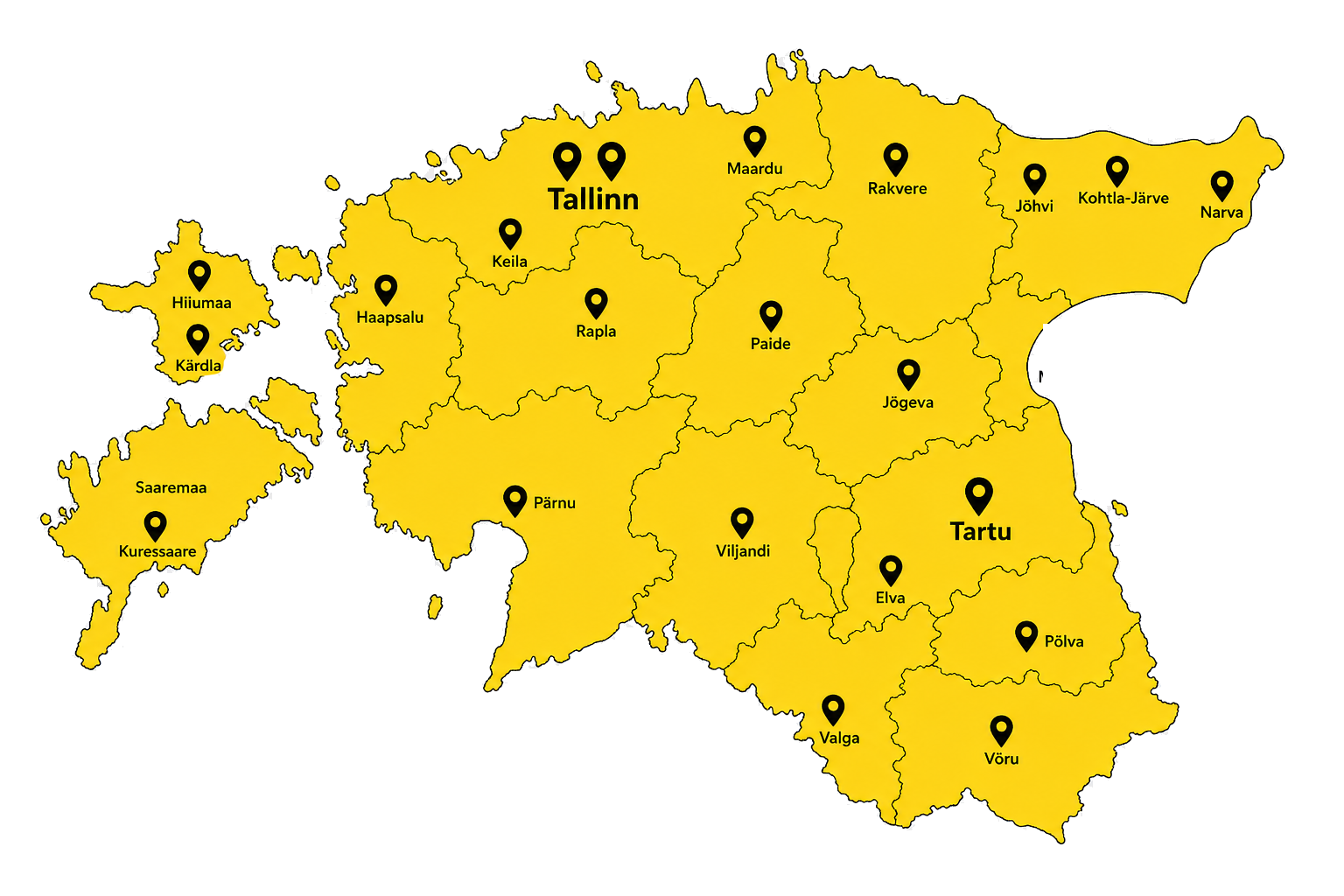
We maintain, flush, and repair heating systems in private homes, apartment buildings, and commercial properties: water-air flushing, chemical cleaning of heat exchangers, system balancing and tuning, maintenance of boilers, heat substations, and heat meters. Serving Tallinn and Harjumaa, and nationwide if required.
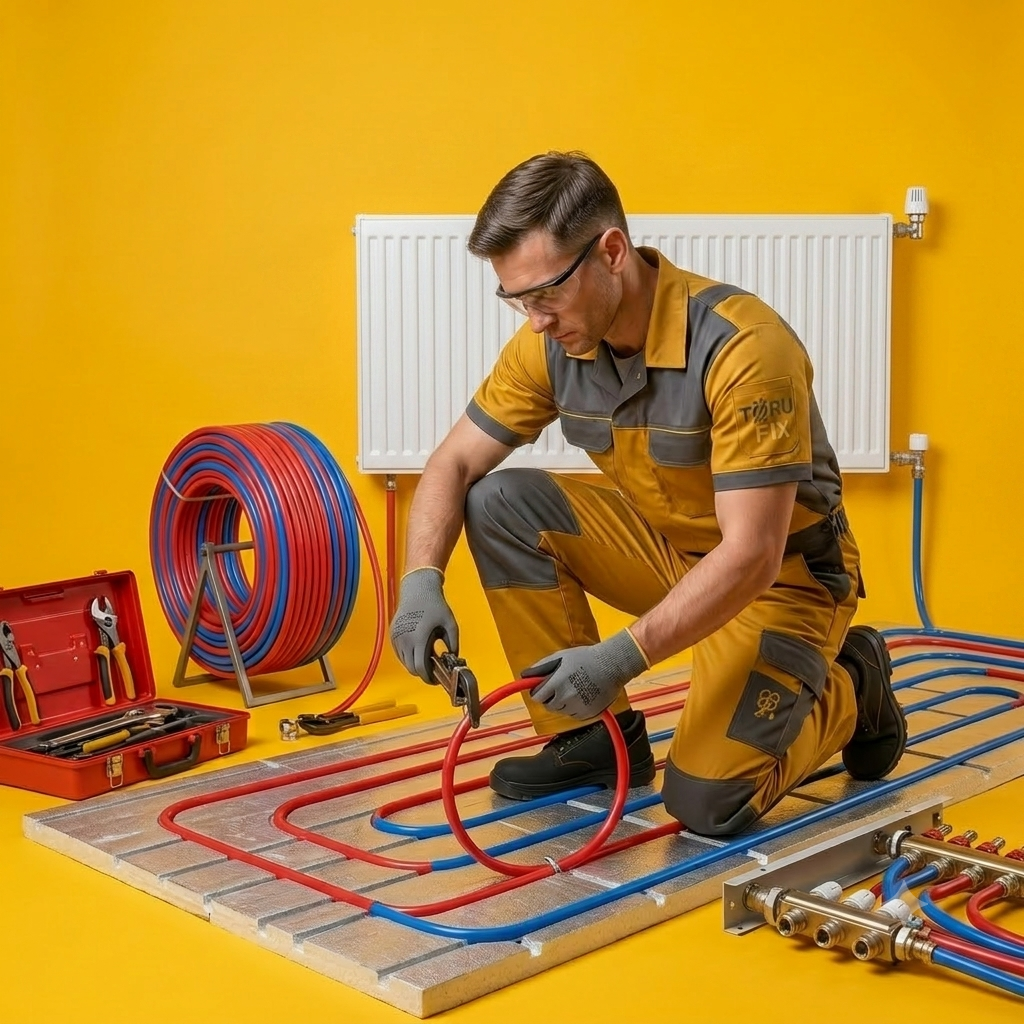
Water-air flushing of heating systems and chemical cleaning of heat exchangers – removing sludge and sediment from pipes without dismantling radiators.
Balancing and tuning heating systems to ensure all radiators and underfloor heating circuits receive the calculated flow rate and heat evenly.
Annual pre-heating season maintenance: pressure testing, bleeding, inspection of valves, pumps, expansion tank, and automation.
Installation and repair of heating systems and underfloor heating, equipment assembly and disassembly, leak repair, and modification of units.
Installation, repair, and maintenance of boilers, maintenance and inspection of heat substations and heat meters, temperature schedule settings.
Planned maintenance schedules for apartment associations and commercial buildings, including 24h emergency readiness and documented maintenance reports.
Dispetšer vastab ööpäevaringselt. Peatame kahju leviku, lokaliseerime lekke ja sõidame välja ka öösel ning pühade ajal.
+372 58 024 476The heating system is the most expensive technical system in a building, yet it’s often only noticed when it’s already cold. Most winter heating problems – partially cold radiators, fluctuating room temperature, noisy pipes, unexpectedly high heating bills – are not equipment failures, but a result of lack of maintenance. Over the years, the system has been filled, bled, and refilled; sludge has accumulated, valves have seized, and balance has been lost.
ToruFix maintains heating systems in private homes, apartment buildings, and commercial properties in Tallinn, Harjumaa, and throughout Estonia. We work with district heating substations, gas, pellet, and electric boilers, secondary circuits of heat pumps, and water-based underfloor heating systems. The purpose of this page is to explain what heating system maintenance actually involves, when flushing is needed, what balancing achieves, how maintenance is carried out, and how to prepare the system for the heating season.
If you are looking for specific work – radiator replacement, new underfloor heating, boiler, or heat substation installation – these topics have separate pages, and links can be found at the end of the article. Here, we focus on keeping an existing system operational and restoring its efficiency.
Heating system maintenance isn’t a single action but a collection of tasks, the selection of which depends on the system type, age, and problem. Before providing a quote, we always conduct an inspection: we examine the heat source, distribution piping, valves, pumps, expansion tank, automation, and heating elements, and only then suggest the most appropriate actions.
Typical maintenance scope includes the following tasks.
Maintenance extends the system's lifespan but cannot make old, corroded piping new again. If cast iron radiators are leaking at joints, steel pipes have narrowed internally, or a heat substation is technically beyond repair, we will tell you directly and provide the cost for replacement. Our interest is not to sell flushing for a system that genuinely requires renovation.
A heating system usually indicates a problem several months before a serious breakdown. If you recognise at least one of the signs below, it's advisable to order maintenance before the peak heating season, rather than during a January cold snap when all plumbers are busy.
A pressure drop is most frequently caused by either a micro-leak (radiator joint, valve, underfloor heating circuit, boiler unit) or an empty expansion tank. The expansion tank membrane loses pressure over years, causing the system to release water via the safety valve every time it heats up. We check both: we measure the expansion tank's pre-charge pressure and, if necessary, perform a pressure test to detect a leak before it damages your floor or a neighbour's ceiling.
Every litre of fresh water introduces oxygen and lime salts into the system. Oxygen fuels corrosion, and lime deposits on the heat exchanger and radiators. A system that is topped up monthly will sludge up significantly faster than a sealed and properly maintained system. Therefore, finding the source of a leak is always cheaper than years of continuous water top-ups.
In an old system, a layer of sludge accumulates in radiators and pipes: corrosion residues, limescale, sand, and sediment. This sludge settles in the lower part of radiators and horizontal pipe sections, reducing the cross-section and hindering heat transfer. The result is familiar – the upper part of the radiator is warm, the bottom is cold, and the room doesn't get warm even with fully open valves.
Water-air flushing involves introducing a controlled mixture of compressed air and water into the system. The resulting turbulence dislodges sediment from the pipe walls and carries it out of the system, without needing to remove radiators or open walls. Flushing is performed section by section, each riser or circuit separately, until the outgoing water is clean.
For heat exchangers, we use chemical cleaning: we pump a descaling agent through the plates, then neutralise and rinse the system. This restores heat transfer and lowers the return temperature – for district heating, this directly translates to a lower bill.
Flushing is advisable if at least one of the following symptoms occurs.
First, we close the system, connect the flushing unit to the filling and draining points, and prepare for water discharge. The system is then flushed section by section, monitoring the purity and pressure of the outgoing water. After flushing, we refill the system, bleed it, pressure test it, and check all connections. Flushing a private home typically takes 4–8 hours; flushing risers in an apartment building is done in stages according to an agreed schedule.
Underfloor heating circuits are flushed circuit by circuit via the manifold: each loop is isolated, and a water-air mixture is forced through, removing settled sludge and biofilm. The floor is not opened or damaged. After flushing, we reset the flow rates using the manifold's rotameters, as a clean circuit behaves differently from a clogged one.
In an unbalanced system, water travels along the path of least resistance. The radiator closest to the heat substation or boiler receives too much flow, while the furthest receives practically none. This is why, in the same building, some flats have open windows in winter, while residents in others wear jumpers.
During balancing, we calculate the required flow rate for each circuit and heating element, set the balancing valves, thermostat valve pre-settings, and underfloor heating manifold rotameters, then verify the results with temperature measurements. At the end of the work, the flow and return temperature difference throughout the building is uniform.
In apartment buildings, balancing is often the most cost-effective way to reduce heating costs. Overheating ends, the heat substation's temperature schedule can be lowered, and the same comfort level is achieved with less thermal energy consumption. The investment usually pays for itself within one to two heating seasons.
We recommend checking the heating system annually before the start of the heating season, in August or September. This allows time to order spare parts and carry out repairs without the building having to wait in the cold. The inspection includes pressure testing, bleeding, checking valve and pump operation, expansion tank pre-charge pressure, and reviewing the heat substation automation and heat meter.
Boilers require maintenance at least once a year; frequent use, solid fuel, or poor water quality means twice a year. For gas boilers, maintenance includes burner cleaning, heat exchanger inspection, flue gas measurement, and safety automation testing.
For apartment associations and commercial buildings, we create a maintenance schedule and remind them of deadlines ourselves, ensuring maintenance isn't a rushed last-minute task at the end of September. A report is issued for each maintenance visit, suitable for submission to general meetings, property management companies, or insurance providers.
Check the manometer reading once a month and keep it within the range indicated on the boiler or heat substation label. Do not cover radiators with thick curtains or furniture, as this blocks convection. Bleed radiators before the heating season. If the pressure drops faster than a couple of times per season, don't just add water – call us, as there's a leak somewhere.
The scope of maintenance depends on where the heat comes from and how it's distributed in the building. Below is a summary of the most common solutions in Tallinn and Harjumaa.
The most common solution for apartment buildings. During maintenance, we inspect the heat exchanger, regulator, sensors, motorised valve, circulation pumps, mud filters, and heat meter, then adjust the temperature schedule according to the building's actual heat demand. An incorrect schedule is one of the most frequent reasons a building pays too much for heat.
Gas boiler maintenance includes burner and heat exchanger cleaning, condensate drain inspection, expansion tank and safety valve inspection, and safety automation testing. A correctly maintained condensing boiler maintains high efficiency and prevents unexpected shutdowns during cold periods.
Solid fuel systems require more frequent maintenance: ash removal, cleaning of heat exchanger surfaces, draft control, inspection of the chimney and flue ducts, and checking the accumulation tank unit. A clean heat exchanger can reduce fuel consumption by up to a tenth.
For air-to-water and ground source heat pumps, we maintain the indoor unit: buffer tank, circulation pumps, mixing unit, underfloor heating manifold, and automation settings. Heat pumps operate most economically at low flow temperatures, making a balanced and clean distribution network especially important here.
Underfloor heating maintenance involves checking manifold flow rates, actuators, room thermostats, mixing unit temperature, and system pressure, and flushing circuits if necessary. Most underfloor heating complaints – cold spots, slow response – are resolved by adjustment and flushing, not repair.
Older buildings have single-pipe systems and cast iron radiators that have accumulated sludge over decades. Here, flushing provides the greatest benefit, but we always assess the condition of joints: very old threaded connections may start to drip after flushing, in which case it's more sensible to plan for radiator replacement.
We want every step to be clear to the client, and the final bill to come without surprise. That's why we always follow the same procedure.
Call us or submit an inquiry form. We'll ask about the building type, heat source, system age, and a description of the problem. Often, a few photos of the boiler, heat substation, or manifold are enough to initially estimate the scope of maintenance.
A technician inspects the system on-site, measures pressures and temperatures, checks valves and pumps, and identifies whether the problem is with sludge, balance, automation, or a specific device.
You receive a written quote detailing the works: what will be done, what materials will be used, how long the work will take, and the guarantee. For larger projects, we offer work in stages to allow for planned expenses.
We cover the work area, use proper flushing and measuring equipment, and keep heating disruptions for apartment building residents as short as possible. Agreed interruptions are notified in advance so the apartment association can inform residents.
We fill and bleed the system, pressure test it, measure temperatures and flow rates, and show the results to the client. We issue an invoice and maintenance report, and provide recommendations for the next maintenance period.
It's not fair to quote maintenance costs over the phone without seeing the system, as the same word 'maintenance' can mean an hour-long check in one building and two days of flushing in another. The following factors influence the price.
Planned maintenance can be carried out during warmer weather, during regular working hours, and without haste. An emergency in the middle of January means an evening or night call-out, urgently ordered spare parts, and often the liquidation of damages. A maintenance contract is the cheapest insurance for an apartment association against this difference.
For an apartment association, it's important not only that the plumber arrives, but also that the work is documented and costs are predictable. With a maintenance contract, the association receives a fixed schedule, agreed price list, and 24/7 emergency readiness.
The contract typically includes periodic maintenance and inspection of the heat substation, pre-heating season system review, bleeding and pressure testing, heat meter inspection, an agreed response time for emergencies, and a maintenance report for each visit. In larger buildings, a riser flushing schedule is added, spread over several years.
This provides two practical benefits for the board: heat energy costs become more consistent, and at the end of the year, there is documentation to justify the work done to residents and plan repair fund expenses.
We plan work to ensure heating is off for the shortest possible time. For larger scopes, we work riser by riser and inform residents in advance. In most cases, access to all flats is not required – we specify the need in advance, not on the morning of the workday.
If heating fails or a leak occurs, the first few minutes are crucial. The following guide helps limit damage until a technician arrives.
Our emergency service operates 24/7/365. In Tallinn, we usually reach a call-out within 30–60 minutes; in Harjumaa, within 1–2 hours. Our vehicles are equipped with flushing and measuring equipment, common valves, fittings, and circulation pumps, so most faults can be resolved on the first visit.
A heating system is a measurable system: if the work is done correctly, it shows in temperatures, pressure, and readings. Our work is based on measurement, not guesswork.
The most common scenario in our work is an apartment building where residents on lower floors complain of cold, and those on upper floors are too warm. After flushing and balancing, the temperature equalises, the heat substation schedule can be lowered by a couple of degrees, and the building's heat energy consumption noticeably decreases, without anyone having to live in a colder room.
Oleme 24/7/365 kõikjal Tallinnas ja Harjumaal.
Tuleme kohale kiiresti ja lahendame probleemi kohapeal.
Teeme tööd korrektselt ja anname garantii.
Selge hinnainfo enne tööde algust, üllatusi ei tule.
Aitame vormistada kahjujuhtumeid kindlustusseltsidele.
Helista või kirjuta – kirjelda probleemi paari lausega.
Ütleme tunnihinna ja eeldatava mahu enne kohalesõitu.
Tallinnas tavaliselt 30–60 minutiga, oma tehnika ja varuosadega.
Teeme töö, kontrollime süsteemi ja anname garantii.
Detection of hidden water and heating leaks using a thermal camera and pressure test, without unnecessary demolition.
lekkeotsingReplacement of old radiators, thermostats, and system balancing.
radiaatorite vahetusHot water solution: installation of new water heaters, replacement of old units, and maintenance.
boileri paigaldus ja vahetusInstallation of water-based underfloor heating, including manifold unit and settings.
põrandakütte paigaldusInstallation, repair, and chemical flushing of heat sources and heat substations.
soojussõlmede ehitusReplacement of water and heating pipework, leak repair, and modification of units.
veetorude vahetus24-hour emergency assistance if heating fails or pipes leak.
toruabi 24This depends on the water quality, system age, and material. As a general rule, we recommend flushing every 5–7 years; more frequently for systems with old cast iron radiators and poor water quality. If black water comes out when bleeding, or some radiators remain cold, flushing is needed sooner.
No. With the water-air method, the system is flushed through existing connections, without removing radiators or opening walls. The only exceptions are completely blocked or leaking radiators, for which we usually recommend replacement.
Yes. Underfloor heating circuits are flushed circuit by circuit via the manifold – this restores flow and even heat without opening the floor. After flushing, we reset the flow rates with the rotameters.
Annual inspection of a private home typically takes 1–3 hours; full flushing takes 4–8 hours. Flushing and balancing risers in an apartment building are planned in stages, often over several days, to keep interruptions short.
For flushing and major repairs, yes, but only for the specific work section and for the shortest possible time. During a planned inspection, heating can usually remain on. We always agree on interruption times in advance and inform the apartment association.
Yes. We perform maintenance and inspection of heat substations, chemical cleaning of heat exchangers, automation and temperature schedule settings, and maintenance and reading checks of heat meters.
Three common reasons are air in the radiator, a layer of sludge in the lower part, and a seized thermostatic valve. These can be differentiated on-site within minutes: we bleed, measure flow and return temperatures, and check valve movement.
In an apartment building, usually yes. Eliminating overheating and lowering the heat substation schedule reduces thermal energy consumption, and the investment often pays for itself within one to two heating seasons.
Mostly either a micro-leak on the pipework, radiator joint, or underfloor heating circuit, or an empty expansion tank. We measure the expansion tank's pre-charge pressure and, if necessary, perform a pressure test to find the leak before it damages the floor or a neighbour's ceiling.
Yes, the indoor part: buffer tank, circulation pumps, mixing unit, underfloor heating manifold, radiators, and automation settings. The refrigerant circuit of the heat pump is maintained by a refrigeration company.
Yes. We draw up a schedule, an agreed price list, and emergency readiness, and issue a maintenance report for each visit, suitable for submission to the general meeting and property management company.
August–September. At this time, the system is cold, there's time for repairs and ordering spare parts, and the heating season starts with a fully functional system. In winter, the same work is done in a hurry and at a higher cost.
Yes. Our emergency service operates 24/7/365, including public holidays. Night and holiday call-outs are more expensive than weekday visits, but prompt intervention is almost always cheaper than the consequences of waiting until morning.
Yes, we provide a guarantee for both the work performed and the materials we install. We issue a proper invoice, suitable for submission to both apartment associations and insurance companies.
Our primary service area is Tallinn and Harjumaa, but we travel throughout Estonia. In Tallinn, we usually reach emergency call-outs within 30–60 minutes; in Harjumaa, within 1–2 hours.
Sõidame välja kogu Eestis. Avariitööd ööpäevaringselt, 7 päeva nädalas.