Plumbing repairs and pipework
Repair, maintenance, and replacement of water, heating, and sewerage pipes in flats, private houses, apartment buildings, and commercial properties.

One of the most unpleasant issues is a plumbing problem. Call an experienced plumber who will provide expert advice and professionally resolve both major and minor faults – plumbing works, pipe repair and replacement, risers, pressure testing, and emergency fault resolution in Tallinn and Harjumaa.
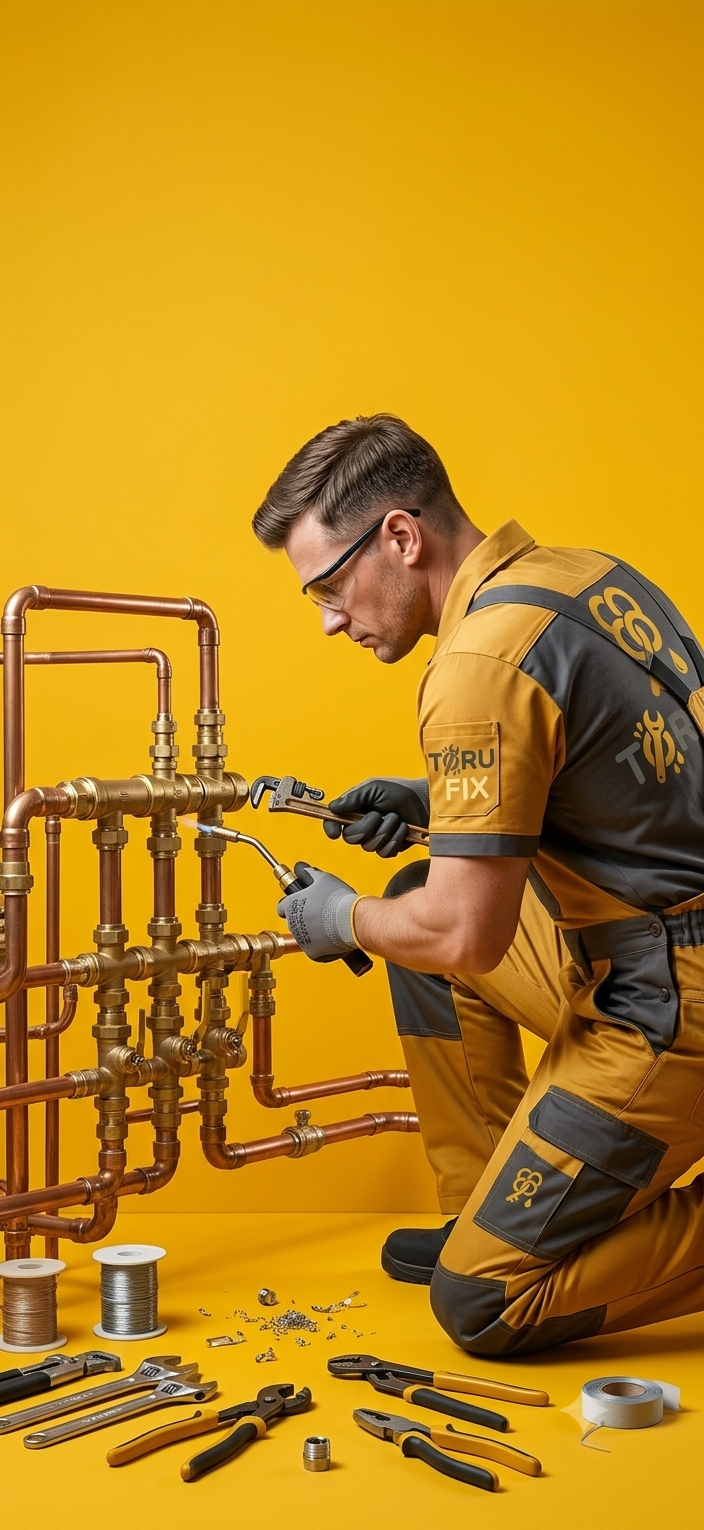
Repair, maintenance, and replacement of water, heating, and sewerage pipes in flats, private houses, apartment buildings, and commercial properties.
Installation, maintenance, and replacement of sanitary ware – taps, toilets, baths, shower enclosures, water heaters, and washing machine connections.
Replacement of water and sewerage risers in apartment buildings, including resident notification and work scheduling.
24-hour emergency assistance for water, heating, and sewerage systems, including weekends and public holidays.
Pressure testing (or pressing) of water and heating systems, and flushing of heating systems with result documentation.
Thawing frozen water and sewerage pipes – both internal and external, plastic and metal pipes – and pipework inspection after thawing.
Dispetšer vastab ööpäevaringselt. Peatame kahju leviku, lokaliseerime lekke ja sõidame välja ka öösel ning pühade ajal.
+372 58 024 476One of the most unpleasant problems is with pipework and sanitary installations. The most common issues are blockages and pipe leaks, but problems related to sanitary equipment are abundant and can be far more serious. Plumbing is an area where a small delay quickly turns into a significant expense: a dripping connection inside a wall might only cause a damp patch in the first week, but after a month, it could lead to a mouldy partition and lifted flooring.
To prevent more severe sanitary equipment failures, it's crucial to fix even minor faults before the situation worsens. For this, it's wise to call a specialist – a plumber who provides correct advice and professionally rectifies both large-scale and minor issues. An experienced tradesperson doesn't just fix the symptom; they also inspect the root cause of the fault: incorrect slope, worn-out seal, aggressive water, overloaded riser, or simply the age of the pipework.
To save time, nerves, and especially money, sanitary equipment must be properly maintained, and its condition checked regularly. On this page, we explain what plumbing services ToruFix provides in Tallinn and Harjumaa, how the work proceeds, what tools our plumbers bring, when a situation is an emergency versus when work can be calmly planned, and how to avoid the most common mistakes.
Our plumbers' daily work covers the entire building's water, sewerage, and heating systems. Most call-outs are resolved in a single visit, as our vehicles are equipped with common materials, seals, connections, and measuring instruments. Larger-scale jobs – such as riser replacement or updating a flat's entire pipework – are planned in advance, and a precise timeframe is agreed upon.
Work always begins with an assessment of the situation. The plumber listens to the client's description, checks the actual extent of the symptom, and only then states what needs to be done. We provide the price before starting work, allowing the client to decide. If it turns out the problem is larger than initially appeared, we discuss it before proceeding.
Not all plumbing problems are emergencies, but some are. The simplest distinction is whether water is moving to a place it shouldn't. If water is flowing onto the floor, into a wall, the ceiling, or to a neighbour, it's an emergency, and immediate action is required – first, shut off the water, then call a plumber.
The second category involves situations where the system is working, but incorrectly. Water drains slowly, the toilet flushes twice, the water heater produces lukewarm water, a radiator is hot at the top and cold at the bottom, or pipework makes banging noises. These are warning signs: the system indicates that sediment, air, or a blockage is accumulating somewhere. In such cases, the work can be planned, but not indefinitely postponed.
The third category is planned work: replacing old pipework, updating sanitary equipment during renovation, replacing risers based on an apartment association's decision, or inspecting pipework before purchasing a property. This is where the most savings can be made, as the work is done calmly, on time, and without emergency surcharges.
In these situations, don't wait until morning – damage increases every hour, and when processing insurance claims, how quickly the owner reacted also matters.
These jobs can be arranged at a convenient time, including evenings, and it's often sensible to do several things at once during a single call-out.
Plumbing works are divided by system, and each system behaves differently. Water supply operates under pressure, so any leak is immediately visible and rapidly damaging. Sewerage operates by gravity, or slope, so its faults appear slowly – as slow drainage, odours, and recurring blockages. The heating system is a closed loop, where problems usually stem from air, dirt, and pressure loss.
A good plumber can work with all three systems, as they are interconnected in a real flat or house. For example, replacing a water heater affects both water supply and electricity, radiator replacement affects heating system pressure and filling, and toilet replacement affects both the sewerage connection and water supply connection simultaneously.
Water pipework is the most high-risk part of a building, as it is constantly under pressure even when no one is home.
For sewerage pipework, the correct slope and proper connections are most important – most recurring blockages are actually the result of a construction error, not the user's fault.
Heating system works are seasonal: most questions arise in autumn when heating is switched on, and it becomes apparent that some radiators are not heating up.
Outdated sanitary equipment causes many problems that typically arise unexpectedly. Therefore, the sensible and correct action to avoid such an unwelcome surprise is to replace old equipment with new before it starts leaking.
Also, old equipment (e.g., water heaters, heating devices, etc.) consumes a lot of energy, which significantly increases your electricity bills. New equipment is always more environmentally friendly and economical.
In practice, the biggest risk sources are old flexible hoses and old angle valves. A flexible hose is an inexpensive component whose rubber interior ages and metal braiding rusts – if it breaks, water flows at full pressure until someone turns it off. An old valve often no longer closes completely, meaning that during an emergency, water cannot be shut off without closing the entire riser.
The same logic applies to metal pipework. Soviet-era steel pipes rust from the inside, their internal diameter decreases, and pressure drops. If the pipework is over 40 years old, the question is no longer whether it needs to be replaced, but whether the replacement will be done as planned or after an emergency.
Plumbing is one of the most important parts of any building and must be kept in check, just like your own health. Therefore, if you call a plumber from our company, you can be sure that your pipes and sanitary equipment are in safe hands.
Our plumber will solve all pipework and/or sanitary equipment problems and assess the condition of other pipes and sanitary equipment, helping to identify all potential hazards that could cause problems in the future. Our experts can always assess the condition of sanitary equipment and provide recommendations. Choose professional plumbing assistance.
A clear work process is what distinguishes a professional service from a casual helper. Our process is the same for replacing a single tap or upgrading a whole house's pipework – only the scale differs.
We ask what exactly happened, where the water is, if the water can be shut off, and whether it's a flat or house property. Usually, over the phone, we can determine whether an emergency team or a planned visit is needed, and what equipment to bring.
The plumber checks on-site if the cause of the symptom is where the client believes it is. Often it's not: a wet patch on the ceiling might originate from a floor above, slow drainage in the bathroom could be a common riser issue, a cold radiator might be due to air in the entire circuit, not that specific radiator.
Before starting work, we tell you what needs to be done and how much it will cost. If additional work is identified during the job, we stop and discuss it – the client will not face surprises on the invoice.
The work area is protected, water is shut off to the necessary extent, and the work is completed. We use materials suitable for the specific system – for example, we do not connect old steel pipes with a solution that accelerates corrosion at the connection point.
After the work, we test the system: open the water, check connections under pressure, examine drainage, and ensure there are no leaks. We show the client what has been done and explain what to pay attention to in the future. We issue a proper invoice suitable for submission to an apartment association or insurance company.
Plumbing works vary for each property type, not so much technically, but organisationally.
In a flat, the most crucial question is the boundary of responsibility: where the flat owner's pipework ends and common property begins. As a rule, the riser and its connections are common property, while internal pipework is the responsibility of the flat owner. We explain this to the client on-site, as it determines who pays for the work.
Work carried out in a flat also requires agreement with neighbours if the riser needs to be temporarily shut off. We assist in organising this and complete the work with the shortest possible water interruption.
In a private house, the owner is responsible for the entire system – from the connection to the service entry point. This means more freedom in choosing solutions but also more maintenance: water meter units, water heaters, heating systems, sewerage outflow, and often a local treatment plant or septic tank.
The most typical winter problem in a private house is a frozen pipe in the garage, utility room, or a section close to the ground. We thaw them and assess whether the pipe was damaged and if insulation needs repair.
For an apartment association, predictability is important: agreed-upon time, resident notification, minimal water interruption, and correct documentation. We collaborate both for one-off jobs and long-term maintenance contracts.
The most typical apartment association works are sewerage riser replacements, basement pipework upgrades, identifying the cause of recurring blockages, and works related to the heating unit.
In an office, shop, or catering establishment, every hour of downtime costs money. Therefore, we often work for business clients outside opening hours and agree on which part of the system must definitely operate during working hours.
In catering, a separate issue is grease-blocked pipework, which requires regular maintenance, not a one-off intervention.
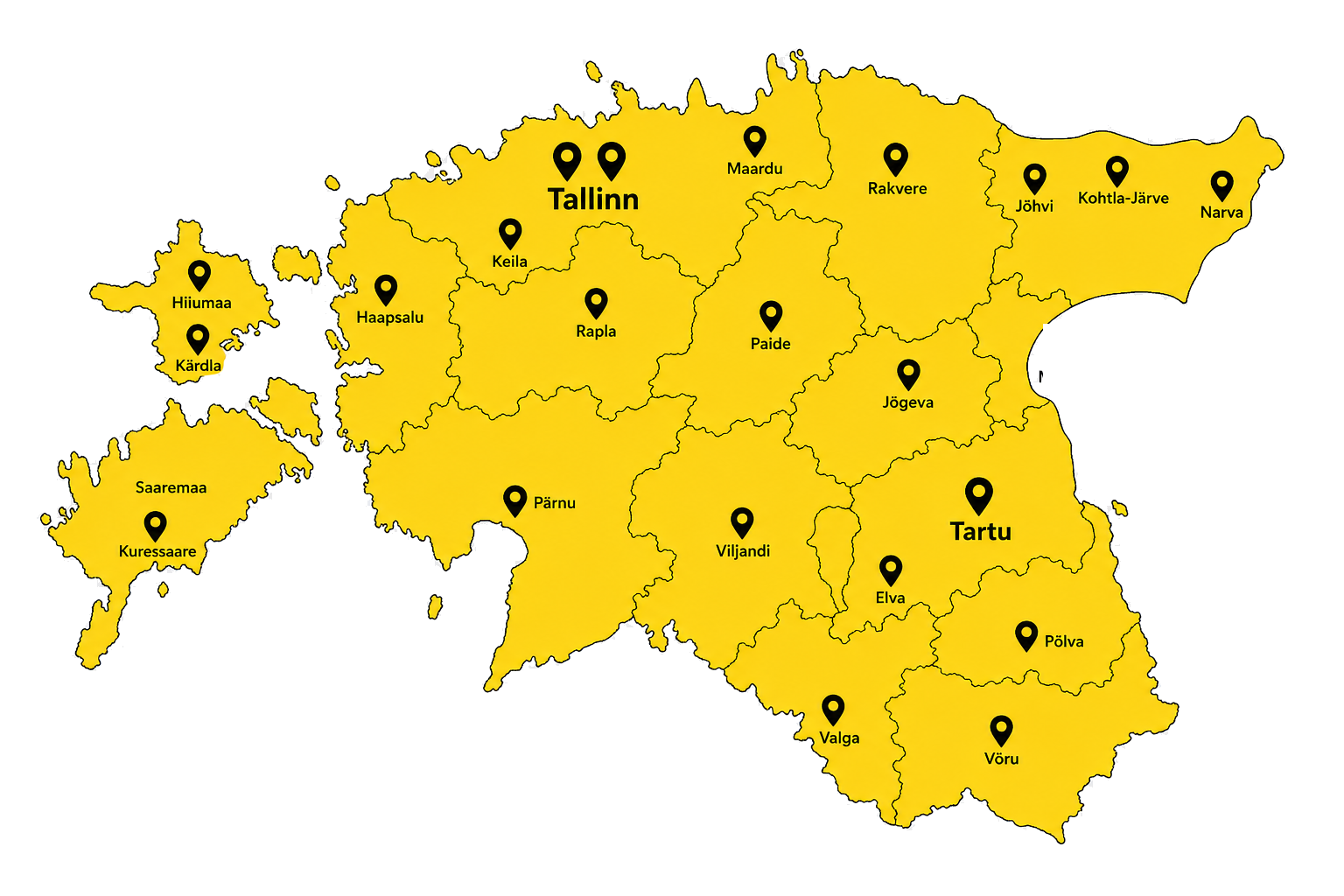
In Tallinn, an emergency team usually arrives within 30–60 minutes; in Harjumaa, within 1–2 hours. Planned works are scheduled at a time convenient for you, including evening hours.
Our plumber arrives with their own equipment and common spare parts, so most jobs can be completed in one visit without a second trip to the shop.
Arrival time depends on traffic and how many teams are currently on calls. If the situation is critical, we provide instructions over the phone on how to minimise damage before the plumber arrives – typically meaning shutting off the main stopcock and turning off electricity in the wet zone.
A large proportion of the call-outs we attend are actually the result of previous incorrect solutions. Below are the most common mistakes we see.
Most emergencies don't happen unexpectedly – they give early warning signs. Prevention is the cheapest plumbing work you can possibly do.
The price is primarily influenced by the scope and complexity of the work, not just the time spent. A simple tap replacement is a quick and predictable job. Finding and repairing a leak inside a wall requires diagnostics, measuring instruments, and often planning for plasterwork restoration.
Another important factor is time: a night, weekend, or public holiday call-out is more expensive than a weekday visit. If the situation is not an emergency, it's worth planning the work during normal working hours.
The third factor is materials. In some cases, we use materials purchased by the client, but then we cannot guarantee the material itself – only the work performed. If we supply the material, the warranty covers both labour and materials.
More detailed price guidelines can be found on the price list page, but the final price is always given on-site before work begins, once the plumber has assessed the situation.
Our team performs plumbing works daily across Tallinn and Harjumaa's varied building stock – Soviet-era panel buildings, old wooden houses, 2000s apartment buildings, and new private homes. This means we know, even before arriving, what solutions are typically used in specific building types and what their common weaknesses are.
Oleme 24/7/365 kõikjal Tallinnas ja Harjumaal.
Tuleme kohale kiiresti ja lahendame probleemi kohapeal.
Teeme tööd korrektselt ja anname garantii.
Selge hinnainfo enne tööde algust, üllatusi ei tule.
Aitame vormistada kahjujuhtumeid kindlustusseltsidele.
Helista või kirjuta – kirjelda probleemi paari lausega.
Ütleme tunnihinna ja eeldatava mahu enne kohalesõitu.
Tallinnas tavaliselt 30–60 minutiga, oma tehnika ja varuosadega.
Teeme töö, kontrollime süsteemi ja anname garantii.
Water supply plumbing: pipework replacement, risers, valves, and leak repair.
water pipe replacementBlocked sink, toilet, drain, or riser – mechanical cleaning and high-pressure jetting.
blockage removalLocating hidden leaks in water and heating pipework without unnecessary demolition.
leak detectionTaps, toilets, sinks, shower enclosures, and baths – installation and replacement.
sanitary equipment installationHeating system flushing, pressure testing, radiators, and circulation pumps.
heating system maintenance24-hour emergency assistance for water, heating, and sewerage systems.
emergency plumbingOur plumber arrives with their tools, rodding equipment, and common spare parts – seals, connections, tap components. For larger equipment, we agree on materials beforehand.
Yes. We thaw both internal and external pipes, plastic and metal pipes, and then check if the freezing has damaged the pipe.
Yes. We perform sewerage riser replacement and repair both in individual flats and across the entire riser's length in cooperation with apartment associations.
Essentially, there is no difference – in Estonian, both words are used for the same profession. 'Torumees' colloquially refers more to pipework, 'santehnik' to sanitary equipment installation, but in practice, the same tradesperson does both.
If water is running somewhere, first turn off the main stopcock or the valve in front of the appliance, and turn off the electricity in the wet zone. Clear access to the workspace – for example, empty the cabinet under the sink. No other preparation is needed.
Yes. In such a case, we perform leak detection – we check the pipework and, if necessary, use diagnostic equipment to find the leak location without unnecessary demolition.
Yes. We offer both one-off jobs and maintenance contracts to apartment associations, where response times and conditions are agreed upon in advance.
Yes. Our emergency service operates 24/7/365, including public holidays. Night and holiday call-outs are more expensive than weekday visits, but quick intervention is almost always cheaper than the consequences of waiting until morning.
Yes, we provide a warranty on both the work performed and the materials we install. We issue a proper invoice suitable for submission to both apartment associations and insurance companies.
Our main service area is Tallinn and Harjumaa, but we travel throughout Estonia. In Tallinn, we usually reach emergency call-outs within 30–60 minutes; in Harjumaa, within 1–2 hours.
Sõidame välja kogu Eestis. Avariitööd ööpäevaringselt, 7 päeva nädalas.