Sewer Blockage
Clearing blockages with 16mm and 22mm coiled cable; larger blockages with high-pressure jetting.

Sewer blockage removal (up to 25m of cable for 100-120mm pipes, up to 15m for smaller pipes) and domestic water pipe blockage clearing in Tallinn and Harjumaa.
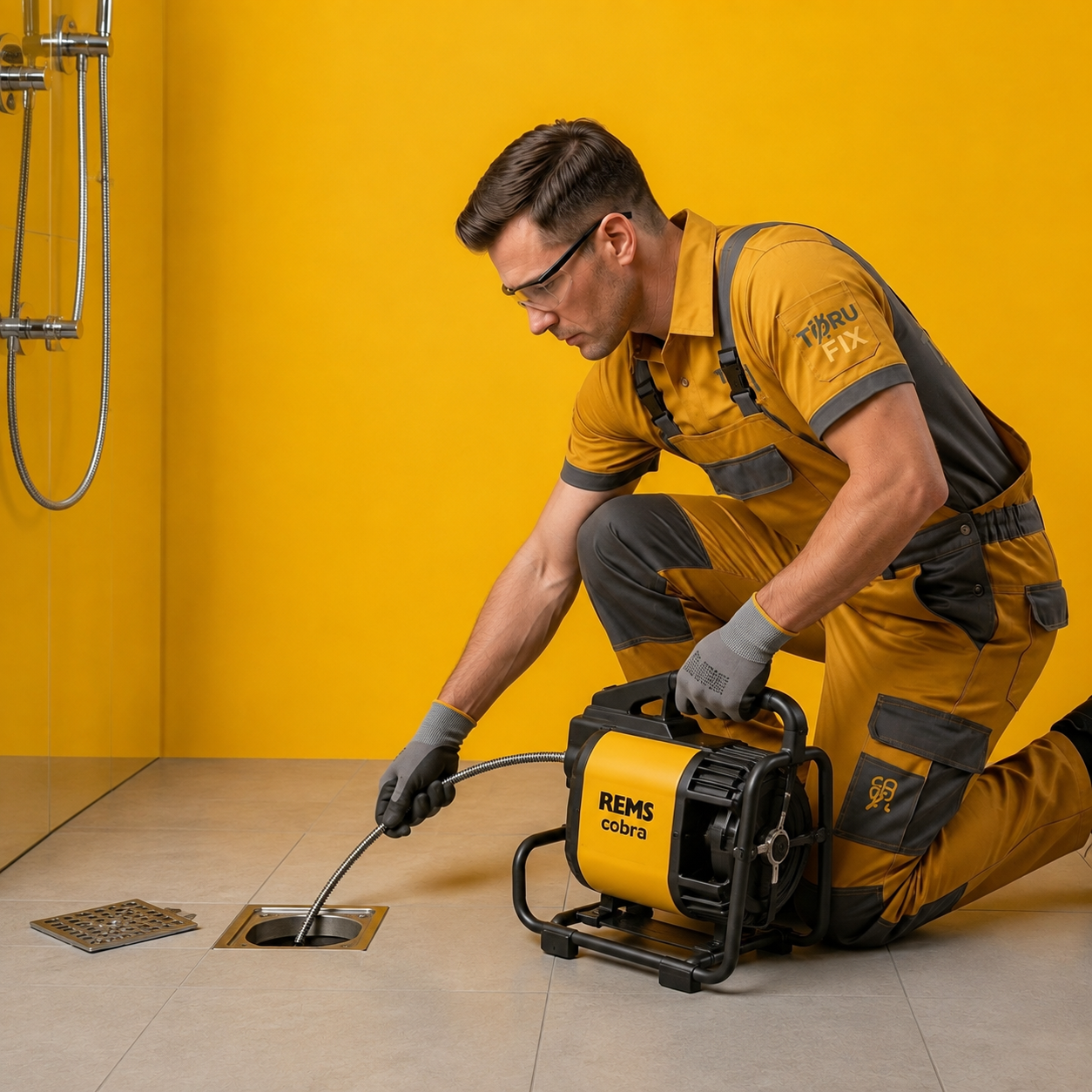
Clearing blockages with 16mm and 22mm coiled cable; larger blockages with high-pressure jetting.
WC blockage removal without dismantling the pan, rapid response.
Grease build-up removal for sink, siphon, and kitchen pipe blockages.
Clearing blockages and sediment from domestic water pipes, restoring water pressure.
Dispetšer vastab ööpäevaringselt. Peatame kahju leviku, lokaliseerime lekke ja sõidame välja ka öösel ning pühade ajal.
+372 58 024 476Blockage removal is a service that helps you resolve situations where a pipe is clogged and needs to be cleared quickly. When a problem arises, people often try to remove the blockage themselves, but this can make the situation worse, requiring more time and expense for a specialist's work.
Our qualified plumbers clear blockages quickly, efficiently, and using only professional tools. We serve apartments, private homes, apartment associations, and business clients throughout Tallinn and Harjumaa, 24/7 if necessary.
To prevent blockages, it's important that the pipework is correctly sloped and properly connected. Of course, blockages cannot be entirely avoided; for instance, in the kitchen, grease gradually forms a layer inside the pipes, significantly reducing flow, eventually leading to a complete grease blockage.
In such cases, you cannot clear the blockage yourself, and it's sensible to call a specialist who will professionally remove the blockage with a 16mm coiled cable. Pipes with larger diameters (from 110mm) are cleaned with a 22mm coiled cable, and major blockages are cleared with high-pressure jetting.
WC blockages often occur because unsuitable waste is flushed down the toilet, such as spoiled food, hair, wet wipes, etc.
The following items should not be flushed down the toilet:
Locating and removing sewer blockages often consumes considerable time and resources, but all of this can be avoided and prevented by not contaminating sewer pipes with unsuitable waste and objects.
Also, be careful with drain cleaning chemicals. Using unknown chemical cleaning agents is not safe; therefore, for every chemical, the instructions for use must be known, as incorrect use can damage the pipework, leading to additional costs for pipe replacement. Thus, it is more effective and correct to seek professional help.
If a blockage has already occurred, call in the professionals.
We always start with diagnostics: we determine whether it's a local blockage in one appliance or a problem with a shared riser affecting the entire stairwell. This dictates both the method and who orders the work – the apartment owner or the apartment association.
The primary area where we resolve blockages is Tallinn and its neighbouring municipalities. In Tallinn city centre, Lasnamäe, Mustamäe, Õismäe, Kristiine, Põhja-Tallinn, and Nõmme, a crew typically arrives within 30-60 minutes; in Harjumaa – Viimsi, Harku, Saue, Rae, Jõelähtme, Kiili, and Maardu – allow 1-2 hours.
In older panel and brick buildings, sewer blockages are usually related to the roughening and grease build-up on the inner surface of cast-iron pipes. In new developments, they are more often due to incorrectly installed slopes or construction debris. In private homes and terraced houses, external drainage systems and manholes are added, where the pipe may be blocked by roots, sand, or a collapsed section.
In apartments, local cabling through a cleanout or appliance connection is usually sufficient. If water rises in several apartments simultaneously or from a floor drain, it indicates a riser blockage, and the work is ordered by the apartment association – we then clean the entire riser and check the result.
For private homes, we start from the manhole and external drainage: a blocked sewer there is often caused by sediment, roots, or a collapsed pipe section. If necessary, we combine high-pressure jetting and CCTV drain surveys to assess the actual condition of the pipe before considering excavation work.
The sooner a pipe blockage is addressed, the cheaper the removal will be. A blocked sewer usually gives signs days before it completely clogs.
The scope of blockage removal depends on three things: the pipe diameter, the distance of the blockage from the access point, and the nature of the blockage. A grease blockage in a kitchen pipe is usually resolved with a cable, while solidified sediment or roots in a 110mm pipe require high-pressure jetting.
We will quote the hourly rate and estimated scope before arrival, and if during the work a different method is required, we will agree upon it separately with the client. For apartment associations and commercial properties, we issue a proper invoice with a detailed description of the work.
For the client, a sewer blockage is always an unexpected and inconvenient situation, which is why we have designed our workflow to be as understandable and predictable as possible. You will know before the technician arrives what order the work will be done in, how long it is expected to take, and from what moment the hourly rate starts. A transparent process is why a large part of our orders come from repeat clients and apartment associations with whom we have cooperated for years.
The first step is a phone conversation with the dispatcher. During the call, we ask which appliance isn't draining, whether the problem affects one or multiple appliances simultaneously, whether it's an apartment, private house, or commercial building, and whether water has already risen to the floor. Based on these answers, we can prepare the correct equipment: for a minor domestic blockage, a 16mm coiled cable is sufficient; for a riser or external drain, we bring a 22mm cable and, if necessary, high-pressure jetting equipment. Bringing the correct equipment means most jobs are resolved in a single visit.
The second step is on-site diagnostics. The technician inspects the problematic appliance, drain, siphon, and the nearest cleanout, and checks if water is flowing in neighbouring appliances. This check determines whether the blockage is local or in a shared riser. A wrong diagnosis is the most expensive mistake in blockage removal: if only the internal pipework of an apartment is cleaned when the actual blockage is in the riser, the water will return in a few days, and the client will pay for the work a second time.
The third step is removing the blockage with the chosen method. For mechanical cabling, we feed the cable head to the blockage, break up or pull out the obstruction, and continue along the pipe section until we feel there is no longer any resistance. For high-pressure jetting, we direct high-pressure water into the pipe, which cleans the inner wall of the pipe along its entire length – this is the only method that truly removes the grease layer, rather than just creating a hole in it.
The fourth step is checking the result. We run a large amount of water through the pipework and observe how quickly it drains, whether there's any gurgling, and if water rises anywhere else. Only after this do we consider the job done. The fifth step is explanation and recommendation: we honestly tell the client what caused the blockage and whether it is a one-off incident or a systemic problem that will recur if the pipework is not cleaned properly or repaired.
Each drain behaves slightly differently when blocked, and the solution also varies. Below are the most common cases our technicians in Tallinn and Harjumaa encounter daily.
The kitchen sink is statistically the most frequent site of blockages. The reason is simple: dishwashing water carries grease into the pipework, which adheres to the inner pipe wall as it cools. Over years, a thick layer forms, to which food waste, coffee grounds, and detergent residues cling. The pipe diameter gradually narrows until one day, water remains standing in the sink.
For a grease blockage, boiling water or shop-bought chemicals no longer work – at best, they create a narrow channel in the solidified layer, which clogs again within a few weeks. We remove kitchen pipe blockages with a 16mm coiled cable, and if the grease layer is extensive, we recommend high-pressure jetting of the pipe section, which restores the pipe to its original diameter. In apartment buildings, kitchen pipes often connect to a shared riser, so we always check if neighbouring apartments have similar complaints.
A WC blockage is the most rapidly escalating issue, as an overflowing toilet immediately means a sanitary problem and floor damage. If water rises to the rim of the bowl when flushed and then slowly drains, the blockage is usually in or just behind the toilet's outlet. If water doesn't drain at all and, at the same time, the bathroom drain gurgles, the blockage is likely further down in the shared riser.
We clear WC blockages without dismantling the toilet: we use a special cable and technique that passes through the toilet siphon without damaging it. Removing the toilet is only considered if a hard object – such as a child's toy, sanitary item, or construction debris – has entered the pipe and cannot be removed with a cable. In such a case, we discuss any additional work with the client before disassembling anything.
Bath and shower drains typically block due to hair, soap residue, and cosmetics, which form a soft but dense plug in the siphon and the nearest pipe section. Often, cleaning the siphon and a short cabling session are sufficient here. However, if water rises from the floor drain, it's a more serious sign: it means the water can no longer flow into the riser, and the blockage is located further down.
Water rising from a floor drain in an apartment building is always a signal that requires quick action – this protects your floor and the apartment below. In such a situation, stop using water and call us; we handle such emergency calls 24/7.
Washing machine drains are narrow and accumulate detergent residues, fibres, and grease. If the machine displays an error message or water remains in the drum, the fault may not be with the machine itself, but with a blocked drain pipe. We always check whether the drain hose is installed at the correct height and angle – incorrect installation causes recurring blockages and odours.
In private and terraced houses, blockages often occur where the pipework exits the building. Typical causes of external drainage blockages include tree and hedge roots, sand, solidified sediment, an incorrectly laid slope, or a pipe section that has collapsed due to ground movement. These cannot be resolved with household remedies, and even a regular cable only provides temporary relief.
For external sewerage, we start at the manhole: we check the water level and flow direction, which indicates whether the blockage is towards the house or towards the street. We then use high-pressure jetting, which removes sediment and fine roots from the entire cross-section of the pipe. If the blockage recurs, we perform a CCTV drain survey – this shows exactly whether the pipe has subsided, cracked, or been infiltrated by roots, and only then can excavation work be considered. This prevents the client from excavating the wrong spot.
Clients often ask why one blockage is resolved in half an hour while another requires special equipment. The answer lies in what the blockage consists of and where it is located. Mechanical cabling is a fast and affordable method, ideal for soft blockages, hair, paper, and food waste, and for short pipe sections within an apartment. The cable breaks up the blockage and restores flow but does not clean the inner pipe wall.
High-pressure jetting is a more thorough method. Water under pressure removes grease layers, calcified sediment, and fine roots from the entire cross-section of the pipe, restoring its original diameter. High-pressure jetting is the only correct choice when blockages recur, when dealing with long external drains or larger diameter collectors, and for grease pipework in restaurants, cafes, or production facilities. Our high-pressure jetting and sewage removal service is separately available for these situations.
A CCTV drain survey is not a cleaning method, but a diagnostic one. The camera shows the inside of the pipe in real-time and pinpoint the exact location of a defect with metre accuracy. Ordering a CCTV drain survey is sensible when the blockage recurs repeatedly, if you plan bathroom or kitchen renovations, when buying an older property, or if you need to verify the condition of the pipework to an apartment association or insurance company. We often combine all three: clean with a cable, jet with high-pressure water, and check the result with a camera.
Our principle is to choose the simplest method that genuinely solves the problem. We do not offer high-pressure jetting where cabling suffices, nor do we fail to recommend a CCTV drain survey when a client has already tried to resolve the same blockage for the third time – in the latter case, the cost of repeat visits has already exceeded the cost of proper diagnostics.
We serve four types of clients in Tallinn and Harjumaa, each with slightly different expectations regarding response time, documentation, and working hours.
Private clients primarily want speed and clarity: for someone to come today, quote the price upfront, do the work cleanly, and leave the bathroom in its original state. We cover floors and work areas, use protective film, and clean up after ourselves. If necessary, we also explain whether the case falls under the apartment owner's responsibility or the apartment association's maintained section.
For apartment associations, in addition to the technical outcome, correct documentation is important: a description of the work, the cause, and recommendations on which the general meeting can decide whether the riser needs cleaning or replacement. We clean vertical sewer risers in their entirety, perform high-pressure jetting of basement pipework and outlets, and offer maintenance contracts that provide priority response and agreed hourly rates.
In apartment buildings, the most typical scenario is where one apartment complains about slow drainage, but the actual cause is a layer of grease and sediment in the shared riser. Regular high-pressure jetting of risers every few years is significantly cheaper for an apartment association than a series of individual emergency calls and dealing with flood damage in apartments.
In restaurants, cafes, and catering establishments with kitchens, the grease pipework is under constant load, and a blockage immediately means business disruption. We often carry out work on these properties outside opening hours – early morning or at night – and maintain a schedule where grease traps and outlet pipework are cleaned proactively, not just when the kitchen is at a standstill.
For property managers of rental units, it is important that the technician can access the property without the owner being present and that the report is clear enough to determine the distribution of costs. We agree on access and the form of reporting at the time of order.
The cheapest blockage is one that never occurs. Our technicians' experience shows that most recurring blockages stem from simple habits that can be changed. Below are recommendations we share with clients on site, even after the work is done.
In the Estonian climate, winter adds another reason for blockages – cold. Pipes in an unheated basement, technical shaft, or external drainage can freeze, and then water stops flowing, even if the pipework itself is clean. Distinguishing between freezing and a blockage is important, as the solution is completely different: a frozen pipe must be thawed in a controlled manner, and a leak check must definitely be performed afterwards, as ice may have burst the pipe.
In spring, meltwater and sand add to the problem, carrying sediment into external drainage; in autumn, root growth and leaves are factors. This is why we recommend that private homeowners plan manhole and external drainage maintenance twice a year – in spring and autumn.
ToruFix OÜ is a plumbing company whose daily work focuses on emergency and blockage services in Tallinn and Harjumaa. Our team comprises experienced plumbers who have resolved blockages in Soviet-era cast-iron pipework in panel buildings, old stone buildings in the city centre, and plastic pipework in new developments. Each building type behaves differently, and it is this wealth of experience that allows us to correctly diagnose the problem on the first visit.
We perform work with professional equipment: coiled cables of various thicknesses, high-pressure jetting units with appropriate nozzles, drain cameras, and auxiliary tools that allow us to work even in cramped bathrooms without dismantling structures. We also carry the most common spare parts and seals, so replacing a siphon or connection does not require a separate visit.
We provide a guarantee for both the work performed and the materials we install, and we issue a proper invoice suitable for submission to both apartment associations and insurance companies. We are always honest if a problem cannot be permanently solved without pipe section repair or replacement – we do not sell work that does not improve the client's situation. The dispatcher is available 24/7 and answers the phone even at night, on weekends, and public holidays.
Transparency starts with the price: the hourly rate and estimated scope are quoted before arrival, and if during the work a different method or additional equipment is required, we agree upon it with the client before proceeding. There are no unexpected line items on the invoice.
Our technicians see situations every week where blockage removal would have been twice as fast and cheaper if the problem hadn't been 'solved' by the client before calling us. The most common mistake is the repeated use of chemicals. If the first bottle didn't help, neither will the second or third – but corrosive liquid will accumulate in the pipe, damaging older connections and seals and making the technician's work dangerous.
Another typical mistake is applying too much force. Vigorous use of a rubber plunger or air-pressure device can simply push the blockage further down in old cast-iron or ceramic pipework, or even disconnect a joint inside the pipe, leading to sewage leaking between floors. Such damage is often discovered only when a stain appears on the ceiling of the apartment below.
A third mistake is tolerating a blockage for too long. If water has been draining slowly for a month and there's been an odour from the drain, the blockage will have solidified and grown during that time – what would have initially been resolved with a short cabling session now requires high-pressure jetting. The fourth mistake is excavating in the wrong place in a private house without a prior CCTV drain survey: excavation work is the most expensive step in resolving a blockage and should only be done when the defect's location is precisely known from the camera.
The fifth mistake is forgetting prevention after the work is done. If a grease blockage occurred once, it will recur with the same habits. That's why we always explain what caused the specific blockage and what can be done to prevent the same situation from recurring – this is part of the service, not separate paid advice.
If water isn't draining, don't wait until morning or try new chemicals repeatedly – every hour increases the risk of water reaching the floor or your neighbour's ceiling. Call our dispatcher and describe the situation in a few sentences: which appliance isn't draining, how long the problem has lasted, and whether it's an apartment, private house, or commercial building. We will immediately give an initial assessment over the phone and tell you when the crew will arrive.
If the situation is not urgent, you can also send an inquiry via the order form – we will respond and arrange a suitable time. In Tallinn, we usually reach emergency call-outs within 30-60 minutes; in Harjumaa, within 1-2 hours. Blockage removal, high-pressure jetting, and CCTV drain surveys are available from the same crew, meaning the problem will be resolved without coordinating between different companies.
Oleme 24/7/365 kõikjal Tallinnas ja Harjumaal.
Tuleme kohale kiiresti ja lahendame probleemi kohapeal.
Teeme tööd korrektselt ja anname garantii.
Selge hinnainfo enne tööde algust, üllatusi ei tule.
Aitame vormistada kahjujuhtumeid kindlustusseltsidele.
Helista või kirjuta – kirjelda probleemi paari lausega.
Ütleme tunnihinna ja eeldatava mahu enne kohalesõitu.
Tallinnas tavaliselt 30–60 minutiga, oma tehnika ja varuosadega.
Teeme töö, kontrollime süsteemi ja anname garantii.
Water supply plumbing: pipework replacement, risers, and leak repair.
water pipe replacementIf cabling doesn't permanently clear a blockage, high-pressure cleaning of sewer pipes and manholes helps.
sewer pipe jettingTo identify the cause of recurring blockages, we inspect the pipe interior with a camera.
pipework CCTV surveyIf a blocked sewer has already overflowed, we handle it as an emergency service 24/7.
24/7 plumbing and emergency plumbingRepair and replacement of subsided or worn pipe sections after blockage removal.
plumber services and pipeworkFor properties without a public sewer system, drainage depends on a septic tank and infiltration system – see a separate page for on-site treatment.
septic tank installationIn Tallinn, we usually arrive within 30-60 minutes, and a typical blockage is resolved within one working hour. More complex cases requiring high-pressure jetting or a CCTV survey take longer.
For 100-120mm pipes, we use up to 25m of cable; for smaller pipework, up to 15m. For larger diameters (from 110mm), we use a 22mm coiled cable and, if necessary, high-pressure jetting.
For a single, minor blockage, it might help, but repeated use damages older pipes and seals and does not eliminate the actual cause of the blockage.
If water doesn't drain from only one appliance, the blockage is usually local. If water rises in several appliances simultaneously, from a floor drain, or also in neighbours' drains, it's a shared riser blockage, and the work is typically ordered by the apartment association.
Stop using water in all appliances to prevent overflow, do not pour chemicals down the drain, and clear access to under the sink or to the cleanout hatch. The technician will handle the rest on site.
Yes, blockage removal is available as an emergency service 24/7. Night-time and holiday call-outs are more expensive, but waiting with an overflowing sewer is usually more costly than calling for assistance.
Yes. For recurring blockages, we perform a CCTV drain survey of the pipework, which shows whether the cause is a collapsed section, roots, construction debris, or an incorrect slope. Based on this, we can decide whether high-pressure jetting is sufficient or if a pipe section needs repair.
Yes, we clean settlement tanks, grease traps, and external drainage with high-pressure jetting and, if necessary, arrange sewage removal.
Generally, the apartment owner is responsible for their apartment's internal pipework up to the connection to the shared riser, and the apartment association is responsible for the communal riser and basement pipework. If water rises in several apartments simultaneously or from a floor drain, it indicates a shared section, and the work is typically ordered by the apartment association. We will determine on site which side of the boundary the blockage is located and describe it on the invoice to ensure clear cost distribution.
In the vast majority of cases, no. We work through existing cleanouts, siphons, or appliance connections, and we clear WC blockages without removing the toilet pan. Opening up structures is only considered if there is a hard object in the pipe or if the pipe has subsided or cracked – in such a case, we perform a CCTV drain survey first and agree on further steps with the client.
That depends on the cause. A one-off blockage – hair, paper, or food residue – is permanently resolved after removal. However, if there is a thick layer of grease or sediment on the inner pipe wall, the blockage often recurs within a few months after cabling; in such cases, high-pressure jetting, which restores the pipe to its original diameter, provides a lasting result. For recurring blockages, we recommend a CCTV drain survey to find a structural cause, such as an incorrect slope or a collapsed pipe section.
Yes. In old Tallinn panel and stone buildings, the inner surface of cast-iron pipes becomes rough over time and accumulates sediment, which is why we use cables of appropriate thickness and regulated pressure to avoid damaging the pipe. If the cast-iron pipe is already rusted through or cracked, we will see this during a CCTV survey and honestly advise that the permanent solution is pipe section replacement.
Stop using water in all appliances, clear access to under the sink, around the WC, or to the cleanout hatch, and remove rugs and items from the floor that might get wet. If you have already used chemicals, be sure to inform the technician – this is important for their safety.
Yes. In restaurants, cafes, shops, and production facilities, we often carry out work early in the morning or at night to avoid business interruptions. For catering establishments, we also offer a preventive cleaning schedule for grease traps and outlet pipework.
Yes. Our emergency service operates 24/7/365, including public holidays. Night-time and holiday call-outs are more expensive than weekday visits, but quick intervention is almost always cheaper than the consequences of waiting until morning.
Yes, we guarantee both the work performed and the materials we install. We issue a proper invoice suitable for submission to both apartment associations and insurance companies.
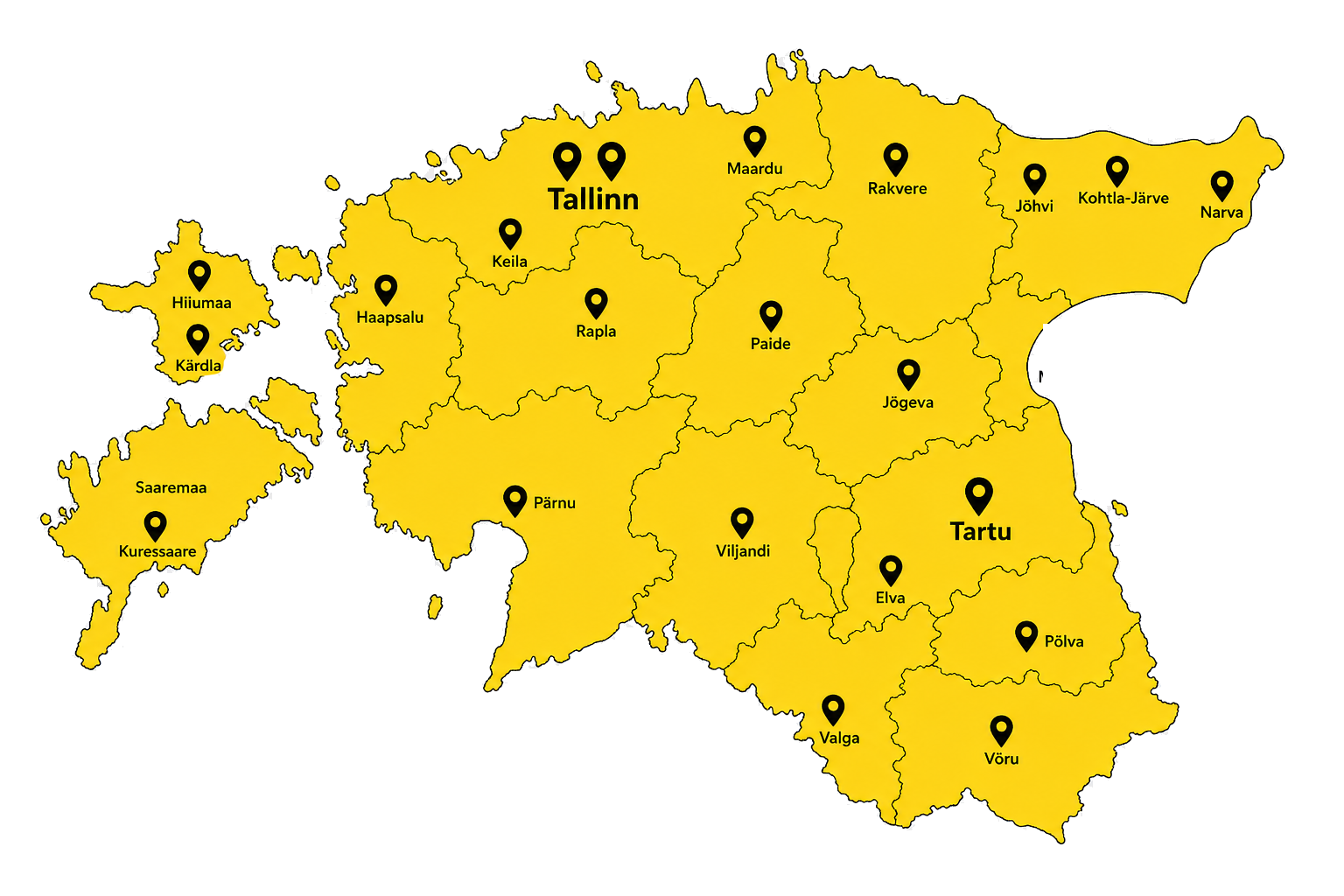
Our primary service area is Tallinn and Harjumaa, but we travel throughout Estonia. In Tallinn, we reach emergency call-outs typically within 30-60 minutes; in Harjumaa, within 1-2 hours.
Sõidame välja kogu Eestis. Avariitööd ööpäevaringselt, 7 päeva nädalas.