Water Meter Unit · Water Meter · Valves · Filter · Check Valve
Water Meter Unit Installation – Water Meter Fitting, Replacement & Construction
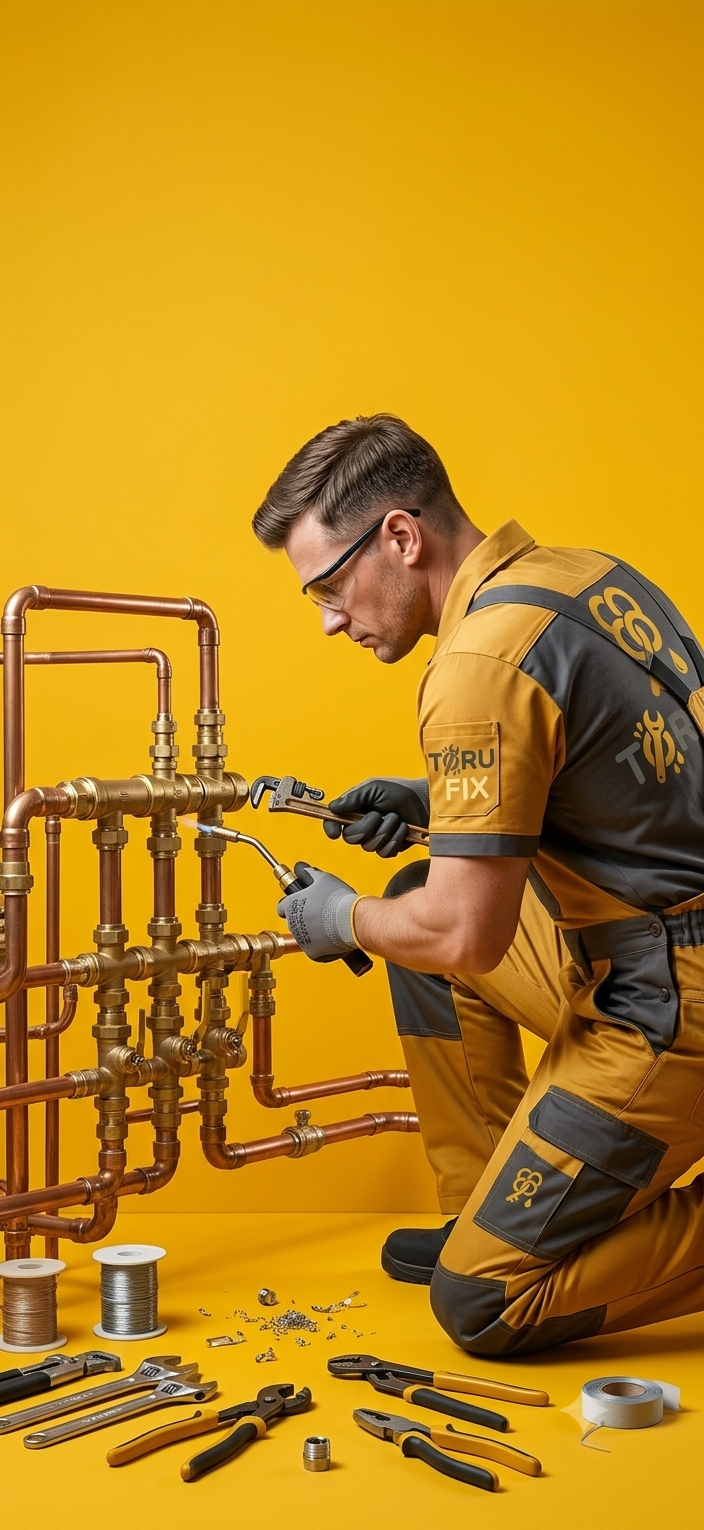
We build, reconstruct, and maintain water meter units in Tallinn and Harjumaa, Estonia: including individual apartment units, main entry units for private homes, and primary units for apartment buildings and commercial properties. We install and replace water meters, shut-off valves, mechanical filters, and check valves. We construct units to be leak-proof, readable, maintainable, and accessible for inspection by water service providers.
Kogenud meistridTeeme tööd puhtalt ja kvaliteetselt
Water Meter Unit Services We Provide
Water Meter Unit Installation & Reconstruction
Installation of new water meter units or replacement of old, worn-out units: including shut-off valves, filters, water meters, check valves, and correct straight pipe sections before and after the meter.
Water Meter Installation & Replacement
Installation and replacement of cold and hot water meters in apartments, private homes, and commercial properties. We replace meters due to expired calibration periods or if they are faulty or leaking.
Valve & Filter Replacement
Replacement of seized or leaking ball valves, installation and cleaning of mechanical sediment filters, installation of check valves, and reconfiguring connections for easier access.
Main Water Meter Units for Apartment Buildings & Commercial Properties
Plumbing works for main water meter units in apartment building basements or utility rooms: including main shut-off valves, bypass lines, meter unit reconstruction, and access improvement.
Avarii · 24 / 7 / 365
Toruavarii ei oota hommikut
Dispetšer vastab ööpäevaringselt. Peatame kahju leviku, lokaliseerime lekke ja sõidame välja ka öösel ning pühade ajal.
Water leaking from the water meter casing or connections
Shut-off valve won't close, preventing water from being shut off in the apartment
Meter dial turning even when no taps are open
Water meter unit is corroded and starts leaking with every touch
Water Meter Unit Installation – How to Build a Unit Correctly and Common Mistakes
The water meter unit is a small but crucial component for the entire building's water supply. It marks the beginning of an apartment's or house's plumbing system, provides the only point where water can be quickly shut off, and measures the water for which a monthly bill is issued. If a water meter unit is improperly constructed, it leads to three immediate problems: water cannot be shut off during an emergency, the meter reading is unreliable, and any future maintenance requires demolition.
ToruFix OÜ builds, reconstructs, and maintains water meter units in Tallinn and Harjumaa, Estonia. We perform both individual tasks – replacing an old meter with a new one, changing a seized ball valve – and complete unit overhauls. This includes replacing old threaded valves with modern press-fit or ball valve solutions, adding filters and check valves, and positioning the unit for easy reading, maintenance, and access.
On this page, we explain what a water meter unit consists of and the purpose of each element, the types of units found in Estonian apartments and private homes, how preparation and installation are carried out, how work differs in apartments, private homes, apartment buildings, and commercial properties, common errors, and what to do when a meter's calibration period expires. We also describe how meter inspection and sealing are typically done – the official sealing and reading registration are always managed by the water company according to their procedures, and our role is to ensure the plumbing work prepares the unit for inspection.
01
What is a Water Meter Unit and What Does it Consist Of?
A water meter unit is a section of pipework that centralises water shut-off, mechanical filtration, metering, and backflow prevention. In an apartment building, it's usually located near the riser in the bathroom or WC, often behind an access panel. In a private home, the unit is in the utility room, basement, or an external connection pit. The main water meter unit for an apartment building is in the basement or a dedicated utility room where water enters the building.
A typical apartment water meter unit consists of the following components in the direction of flow: a shut-off valve (ball valve), a mechanical sediment filter, a water meter, and a check valve. Most Estonian apartment buildings have two such units – one for cold and one for hot water. Each component has a precise function, none are there by chance.
The shut-off valve is an emergency safety element. It allows water to be shut off to the apartment or house in seconds, without affecting the riser or the entire building's water supply. If this valve is seized – which is surprisingly common in old units – the rest of the unit becomes meaningless, as water cannot be stopped in an emergency.
The sediment filter protects both the meter and all apartment fixtures. Estonian pipework often carries rust particles, sand, and welding debris, especially after network maintenance or riser replacements. A meter without a filter wears out faster and measures inaccurately; mixer tap cartridges seize up, and thermostatic mixers fail. The filter is an inexpensive part, but failing to clean it costs much more later.
The water meter measures the volume of water consumed. The check valve after the meter prevents water from flowing backward – this avoids both metering errors and situations where hot water pushes into the cold water system or vice versa. A missing or blocked check valve is the most frequent reason in apartment buildings for lukewarm water coming from the cold tap and an inexplicably rising water bill.
Shut-off valve – for quick water shut-off in case of apartment or house emergency
Sediment filter – protects the meter and taps from sediment and rust particles
Water meter – measures consumed cold and hot water separately
Check valve – prevents water from flowing backward
Straight pipe sections before and after the meter – ensure accurate measurement
Access panel or access – without it, the unit cannot be read or maintained
02
Why is a Water Meter Unit Needed and What Does a Correct Unit Prevent?
The most visible reason is billing. In an apartment building, water and sewerage costs are distributed among apartments based on meter readings, and the main building meter reading should align with the sum of apartment readings. If an apartment meter measures incorrectly or a check valve is faulty, a 'general water consumption' discrepancy arises between the main meter and apartment readings – and this cost is borne by all residents.
A second, much costlier reason is emergency safety. A functioning shut-off valve in the water meter unit is the only thing separating a burst flexible hose or a cracked tap from a small wet patch on the floor to extensive water damage. In our call-outs, it regularly happens that a client has searched for and found the valve, but it either won't turn or spins freely – then the entire riser must be shut off, and damage has already occurred.
The third reason is the lifespan of the entire apartment's plumbing system. A unit without a filter and check valve allows all debris to go directly into taps, water heaters, and washing machines. We see this every week: the client's complaint is 'the tap isn't giving water,' but the real cause is a blocked aerator and cartridge, whose contents come directly from the riser.
The fourth reason is maintainability. A properly constructed unit – with accessible connections and an access panel that actually opens – allows a meter to be replaced in 30-60 minutes without damaging tiles. A unit built into a wall without an access panel means construction work with every calibration replacement.
Fair billing and reduced building-wide water consumption costs
Ability to shut off water in seconds during an emergency
Protection of taps, water heaters, and appliances from sediment
Fast and affordable maintenance and meter replacement in the future
03
Types of Water Meter Units – Apartment, Private Home, Apartment Building, Commercial Property
Water meter units primarily differ in the volume of water flow and their location. This affects both the size of the fittings and the space required for installation.
Apartment Water Meter Unit
The most common type in Estonia. Two units – cold and hot – are located near the riser in the WC, bathroom, or kitchen cabinet. The pipe size is typically DN15 (half-inch) and meters are compact, often 80mm or 110mm long versions. The main limitation is space: the unit must fit into a narrow shaft while allowing the meter to be read and the valve to be turned.
When reconstructing an apartment unit, the biggest benefit is usually replacing old threaded fittings and seized valves with modern ball valves, and orienting the unit so the reading is directly visible through the access panel. Often, a filter is also added, which older units simply didn't have.
Private Home Water Meter Unit
In a private home, the water meter unit is located in the utility room, basement, or an external connection pit. Here, the unit is often larger and includes, in addition to the basic elements, a pressure reducing valve, a coarser filter, or provision for water treatment, as well water from wells and even public supply can be rich in iron.
For units located in a pit, frost resistance is critical: the unit must be below the frost line or insulated. A frozen and burst water meter unit in a connection pit is one of the most typical winter call-outs. For units in a utility room, we always plan space for the water heater, manifold, and filter unit to ensure convenient future maintenance.
Main Water Meter Unit for Apartment Buildings
The main entry unit for a building in the basement or utility room is larger: DN25–DN50 or more, with a main shut-off valve, often a bypass, and a coarse filter. Here, the building's consumption determines the size selection – a meter that's too large won't register small nighttime flows, while one that's too small will cause pressure loss and wear out quickly.
We perform main water meter unit works for apartment associations within a pre-arranged timeframe, as water must be shut off for the entire building. We usually schedule the work for early mornings or daytime, notify the association in advance, and keep the interruption as short as possible.
Commercial Property Water Meter Unit
In offices, shops, catering establishments, and production facilities, the water meter unit is often part of a larger technical setup, and consumption is uneven – long periods of inactivity alternate with high instantaneous consumption. It is important here to choose the correct measuring range and ensure that shutting off the unit does not require a water outage for the entire building.
For commercial properties, we usually work outside business hours to avoid disrupting operations, and we agree on the interruption duration in advance. Catering facilities often require an additional filter and water treatment unit, whose connection with the water meter unit needs to be carefully planned.
04
Preparation and Solution Selection Before Installation
Every water meter unit job begins with assessing the situation. We examine the unit's location, the condition of the riser and connections, whether access is available, and the size of the existing pipework. This determines whether a simple meter replacement is sufficient or if it's more sensible to rebuild the entire unit.
In practice, one of the most important decisions is whether to interfere with the riser. If the connection from the riser is a galvanised steel pipe that is corroded internally and rusted externally, it makes no sense to install a new meter onto an old connection – the first turn will break the joint. In such cases, we honestly explain that the scope of work is larger and propose replacing the connection along with the shut-off valve.
The second decision is the choice of meter. The meter must match the pipe size, consumption range, and whether it's for cold or hot water – a hot water meter is designed for higher temperatures, and using a cold water meter for hot water leads to rapid wear and measurement errors. Additionally, the installation position must be considered: many meters are designed for a specific orientation, and an incorrect position affects accuracy.
The third decision is the unit's geometry. Straight pipe sections are needed before and after the meter to prevent turbulent flow from distorting readings, and the entire unit must fit into the existing shaft so that the access panel closes and the reading is visible. We discuss this layout with the client on-site before anything is disconnected.
Fourth, we agree on the water shut-off. In an apartment, this usually means shutting off the riser, which affects neighbours – the apartment association must agree on a time, and residents must be informed. In a private home, we shut off the main connection or pump. We always state in advance how long the water will be off.
Assessment of unit location, access, and riser condition
Decision: meter replacement only or full unit reconstruction
Meter selection based on size, consumption, and water temperature
Planning for straight pipe sections and installation position
Agreeing on water shut-off time with the association or owner
05
Water Meter Unit Installation Step-by-Step
Installation itself is precise but quick work, assuming preparation is done. A typical replacement of two apartment units, including draining and inspection, usually takes us a couple of hours.
Shutting off water in the riser or main connection and draining the pipework
Dismantling old meter and fittings, checking the condition of the connection
If necessary, replacing the connection and riser branch, and preparing threads
Installing the new shut-off valve – a ball valve that turns easily and closes fully
Installing the sediment filter in the correct orientation, so the cleaning plug is accessible
Installing the water meter in the direction of flow, in the correct position, with a readable display
Installing the check valve after the meter
Opening the water supply, bleeding air, and pressurising the unit
Leak check of all connections, and recording/photographing the meter reading
Connection Methods and Materials
We predominantly use high-quality threaded fittings with proper sealing in units, and press-fit or PEX connections on the pipework side. Where possible, we completely replace old galvanised steel, as its internal rust layer feeds the filter and taps with sediment.
We avoid direct connections between dissimilar metals – copper and galvanised steel in direct contact cause galvanic corrosion, which eats through the joint over years. If a transition is unavoidable, we use a specifically designed transition fitting.
Reading and Documentation
Before removing the old meter, we record the final reading, and after installation, the initial reading of the new meter, taking photos of both. The owner or association submits these readings to the water company or property manager according to their specific procedures.
We issue a proper invoice for the work performed, suitable for submission to both apartment associations and insurance companies.
06
Valves in the Water Meter Unit – Taps, Filter, Check Valve
The reliability of the unit depends more on the valves and fittings than on the meter itself. The meter is a factory-calibrated device that usually operates without problems throughout its calibration period. However, valves, filters, and check valves are moving or clogging parts that wear out.
The shut-off valve should be a full-bore ball valve that opens and closes with a quarter-turn. Old globe valves, still common in many Estonian buildings, seize up precisely because they are not turned for years. We recommend turning each valve a full cycle a couple of times a year – this keeps the mechanism moving. If a valve is already seized, do not force it: the old body might break, leading to an emergency.
The sediment filter is the most maintenance-intensive part. Cleaning its contents is a simple task, but it must be done regularly, especially after network maintenance or riser replacement in the building. A clogged filter manifests as a pressure drop: clients think the pressure in the house has dropped, but in reality, it's their own filter screen that's blocked.
The check valve is a small part whose failure often goes unnoticed for a long time. If the valve is stuck or clogged with sediment, hot and cold water will mix. The symptoms are familiar: lukewarm water initially comes from the cold tap, hot water circulation becomes slow, and the water bill increases for no clear reason. Replacing this valve is a quick job that often solves a problem that has been sought for months.
Angle valves and shut-off valves for appliances – at the toilet, washing machine, dishwasher, and taps – complement the water meter unit. If these are present, there's no need to shut off water to the entire apartment to replace a single appliance. We often install these during water meter unit work.
Full-bore ball valve – quarter-turn closure
Sediment filter with an accessible cleaning plug and access
Check valve after the meter – prevents water mixing
Angle valves before appliances – less work for future replacements
Uniform material selection and correct transitions between metals
07
Water Meter – Installation, Replacement, and Calibration Period
A water meter is a measuring device with a specific calibration period. When this period expires, the meter's reading is no longer considered valid for billing, and the meter must either be re-calibrated or replaced with a new one. In practice, for most apartment meters in Estonia, it's simpler and cheaper to replace them than to send them for re-calibration, as removal, transport, and re-installation cost more than a new meter.
The calibration expiry date is usually marked on the meter or its associated documents, and in apartment buildings, this is usually monitored by the apartment association or property manager. The specific deadline, billing procedure, and who installs the seal are determined by your water company or association – it's always worth asking for this information before ordering work, so the replacement proceeds correctly.
Water meter replacement itself is routine work for us. We shut off the water, replace the meter, simultaneously check the condition of the filter and check valve, pressurise the unit, and record the new meter's number and initial reading. If the unit is old and connections are crumbling, we will inform you before starting work, not when water is already on the floor.
Meter replacement may also be necessary before the calibration period expires. The most common reasons are mechanical damage, leakage from the casing or connections, a fogged-up display window, a seized counting mechanism, and situations where the meter clearly doesn't register small flows. The latter is easy to check: close all taps and appliances and observe the meter reading – if the reading moves, there's either a leak or a meter fault.
Hot and cold water meters are not interchangeable. A hot water meter is designed for higher temperatures, and using a cold water meter for hot water leads to rapid wear and measurement errors. The same applies to size and consumption range – we always select the meter according to the specific unit.
When the calibration period expires, the meter must be recalibrated or replaced
Replacement is usually more practical and cheaper than recalibration
During replacement, we also check the filter, valve, and check valve
Hot and cold water meters are not interchangeable
We record the final reading, new meter number, and initial reading with a photo
08
Inspection and Sealing – How It Works in Practice
Sealing means securing the meter and its connections so that the meter cannot be removed or tampered with unnoticed. The installation of the seal and the official registration of the reading are managed by the water company or apartment association according to their procedures – this is not plumbing work, but a service provider's process. Our role is to perform the installation so that the unit is ready for sealing and inspection: connections accessible, meter number and reading legible, unit leak-tight and correctly built.
In practice, the most common sequence is: the owner or association informs the water company of the planned replacement, we perform the installation and record the readings, then the replacement data and meter number are submitted to the service provider, who arranges the seal and updates the billing. If your association or water company has a different procedure, we will follow it.
One thing is important: you must not remove an existing seal yourself. If a seal is damaged or missing, the service provider must be informed. We only remove seals if the replacement has been agreed upon and is in accordance with the service provider's procedure, and we always inform the client what data they need to submit after the work.
If there is doubt about the accuracy of a meter reading, a separate inspection procedure exists, which is also initiated by the service provider or owner. Before that, however, it is always worth ruling out simpler causes: a running toilet cistern, a dripping tap, and a faulty check valve explain the vast majority of 'excessive' water bills. We always check these three things if a client complains about unjustified water consumption.
Seals are installed and readings registered by the water company or association
We prepare the unit: leak-tight, readable, accessible
Existing seals must not be removed by oneself
For high water bills, first check toilet cisterns, taps, and valves
09
Typical Errors in Water Meter Units
A large part of our water meter unit work involves correcting previous installations. Errors are repeated from site to site, and almost all stem from rushing or the installer not considering future maintenance.
The most common error is lack of access. The unit is built into a shaft that is tiled shut without an access panel, or the panel is too small to remove the meter. The consequence is that every meter replacement starts with construction work. We always leave a maintenance hatch that is large enough to actually service the unit.
Another error is incorrect installation position or incorrect flow direction. The meter casing has an arrow indicating the flow direction – a meter installed backward either won't measure at all or will measure inaccurately. The same applies to the position: many meters are designed for a specific orientation, and accuracy decreases with an incorrect position.
The third error is overly short straight pipe sections before and after the meter. If the meter is installed directly onto an elbow or valve, turbulent flow occurs, distorting the reading. In a narrow shaft, this is a compromise that must be consciously considered, not allowed to happen by chance.
The fourth error is a missing filter or check valve. In old units, these were often not provided at all. The result is a worn-out meter, clogged taps, and mixing hot-cold water. The fifth is a seized or missing shut-off valve – a unit that cannot be shut off fails its primary purpose.
The sixth error is overtightened threads and excessive sealing material. An overtightened joint will crack either immediately or after six months, and excessive flax or tape will spread the fitting apart. The seventh is a direct connection of dissimilar metals without a transition piece, leading to galvanic corrosion.
Missing or undersized maintenance access panel
Incorrect flow direction or installation position
Overly short straight pipe sections before and after the meter
Missing filter or check valve
Seized, leaking, or missing shut-off valve
Overtightened threads and excessive sealing material
Copper and galvanised steel directly connected without a transition
10
Water Meter Unit Maintenance – What the Owner Can Do
A water meter unit doesn't require much maintenance, but the little it does is very inexpensive compared to the consequences. We recommend doing four things regularly.
First, turn the shut-off valves fully closed and open a couple of times a year. This keeps the ball valve mechanism moving, and you'll know if the valve actually works. If the valve turns stiffly or water still flows when closed, order a replacement before you need it in an emergency.
Second, have the sediment filter cleaned, especially if you've noticed a pressure drop or if network or riser work has recently been done in the building. Third, monitor the meter reading: close all taps and appliances and check if the reading is stationary. If the reading moves, there's a leak somewhere – most often a toilet cistern.
Fourth, visually inspect the unit. A layer of rust around a joint, dried salt traces on a pipe, a damp stain under the access panel or at the bottom of a cabinet are all early signs of a leaking joint. In these situations, it's a job that can be done calmly, not as an emergency.
If you notice water seeping from the meter or connections, turn off the shut-off valve if it works, and call us. A seeping joint quickly turns into a spraying joint – especially if someone tries to tighten it themselves.
Turn ball valves a couple of times a year
Clean the sediment filter, especially after building pipework
Check for leaks: everything off, is the reading stationary?
Regularly visually inspect connections and under the access panel
11
Apartment, Private Home, Apartment Association, and Commercial Property – Work Specifics
In an apartment, the main issues are water shut-off and access. In most buildings, shutting off the riser is necessary to work on the unit, which affects neighbouring apartments. We arrange a time with the association or manager, complete the work quickly, and restore water as soon as possible. If the shaft is tiled shut, we discuss how to resolve access beforehand and leave a maintenance access panel afterwards.
In a private home, the owner has more freedom but also full responsibility: the connection, pump, meter unit, filters, and water heater are theirs. Here, in addition to the meter unit, we also review pressure, water quality, and frost resistance, as a unit in a pit or unheated utility room is a risk point in winter.
For apartment association projects, we often work on multiple apartment units consecutively or replace meters on an entire riser at once – this is significantly cheaper for the association and more convenient for residents than individual visits. Main water meter unit works are planned separately, as they require a building-wide water outage. We work with associations under a contract or agreement and provide proper documentation.
For commercial properties, the main constraint is time. We perform work in the evening, at night, or on weekends to avoid disrupting business operations, and we agree on the duration of the interruption in advance. For catering and production facilities, we also consider water treatment and filter units that remain in the same utility room as the water meter unit.
Apartment: riser shut-off, access, and maintenance panel
Private home: pressure, water quality, and frost resistance
Apartment association: multiple units at once, main unit in a separate timeframe
Commercial property: work outside business hours, short interruption
12
Our Work Process – From Order to Completed Unit
We keep the process simple and predictable, as water meter unit work almost always affects neighbours or other users.
You call or submit an inquiry – we ask for location, unit type, and problem
We agree on a time and state how long the water will be shut off
Our plumber arrives, inspects the unit, and confirms the scope of work before starting
Water shut-off, dismantling, installation of new valves and meter
Pressurisation, leak check, and workspace cleanup
Recording readings and photos, instructions for further notification
Proper invoice and warranty for work performed and materials installed
13
Water Meter Unit Installation in Tallinn and Harjumaa
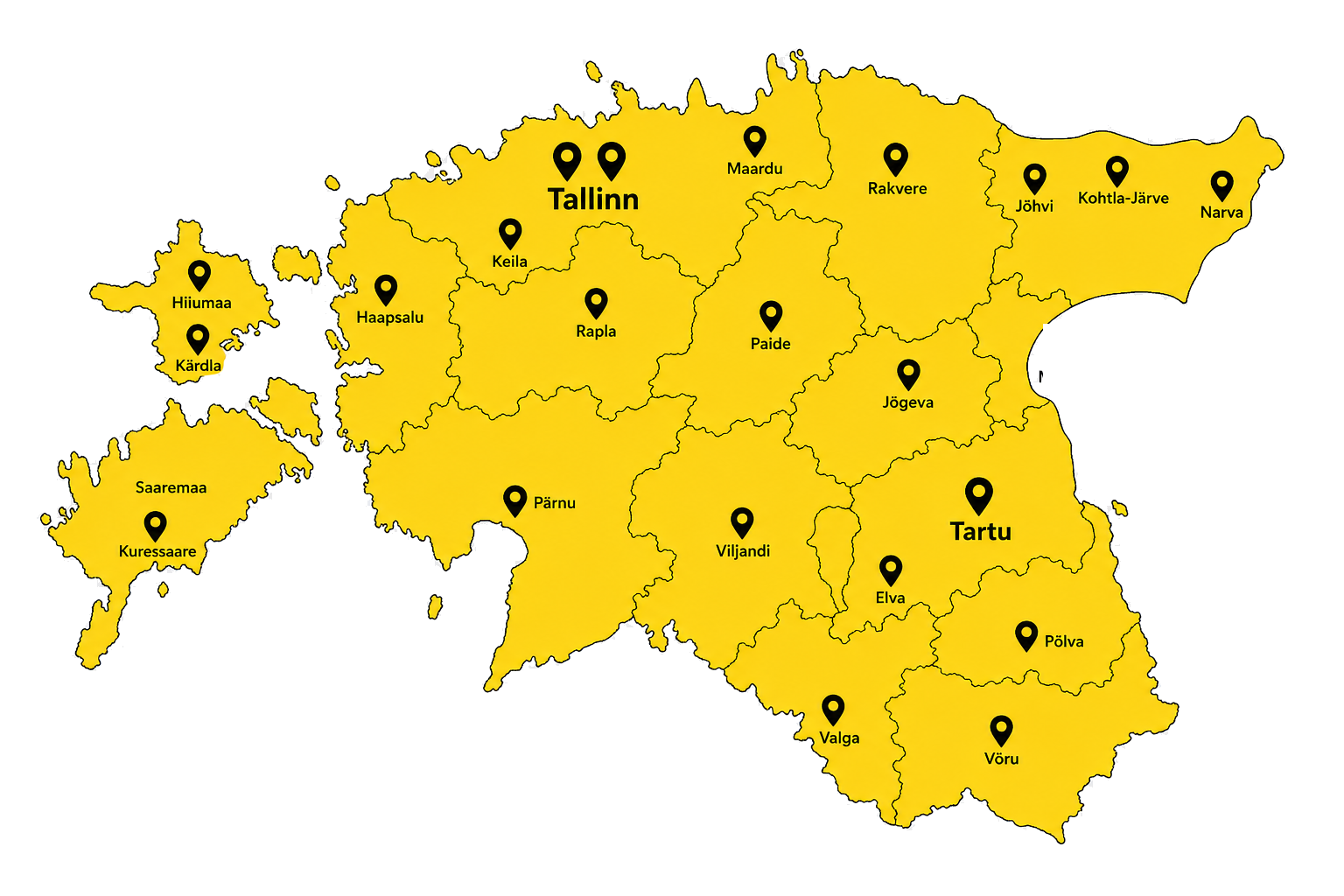
Our primary service area is Tallinn and Harjumaa, Estonia. We operate in all districts of Tallinn – Lasnamäe, Mustamäe, Õismäe, Kesklinn (City Centre), Põhja-Tallinn (North Tallinn), Kristiine, Nõmme, Pirita, and Haabersti – and in Harjumaa municipalities: Viimsi, Rae, Kiili, Saue, Saku, Harku, Jõelähtme, Maardu, Keila, and others.
In older panel buildings in Tallinn, water meter units often feature original fittings where the shut-off valve is seized and a filter is missing. In these buildings, it is most sensible to replace the meter and fittings simultaneously – otherwise, the old joint will break during the first replacement anyway.
In newer apartment buildings and private homes in Harjumaa, the situation is different: units are technically sound but require meter replacement when the calibration period expires, and occasional filter cleaning. We perform these jobs quickly and as planned.
For emergency call-outs – if the water meter unit is leaking or the valve won't close – we typically arrive in Tallinn within 30-60 minutes and in Harjumaa within 1-2 hours. Our emergency service operates 24/7.
Miks valida ToruFix
Ööpäevaringne teenus
Oleme 24/7/365 kõikjal Tallinnas ja Harjumaal.
Kiire reageerimine
Tuleme kohale kiiresti ja lahendame probleemi kohapeal.
Kvaliteet ja garantii
Teeme tööd korrektselt ja anname garantii.
Läbipaistev hind
Selge hinnainfo enne tööde algust, üllatusi ei tule.
A water meter unit is a section of pipework containing a shut-off valve, a sediment filter, a water meter, and a check valve. Water enters the apartment or house through it, and it allows water to be shut off in an emergency.
Replacing a single meter typically takes 30-60 minutes. A full overhaul of two apartment units, including fittings and connections, usually takes a couple of hours. We schedule main water meter unit works for apartment buildings in a separate timeframe.
In an apartment, the riser usually needs to be shut off, which affects some neighbouring apartments. If there's a functioning shut-off valve before the apartment unit, often only that needs to be closed. In a private home, we shut off the main connection or pump.
A meter has a calibration period, at the end of which it must either be recalibrated or replaced. The specific deadline and procedure are determined by your water company or apartment association – it's advisable to check this before ordering work.
The installation of the seal and the official registration of the reading are managed by the water company or apartment association according to their procedures. We perform the plumbing work so that the unit is ready for sealing: leak-tight, readable, and accessible, and we record the readings with a photo.
The most common reasons are a running toilet cistern, a dripping tap, and a faulty check valve, which causes hot and cold water to mix. To check, close all taps and appliances and observe the meter reading – if the reading moves, there's a leak somewhere.
Do not force it – the old body might break, leading to an emergency. Order a planned replacement: we will shut off the riser, replace the valve, and simultaneously check the filter and meter connections.
Often yes, but it depends on the riser's location, available space, and access. We will assess the situation on-site and offer a solution where the unit remains readable and maintainable.
No. A hot water meter is designed for higher temperatures. Using a cold water meter for hot water leads to rapid wear and measurement errors.
No, you don't. We bring suitable meters and fittings, selecting them according to the specific unit's size and consumption. If you have already purchased one, we will check before installation whether the device is compatible with existing connections.
Yes. We replace meters and fittings on an entire riser or building consecutively – this is more cost-effective for the association and more convenient for residents than individual visits. We work under a contract or separate agreement.
Close the shut-off valve if it works, and call us. Our emergency service operates 24/7 – we typically arrive in Tallinn within 30-60 minutes and in Harjumaa within 1-2 hours.
Yes, we provide a warranty for both the work performed and the materials we install, and we issue a proper invoice suitable for submission to an apartment association or insurance company.
Our primary service area is Tallinn and Harjumaa, but we also travel to other parts of Estonia. We work in apartments, private homes, apartment buildings, and commercial properties.
Sõidame välja kogu Eestis. Avariitööd ööpäevaringselt, 7 päeva nädalas.