Water and Sewage Pipework Reconstruction
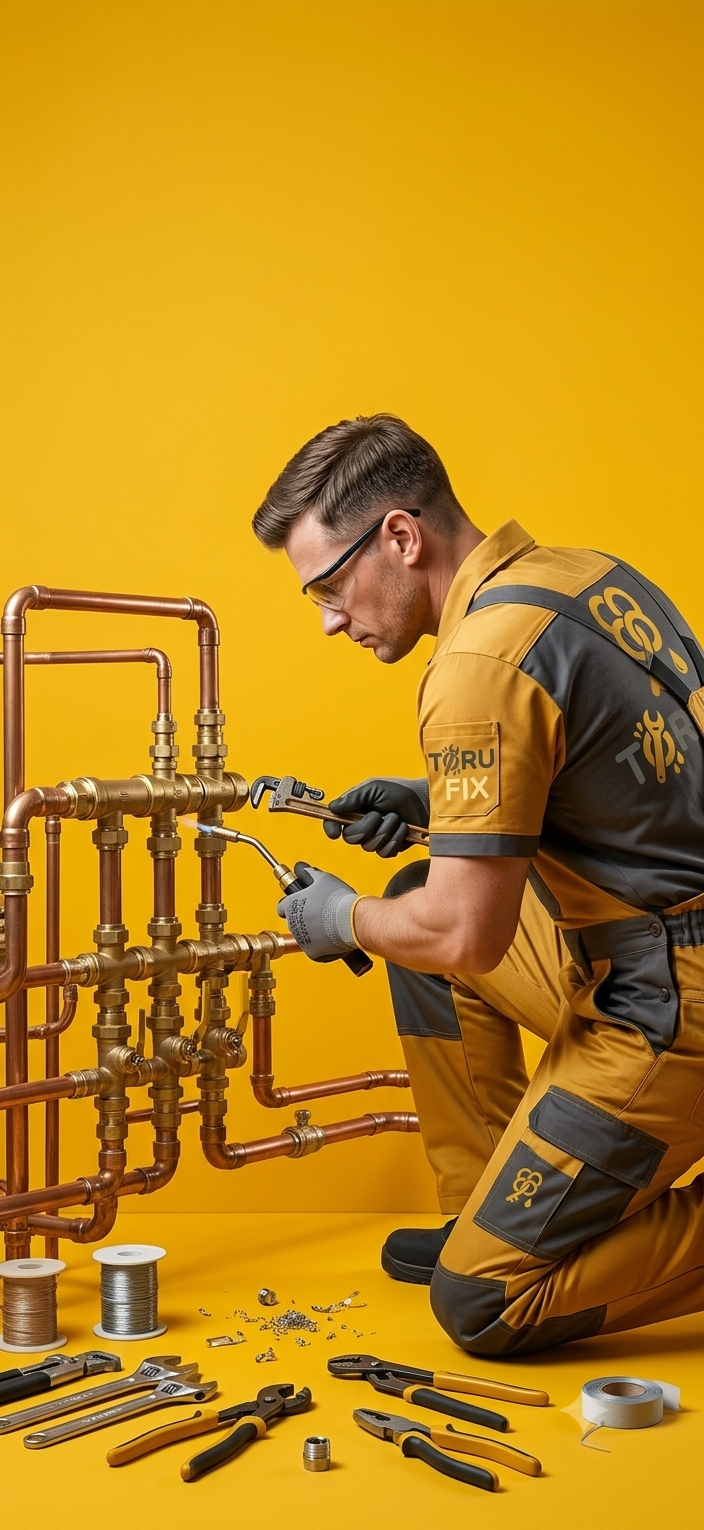
Demolition of old pipework and installation of new pipes to revised appliance locations, including shut-off valves.

We manage the plumbing aspects of bathroom renovation from start to finish: old pipework demolition, new water and sewage pipe installation, floor drains and gradients, in-wall frames, waterproofing preparation, and final sanitaryware installation after tiling.
Demolition of old pipework and installation of new pipes to revised appliance locations, including shut-off valves.
Installation of floor or wall drains at the correct height, with gradients that effectively guide water to the drain.
Load-bearing installation of wall-hung toilet frames, cistern installation, and access panel solutions.
Correct preparation of pipe penetrations, corners, and drain flanges before the application of waterproofing membrane and tiles.
Water and drainage connections, preventing backflow, without temporary hose solutions.
Toilet, basin, taps, shower system, and bath installed after tiling, including pressure and leak checks.
Dispetšer vastab ööpäevaringselt. Peatame kahju leviku, lokaliseerime lekke ja sõidame välja ka öösel ning pühade ajal.
+372 58 024 476Bathroom renovation is arguably the most technical repair job in an apartment. The space is small, yet it simultaneously accommodates pressurised water pipes, gravity-fed drainage, ventilation, electricity, and a waterproofing layer – all of which must function in a room that is exposed to water daily. This is precisely why the success of a bathroom renovation is determined not by tile selection, but by what lies behind the tiles.
The most costly mistake in bathroom renovation isn't the wrong tile, but the wrong order of operations. If pipework, drains, and gradients are only completed after the tile pattern is decided, compromises will be made where they shouldn't. And any error in waterproofing or gradient will only become apparent months later – by which point, rectifying it requires demolition.
On this page, we explain the plumbing stages of a bathroom renovation, what is and isn't permitted to be altered in an apartment building, how drains and gradients are created, the boundary between waterproofing and plumbing works, common mistakes, and how a realistic timeline unfolds. We carry out bathroom plumbing works in apartments, private houses, and terraced houses in Tallinn and Harjumaa.
A bathroom renovation typically involves multiple trades: demolition, tiling, electrical, and plumbing. Our responsibility covers water – everything related to water pipes, drainage, drains, gradients, and sanitary equipment. In practice, this part dictates the entire renovation schedule, as the tiler cannot begin work without completed pipework.
Bathroom plumbing works are always divided into two distinct stages, separated by the tiler's and waterproofing specialist's work. This division is not an organisational preference but the only technically feasible sequence.
Before even the first tile comes off, the locations of the toilet, basin, shower, bath, and washing machine must be determined. Each appliance has specific requirements: a wall-hung toilet needs a deep frame, a shower enclosure requires a specific drain location, and a washing machine needs drainage at the correct height. If these decisions are delayed, pipework is installed 'roughly in the right place', and later, additional bends and adapters are added, reducing flow capacity.
At this stage, the existing riser and outlet height are also reviewed – these determine how freely appliances can be relocated.
Old sanitaryware and pipework are removed. Water is shut off only for the duration of the work, and riser connections are properly sealed, not with temporary caps that remain for months. In an apartment building, considering neighbours is crucial: shutting off the riser affects the entire vertical stack and must be communicated in advance.
This stage determines the lifespan of the bathroom. Domestic water pipework is installed to appliances, drainage branches with the correct gradient, the drain at the correct height, and the in-wall frame. All connections are left exposed until pressure and leak tests are completed.
A pressure test is performed at the end of the rough-in. If the pipework remains under pressure for an extended period and the pressure doesn't drop, the joints are sound. This is the only point where a mistake is still inexpensive – after tiling, the same mistake costs many times more.
The waterproofing membrane is applied to the floor and wet wall surfaces, including corner tapes and pipe collars. The plumber's role here is to ensure that penetrations, drain flanges, and appliance mounting points are correctly prepared for the waterproofing specialist. Only then does the tiler begin.
After tiling, sanitaryware is installed: toilet, basin, taps, shower system, bath or shower enclosure, access panels, and small details. Every connection is checked under operating pressure, and drainage is verified with actual water volume, not just visually.
We show the client where the shut-off valves are located, how to open access panels, and what requires maintenance – silicone joints, drain traps, filters. The bathroom is handed over in working order with a warranty.
Renovating an apartment bathroom is not an entirely free activity. Part of the system belongs to the apartment owner, part is common property of the building – and the boundary between them is where the most troublesome disputes with the apartment association arise.
The most common conflict arises when the riser is completely tiled over during renovation. Aesthetically, the result may be better, but the next riser replacement or blockage clearance will then mean demolishing the new bathroom. A proper access panel or removable tile panel costs little during renovation and saves the entire bathroom later.
If water stands on the bathroom floor after a shower, the tile or drain is not to blame, but the gradient. Water only moves where the floor directs it, and the gradient is created in the levelling compound before tiling – it cannot be corrected later.
In a rarely used bathroom or summer home, the drain's water trap will dry out over time, and sewage odours will begin to enter the room. This is not a fault – it is expected. The solution is simple: periodically pour water into the drain or use a drain with a dry trap mechanism. If the odour persists even with a filled water trap, the cause is elsewhere and should be investigated.
Waterproofing is the bathroom's last line of defence. Its purpose is not to keep water on the tiles, but to ensure that moisture seeping through tile joints does not reach the building structure or the neighbour's ceiling. A tile joint is not waterproof – it has always been a wear-and-tear material.
The boundary between plumbing and insulation is precisely at the penetrations. Every pipe passing through the floor or a wet wall is a point where the waterproofing layer is interrupted and must be properly reinstated with a collar. The same applies to drain flanges and the fixings of in-wall frames. If these points are prepared carelessly, even the most expensive insulation material will not save the situation.
Bathroom pipework is short but heavily utilised. It has the highest concentration of appliances per square metre and the most frequent usage cycles. The choice of material and design affects noise, pressure fluctuations, and future maintainability.
Separate shut-off valves before each appliance are a small cost during renovation and a great value later. This means that in case of a faulty tap or a leaking toilet cistern, there's no need to shut off the main water supply to the apartment or building – a single valve suffices, and the rest of the home continues to function.
Drainage pipes require a gradient even on short branches. Too little gradient allows sediment to accumulate, while too much gradient causes water to run ahead of solids, leaving them behind – both lead to recurring blockages. To reduce noise, consider sound-dampening pipes near the riser, especially if a bedroom is behind the bathroom wall.
Washing machine connections are a disproportionately large cause of apartment flooding statistics. The correct solution is a permanent water connection with a valve, drainage at the correct height, and a secured hose – not a tube half-shoved into a basin siphon. If the machine is unused for a long time, the water valve should be closed.
If the building has hot water circulation, it must be maintained during renovation – otherwise, hot water will arrive with a long delay, and water consumption will increase. Heated towel rail connection depends on whether it's part of the circulation or heating system; confusing these is why the rail might be cold in summer or winter.
Most bathroom problems arise not from use, but from decisions made during renovation. These mistakes are repeated from project to project.
Plumbing works don't span the entire renovation, but they are split into two different periods with waiting time in between. This is what makes scheduling difficult: if rough-in is delayed by a day, the entire renovation shifts by the same amount.
The most common cause of delay is not the work itself, but materials. A wall-hung toilet whose frame arrives a week late halts the entire rough-in. Therefore, we ask that appliance selection and delivery be arranged before demolition begins – then the rest of the process proceeds without downtime.
The price of bathroom plumbing works is based on the scope of work, not the square metres of the room. A small bathroom where all appliances move to new locations is more work-intensive than a large bathroom where appliances remain in place.
We provide a quotation after a bathroom inspection and agreement on the appliance layout. The quote will list rough-in and final installation as separate items, as they occur at different times. Prices and hourly rates can be found on our price list page.
A properly built bathroom is almost maintenance-free, but some things wear out, and ignoring them only becomes apparent when damage has already occurred.
The biggest risk in bathroom renovation is diffused responsibility: the tiler says the pipework was wrong, the plumber says the gradient was the tiler's job. We handle the entire plumbing scope as a single responsible party and guarantee our work.
Oleme 24/7/365 kõikjal Tallinnas ja Harjumaal.
Tuleme kohale kiiresti ja lahendame probleemi kohapeal.
Teeme tööd korrektselt ja anname garantii.
Selge hinnainfo enne tööde algust, üllatusi ei tule.
Aitame vormistada kahjujuhtumeid kindlustusseltsidele.
Helista või kirjuta – kirjelda probleemi paari lausega.
Ütleme tunnihinna ja eeldatava mahu enne kohalesõitu.
Tallinnas tavaliselt 30–60 minutiga, oma tehnika ja varuosadega.
Teeme töö, kontrollime süsteemi ja anname garantii.
Replacement and installation of individual appliances when a full bathroom renovation is not undertaken.
sanitaartehnika paigaldusReplacement of domestic water pipework in an apartment or house during renovation.
veetorude vahetusUpgrading sewage branches and riser connections.
kanalisatsioonitorude vahetusWhen bathroom renovation coincides with the upgrading of the building's risers.
püstikute vahetusWhen a wet patch appears after renovation or a stain on the neighbour's ceiling.
lekkeotsingQuick resolution of drain, basin, or toilet blockages.
ummistuste likvideerimineWe perform the plumbing part of bathroom renovation: pipework reconstruction, drains and gradients, in-wall frames, waterproofing preparation, and final sanitaryware installation. For tiling and finishing, we collaborate with the client's chosen specialists and coordinate the schedule accordingly.
Often yes, but it depends on the riser's location and outlet height. The further an appliance moves from the riser, the more height is needed for the gradient. We will assess the situation on-site and inform you what is technically feasible before renovation begins.
Water is shut off only for the duration of connections, not for the entire renovation. The toilet will be unavailable from demolition until final installation – this period can be shortened if appliances are pre-ordered and stages are planned sequentially.
The cause is almost always the gradient, not the drain. The gradient is created in the levelling compound before tiling and cannot be altered later. Therefore, creating the correct gradient is one of the most important stages of the entire renovation.
A waterproofing membrane is necessary in every wet room, as tile joints are not waterproof. A closed shower enclosure reduces splashes but does not replace insulation – water will reach the floor regardless.
It is not advisable. An access panel or removable panel must remain for the riser; otherwise, the next riser maintenance or blockage will mean demolishing the new bathroom.
Yes, we always recommend this. A valve costs little during renovation but later allows you to shut off water only to a faulty appliance, not the entire apartment.
If the pipework is visibly deteriorated or will be concealed behind tiles, replacement is sensible – later access would mean damaging the new finishes. If the pipework was recently replaced and is in good condition, replacement is not necessary.
The most common reason is a dried out or missing drain water trap. In rarely used rooms, water evaporates. If the water trap is filled and the smell persists, we will check ventilation and connections separately.
Yes. We install both client-purchased and our own supplied appliances. For client-supplied materials, we provide a warranty for the installation work; the appliance's own warranty comes from the vendor.
Yes. Our emergency service operates 24/7/365, including public holidays. Night-time and holiday call-outs are more expensive than weekday visits, but quick intervention is almost always cheaper than the consequences of waiting until morning.
Yes, we provide a warranty for both the work performed and the materials installed by us. We issue a proper invoice suitable for submission to both the apartment association and insurance company.
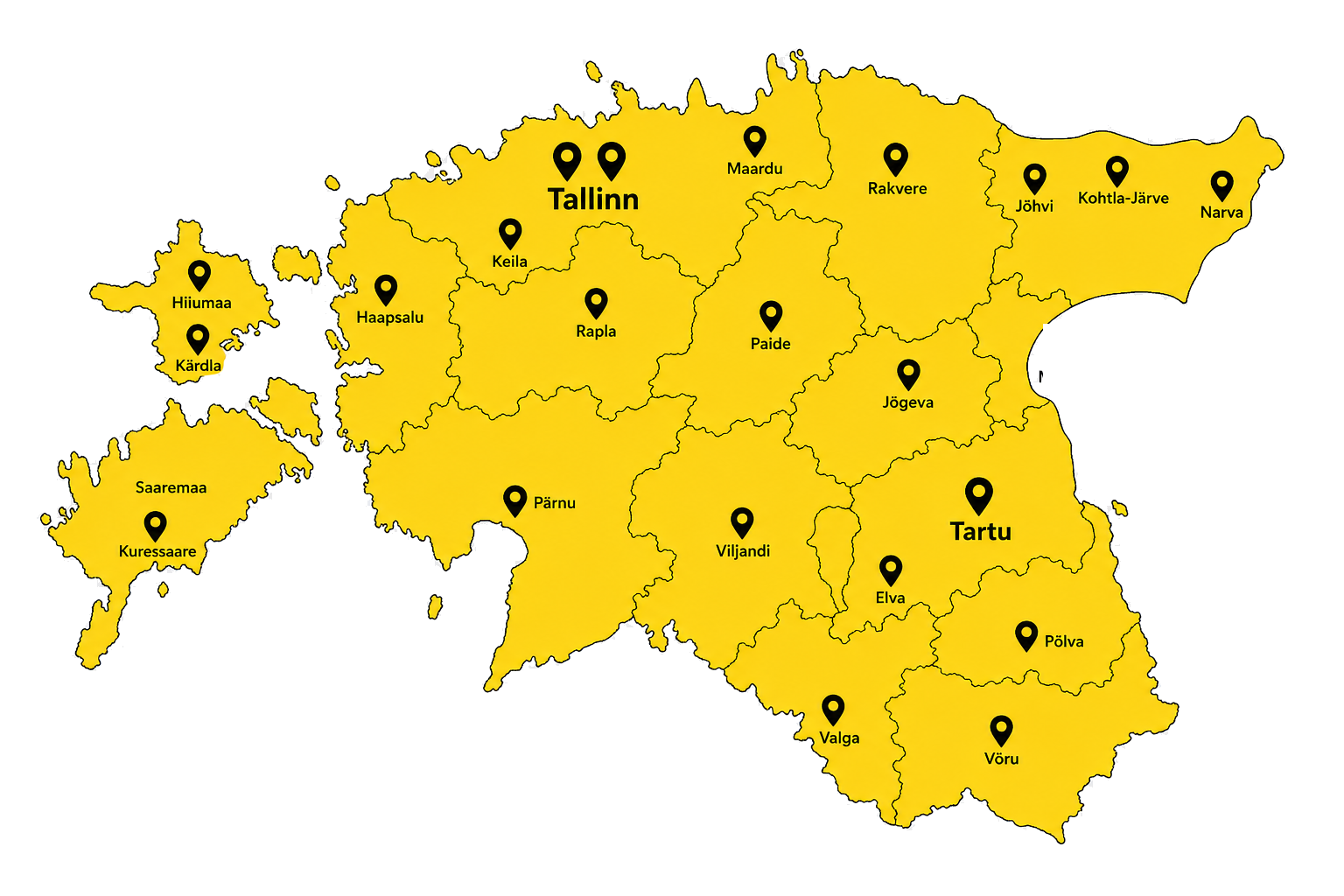
Our primary service area is Tallinn and Harjumaa, but we operate throughout Estonia. In Tallinn, we usually reach emergency call-outs within 30-60 minutes; in Harjumaa, within 1-2 hours.
Sõidame välja kogu Eestis. Avariitööd ööpäevaringselt, 7 päeva nädalas.