Riser Replacement in Apartment Buildings
Dismantling old cast iron risers and installing new sound-dampening drainage risers floor by floor.

We replace worn-out drainage pipes in flats, apartment buildings, private houses and commercial properties – from cast iron risers to external lines. We assess the piping's condition, work to a schedule, and provide a guarantee for the installation.
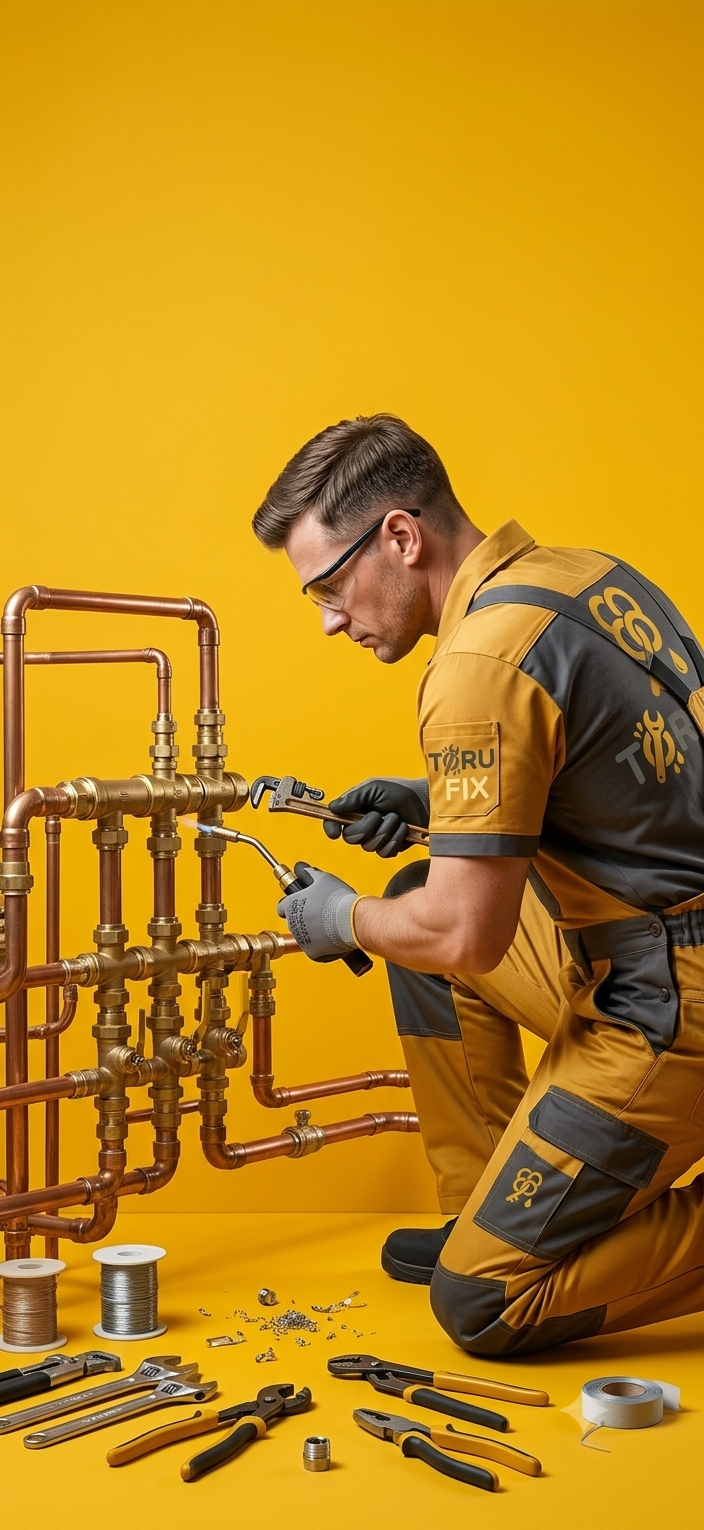
Dismantling old cast iron risers and installing new sound-dampening drainage risers floor by floor.
Replacement of WC, washbasin, bath, shower, and washing machine drain pipes, including slope correction.
Replacement of aged drainage pipes in basements, utility rooms, and bathrooms, along with restoring the ventilation pipe.
Replacement of the drainage line between the house and the connection point, upgrading manholes and inspection covers.
Dispetšer vastab ööpäevaringselt. Peatame kahju leviku, lokaliseerime lekke ja sõidame välja ka öösel ning pühade ajal.
+372 58 024 476Replacing drainage pipes is a task most property owners undertake once in a lifetime – and that's precisely why preparation is often the weakest link. Unlike clearing a blockage or cleaning pipes, replacement doesn't temporarily restore flow; it physically replaces an aged part of the system with a new one. This means the decision must be based on the actual condition of the pipework, not an isolated unpleasant incident.
ToruFix OÜ replaces drainage pipes in Tallinn and Harjumaa in flats, apartment buildings, private houses, and commercial properties. We handle everything from upgrading connection pipes in a single flat to replacing an entire riser across multiple floors, as well as replacing the connection pipe between the house and the street main. Every job begins with an assessment of the existing situation and ends with a system check.
On this page, we explain when pipe replacement is genuinely necessary, what materials are currently in use, how the work proceeds step-by-step, what apartment associations and private house owners need to consider, and how to keep your replaced pipework functional for a long time.
Pipework doesn't fail overnight. Before a pipe rusts through or a crack appears, the system will show signs over several months or even years. The most common signal is repeated blockages: if the same section clogs multiple times a year, even after thorough cleaning, the pipe's inner surface is likely corroded or the flow capacity is permanently reduced.
Another indicator is a persistent odour that doesn't disappear after cleaning the floor drain and siphon. The smell means gas is escaping the system where it shouldn't – usually through a loose connection, a cracked joint, or corroded cast iron. Thirdly, the pipework should be inspected if there are moisture stains, rust streaks in the shaft, or softened plaster beneath the pipe.
A separate case is renovation. If a bathroom or kitchen is being demolished anyway, upgrading the pipework is significantly cheaper than breaking up finished surfaces later. The same logic applies to apartment buildings: if the apartment association plans staircase or bathroom renovations, the condition of the risers should be assessed before, not after, work begins.
These three services are often confused, although their objectives are different. Blockage clearance is a quick intervention aimed at restoring flow immediately. Pipe cleaning is a maintenance task that removes grease and sediment from pipe walls, extending the lifespan of the existing system. Replacement is a capital solution used when the material itself has reached the end of its useful life.
In practice, these services often follow a sequence. First, a blockage is cleared, then the pipework is cleaned, and if necessary, a video inspection is performed. Only then is it decided whether the section needs to be replaced. This sequence is more cost-effective for the client: replacement is not done based on assumptions, but when the internal condition of the pipework has actually been seen.
If it's an unexpected emergency – a pipe has broken, water is flowing into the ceiling or basement – we start by stopping the leak and implementing a temporary solution, then agree on a time for permanent replacement after the situation has stabilised.
In older Tallinn apartment buildings, drainage risers are predominantly made of cast iron. Cast iron is durable and quiet, but its inner surface becomes rough over decades, and joints lose their seal. In most replacement works, cast iron is replaced with modern plastic piping because it is lighter, quicker to install, and has a smooth inner surface.
For apartment building risers, we prefer sound-dampening pipework, as ordinary thin-walled plastic pipes transmit the sound of water movement into the flats. Sound-dampening multi-layer pipes cost more, but the difference in living quality is noticeable, and avoiding repeated complaints is cheaper than undertaking the work a second time.
PP pipes are typically used for connection pipes, while stiffer PVC or PP pipework, which can withstand ground loads, is used for external lines. Material selection is not a matter of taste: diameter, temperature, slope, load, and how the new section connects to the existing system are decisive. An incorrect transition from cast iron to plastic is one of the most common reasons why newly replaced pipework starts to leak.
Drainage does not work under pressure, but by gravity. Therefore, the slope is as important as the pipe material. Too small a slope leaves solid particles stagnant in the pipe; too large a slope allows water to run ahead, leaving sediment behind. During replacement, we correct the slopes to ensure proper flow – this is one reason why blockages disappear after a professional replacement.
The diameter is chosen according to the connected appliances. An oversized pipe is not better: if the flow rate doesn't adequately fill the pipe, the self-cleansing of sediment will be weak.
Every drainage system requires air access. If the riser's ventilation is broken or blocked, the flow will siphon water out of the traps, causing odours in the flat. During replacement, we check the ventilation's function and, if necessary, restore it or install an air admittance valve.
A transparent process reduces surprises. Our work sequence is similar for most sites, whether we are replacing connection pipes in a single flat or an entire riser.
Drainage pipe replacement requires different preparations and different divisions of responsibility for each building type.
In a flat, work is mostly limited to connection pipes: the WC, washbasin, bath or shower, and washing machine drains leading to the riser. Such work usually takes one day and can be done without disturbing neighbours for too long. It is important to clarify beforehand where the flat owner's responsibility ends and the apartment association's responsibility begins – this boundary is usually at the riser.
Riser replacement affects multiple flats simultaneously and requires coordination. The work requires access to every flat connected to the riser, an agreed time window, and prior notification to residents about water shutdowns. For apartment associations, we prepare a work schedule floor by floor to minimise disruption.
It is advisable for apartment associations to combine riser replacement with other planned works – for example, as part of basement pipework renovation or a maintenance contract. This way, preparation costs are distributed more reasonably, and the building achieves a consistent technical condition.
In a private house, the owner is also the owner of the entire system – from internal pipework to the connection point. Here, the issue of the external line often arises: the pipe between the house and the street manhole might have sagged, been infiltrated by roots, or installed with an incorrect slope. Before excavation, we inspect the line to dig precisely where needed, rather than across the entire garden.
Tallinn's building stock varies greatly in construction age, which directly impacts the work. In older buildings in the city centre and Kalamaja, narrow shafts, wooden intermediate floors, and the fact that pipework has been partially upgraded over the years must be considered – a new section might be connected directly to old cast iron without a proper transition. In the panel buildings of Mustamäe, Õismäe, and Lasnamäe, risers are standard and work is repetitive, which simplifies scheduling.
In the private house areas of Harjumaa, the main focus is on the connection between internal pipework and the external line, on-site treatment systems, and the condition of manholes. In areas without a public network, the location and condition of the septic tank or collection tank also influence pipe replacement.
We operate in Tallinn and throughout Harjumaa, and travel further by arrangement. Planned replacement times are usually agreed for the coming days; in emergency situations, we respond 24/7.
A large proportion of the problems we are later called upon to solve do not arise from the pipe itself, but from the installation. The most frequent error is an incorrect slope: the pipe is installed where it spatially fits, not where it hydrodynamically should.
Another common error is connecting cast iron and plastic without a suitable transition coupling and seal. Such a joint will last for some time but will start leaking due to movement and temperature changes. Thirdly, fixings are forgotten: an unsecured riser moves, creates noise, and strains the joints.
The fourth mistake is the absence of an inspection opening. If new pipework is completely enclosed without any access points, future maintenance becomes many times more expensive – every subsequent cleaning starts with demolition.
New pipework does not mean the system is maintenance-free forever. The smooth inner surface of a new pipe reduces sediment build-up, but grease, hair, and items like wet wipes can still cause blockages even in new pipes.
The practical minimum is simple: don't pour grease down the sink, use a strainer in the kitchen, clean the floor drain regularly in the bathroom, and don't flush anything other than toilet paper down the WC. In an apartment building, it is worth agreeing on a common maintenance schedule, as one careless flat can affect the entire riser.
Periodic preventative cleaning will keep the replaced system functioning for significantly longer than reacting only when water no longer flows.
We perform drainage works daily – both emergency and planned replacements – and this experience is crucial for planning jobs. We can anticipate what surprises are likely to emerge when opening pipework in specific building types and account for them in the schedule.
We quote the scope and price before work begins, and if anything on site changes the scope, we coordinate it with the client rather than presenting it as a surprise on the invoice. We issue a proper invoice suitable for submission to both apartment associations and insurance companies, and we provide a guarantee for the work performed and materials installed.
If the need for pipework replacement is not yet clear, we start with diagnostics. Often it turns out that only one section needs replacement, not the entire system – and for the client, that's the most important difference.
Oleme 24/7/365 kõikjal Tallinnas ja Harjumaal.
Tuleme kohale kiiresti ja lahendame probleemi kohapeal.
Teeme tööd korrektselt ja anname garantii.
Selge hinnainfo enne tööde algust, üllatusi ei tule.
Aitame vormistada kahjujuhtumeid kindlustusseltsidele.
Helista või kirjuta – kirjelda probleemi paari lausega.
Ütleme tunnihinna ja eeldatava mahu enne kohalesõitu.
Tallinnas tavaliselt 30–60 minutiga, oma tehnika ja varuosadega.
Teeme töö, kontrollime süsteemi ja anname garantii.
Water supply plumbing works: pipework replacement, risers, and leak repair.
water pipe replacementIf the pipework is still sound but water isn't flowing, start with blockage clearance.
blockage clearanceCamera inspection reveals which section truly needs replacement.
pipework video inspectionCleaning of lines and manholes before deciding on replacement or after work completion.
high-pressure jettingScheduled riser upgrades and maintenance based on the apartment association's plan.
apartment association maintenance contractIf the external line is replaced on a property without a public network, septic tank renewal often accompanies it.
septic tank installationOther plumbing services in flats, apartment buildings, and private houses.
plumbing worksReplacing connection pipes in a single flat usually fits within one working day. Riser replacement in an apartment building is done floor by floor, and its duration depends on the number of floors and access to the flats. For private house external line replacement, excavation time is added.
Not always. If the pipework is accessible via a shaft or inspection hatch, the work can be done without extensive demolition. For bricked-in pipework, partial opening is unavoidable, but we demolish as little as possible and agree on the extent beforehand.
Not necessarily. If one section is in poor condition, that section can be replaced. However, if the same riser is leaking on multiple floors and the material is uniformly worn out, a complete replacement is cheaper in the long run than repeated partial repairs.
Generally, the riser is a common part of the building and falls under the apartment association's responsibility, while internal connection pipes are under the flat owner's responsibility. The exact boundary stems from the apartment association's agreements, so we clarify the division of responsibility before starting work.
For work involving risers, drainage usage must be temporarily suspended. We plan the interruption to be as short as possible and notify residents in advance so they can make arrangements.
If the pipework's condition cannot be visually assessed, or if there's a suspicion of external line sagging and root infiltration, we recommend a video inspection. This accurately shows which section needs replacement and helps avoid unnecessary digging or demolition.
Yes. Dismantled pipework and debris from the work are cleaned up and removed from the site, unless otherwise agreed.
Emergency service operates 24/7. Planned replacement works can also be performed on weekends or evenings by arrangement, which is often the only possible window for commercial properties.
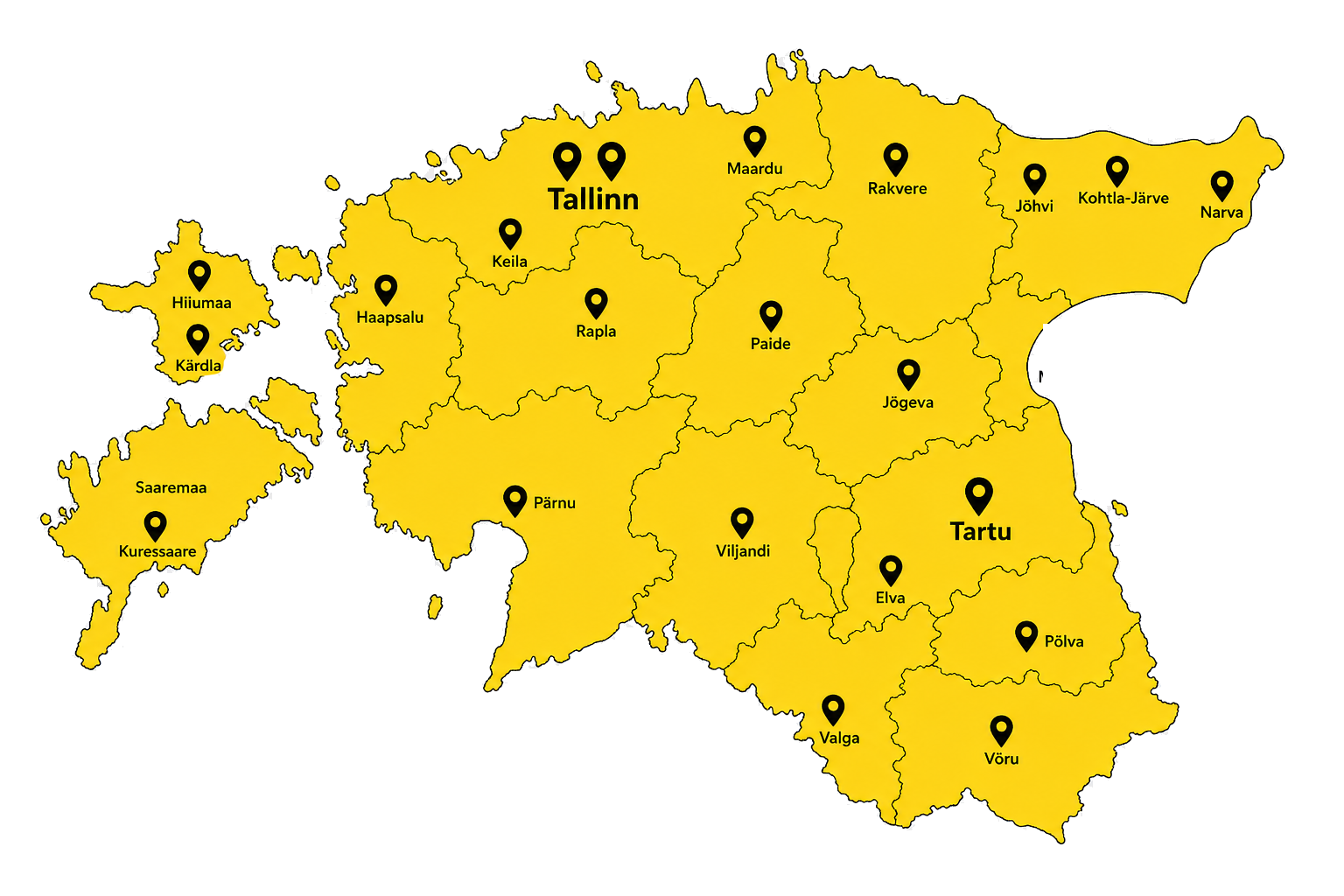
Sõidame välja kogu Eestis. Avariitööd ööpäevaringselt, 7 päeva nädalas.