Stormwater Pipe Installation
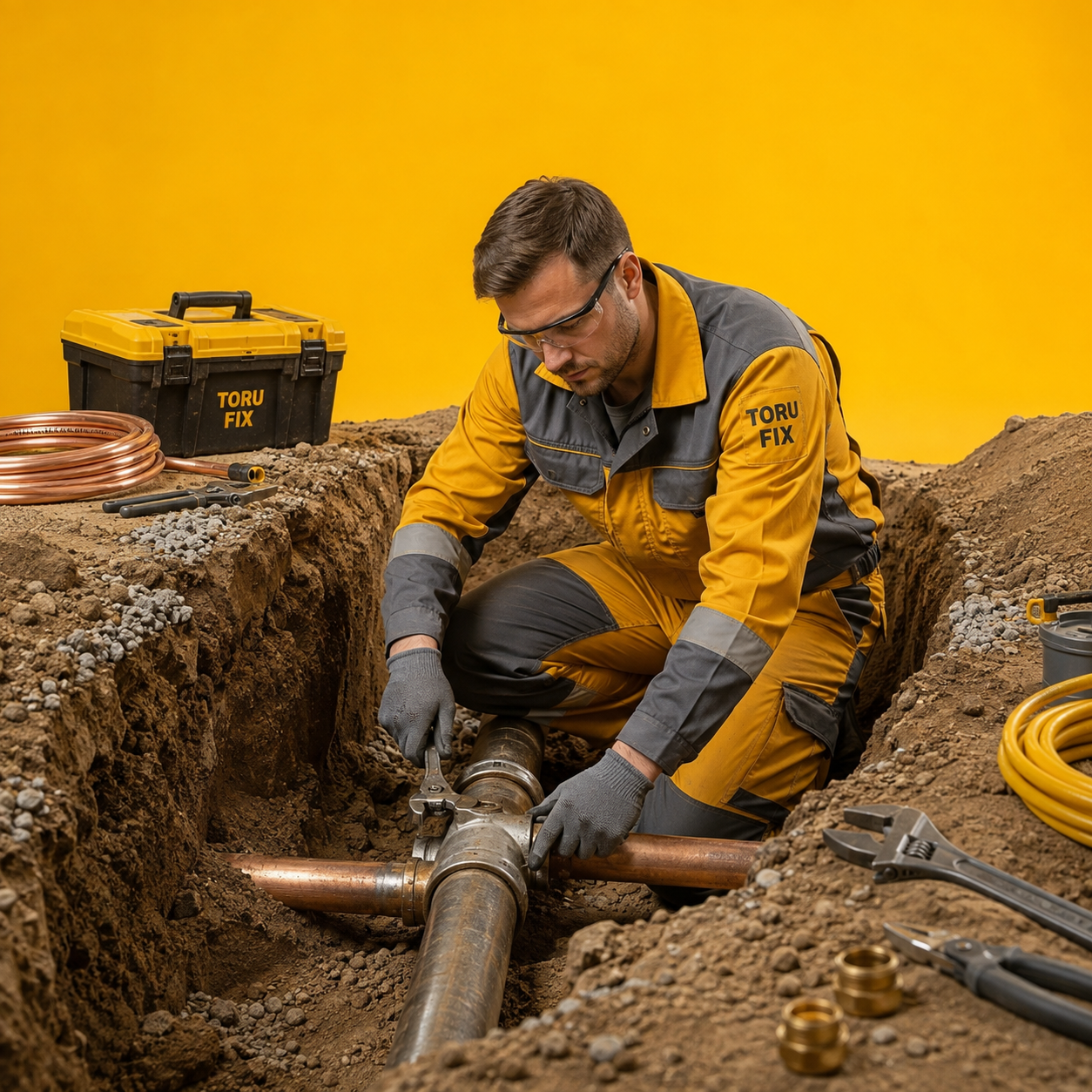
Construction of rainwater drainage pipes from the roof gutter system to the outlet: ensuring correct gradients, connections, and excavation work.

We safely divert rainwater and meltwater away from your house and property: stormwater piping, downpipe connections, gully gratings, sand and silt traps, soakaway fields, and connection to the public network. We also fix faults in existing systems that cause water to collect around foundations or in basements.
Construction of rainwater drainage pipes from the roof gutter system to the outlet: ensuring correct gradients, connections, and excavation work.
Installation of gully gratings, silt and sand traps, and inspection chambers in driveways, yards, and car parks.
Construction of soakaway fields, soakaway tunnels, or soakaway pits if stormwater cannot be discharged into the public network.
Connecting the on-site stormwater piping to the connection point and refurbishing existing connections.
Solutions for downpipes and ground levels to prevent water from collecting around the foundation or plinth.
Cleaning, video inspection, and repair of blocked, subsided, or incorrectly sloped stormwater piping.
Dispetšer vastab ööpäevaringselt. Peatame kahju leviku, lokaliseerime lekke ja sõidame välja ka öösel ning pühade ajal.
+372 58 024 476Stormwater, or rainwater and meltwater, is one of the most underestimated threats to a building. Unlike a pipe leak, it doesn't cause an immediate emergency but works slowly: accumulating moisture around the foundation, freezing in the soil in winter, lifting and damaging asphalt, and eventually reaching the basement or plinth. If a house has a damp plinth, peeling paint, or water in the basement in spring, the cause is almost always incorrectly managed stormwater.
In the Estonian climate, a significant amount of water falls annually, and most of it reaches the ground from the roof via downpipes, often concentrating in just a few square metres directly next to the house wall. It's this concentrated volume, not the rain itself, that causes damage. A properly designed stormwater system effectively diverts this water – into piping, a soakaway system, or the public network.
On this page, we explain what a stormwater system consists of, how to choose a drainage solution, how installation is carried out, what to do if an existing system isn't working, and the most common mistakes made with stormwater management on a property. We carry out these works in Tallinn and Harjumaa for private homes, apartment associations, and commercial properties.
A stormwater system starts at the roof and ends at the discharge point. Everything in between must operate by gravity, meaning that gradients and depths cannot be easily altered later – they must be set correctly from the outset.
The stormwater drainage solution depends on three factors: whether a public stormwater sewerage system exists in the area, the soil's permeability, and the available space on the property. Choosing the wrong solution means the system works perfectly in dry weather but not at all during heavy rainfall.
If a stormwater sewerage system is available in the area and the property has a connection point, this is the simplest and most reliable solution. On-site piping is routed to the connection point, usually via a sand trap to prevent debris from entering the network.
It is crucial that stormwater is not discharged into the foul drainage system. This is not permitted and, during heavy rain, can overload the system to the point where sewage might back up into the house.
If there is no public network, stormwater is directed into a soakaway system: a soakaway field, soakaway tunnels, or a soakaway pit, from where the water infiltrates into the soil. The effectiveness of this solution entirely depends on the soil type – it works well in sandy soil but significantly less effectively in clay soil, requiring a larger capacity.
A soakaway system must be built far enough from the building to prevent the infiltrated water from reaching the foundation. The groundwater level must also be considered – if the water table is high, there is no room for infiltration.
For smaller volumes, it may be sufficient for a downpipe discharge to direct water into a concrete channel or onto sloped ground away from the house. This is the cheapest solution but only works if the ground slopes away from the house along the entire perimeter and water does not collect in low spots.
Some roof water can be collected in a tank for garden irrigation. This reduces the load on the system but does not replace drainage: the tank fills up quickly during heavy rain, and the overflow must also be directed away.
This is the most common misunderstanding. A stormwater system collects surface water – from roofs, roads, and yards. Drainage collects water in the soil around the foundation and lowers the groundwater level beneath the building. These are two separate systems with different purposes and different depths.
The most typical mistake is connecting them such that stormwater is directed into the drainage pipes. During heavy rain, the drainage system fills with water and begins to work in reverse: instead of drawing water away from the foundation, it pushes water into the soil around it. The result is a damp basement in a house where drainage is present.
The correct solution is to keep the systems separate and only connect them at the discharge point if technically and permissibly feasible. If you are unsure how your existing system is connected, it can be checked with a camera.
Stormwater system installation involves excavation, and the result remains underground, making costly repairs if done incorrectly. Therefore, preparation is at least as important as the installation itself.
We inspect the property: where water comes from, where it currently collects, the ground slopes, the location of existing chambers and connection points, and the routes of other utilities. We also ask if there have been any moisture problems in the basement or plinth – this indicates how critical the solution needs to be.
Together with the client, we decide whether the water will be directed to the public network, a soakaway system, or another approved discharge point, and we determine the pipe route, depths, chamber locations, and gradients. We also agree on where inspection chambers will be installed to allow for future system maintenance.
We excavate the trench to the required depth and gradient, considering existing utilities and landscaping. A sand bed is created in the trench to ensure the pipe is evenly supported and does not subside – a subsided section is the most common cause of later blockages.
We install the piping with a consistent gradient, connect the downpipes, gully gratings, and sand traps, and link the system to the discharge. Chamber covers are installed according to their load class – covers in driveways must withstand vehicle weight.
Before closing the trench, we test the system with water to ensure it flows correctly along the entire route and doesn't accumulate anywhere. Only then do we backfill the trench in layers and compact it to prevent future ground subsidence.
We show the client the location of the chambers and how to clean them, and we provide a warranty for the work performed. If necessary, we create a video recording of the piping, which serves as a document of the system's condition.
The stormwater solution depends on the property – both in terms of volume and organisation.
In a private home, the typical starting point is four to six downpipes and a driveway where water runs towards the garage. The solution usually involves piping with a sand trap, gully grating, and discharge into a soakaway system or public network.
Often, work is commissioned when a problem already exists: water in the basement in spring or a consistently damp plinth. In such cases, we start by identifying the cause, rather than immediately excavating.
For apartment buildings, the most common concerns are water accumulating at entrances, basement access points, and in the car park. The solution involves gully gratings in the correct locations and an organised piping system that directs water to the public network.
Maintainability is also important for apartment associations: chambers must be accessible and cleanable, as sand traps always fill up over time.
For larger paved areas, the volume of water is significant, and the system must be dimensioned accordingly. In car parks, the load class of manhole covers and the regular emptying of silt traps are also important.
Very often, the problem isn't that a system doesn't exist, but that an existing one isn't working. Before building a new one, it's always worth checking what's wrong with the current system – often, cleaning and repairing one section is enough.
Winter is the toughest time for a stormwater system. Meltwater comes in large quantities and over a short period, often when the ground is frozen and cannot absorb water. If there is a subsided section or stagnant water in the piping, it will freeze, and the system will stop working precisely when it's needed most.
To prevent freezing, there are two main conditions: sufficient depth and a consistent gradient without water traps. The third is an open discharge point – if the outlet is blocked by ice, even a perfect piping system won't help.
If water is already frozen solid, we can thaw the piping and then use a camera to check whether the cause of freezing was a one-off event or due to a structural defect that recurs every winter.
A stormwater system is one of the few systems in a house that collects dirt directly from the environment – sand, leaves, soil, and road grit. Without maintenance, every system will eventually become blocked.
The largest portion of the cost is for excavation work and its complexity. Excavating a clear lawn area is quick; excavating under asphalt, block paving, or landscaping means additional demolition and restoration. Soil type also affects the volume of work – rocky or clay soil is slower.
Another factor is the length of the run and the number of chambers. Each chamber represents both material and labour costs, but saving on chambers is false economy: a piping system without inspection chambers cannot be properly cleaned later.
The third factor is the discharge solution. Connecting to the public network is usually cheaper than building a soakaway system, as a soakaway field requires a large excavation volume, aggregate, and geotextile.
We provide a quote after a site inspection, once the actual scope and solution are clear. This prevents situations where the quote and final bill differ significantly.
We perform both excavation and plumbing works, meaning the stormwater system is installed from start to finish by a single contractor – avoiding situations where the excavator blames the plumber, and the plumber blames the trench.
Oleme 24/7/365 kõikjal Tallinnas ja Harjumaal.
Tuleme kohale kiiresti ja lahendame probleemi kohapeal.
Teeme tööd korrektselt ja anname garantii.
Selge hinnainfo enne tööde algust, üllatusi ei tule.
Aitame vormistada kahjujuhtumeid kindlustusseltsidele.
Helista või kirjuta – kirjelda probleemi paari lausega.
Ütleme tunnihinna ja eeldatava mahu enne kohalesõitu.
Tallinnas tavaliselt 30–60 minutiga, oma tehnika ja varuosadega.
Teeme töö, kontrollime süsteemi ja anname garantii.
Principles of drainage and sewerage system construction on a property.
drainage system constructionLocal sewage system for private houses: septic tank, soakaway field, and maintenance.
septic tank installationCamera inspection of underground piping and chambers before excavation works.
video inspectionHigh-pressure jetting of stormwater and sewerage pipes, and emptying of chambers.
high-pressure jettingClearing blocked pipes and chambers mechanically and with high-pressure jetting.
blockage clearanceNo. Stormwater must be discharged into a dedicated stormwater system, a soakaway system, or another approved outlet. Discharging into the foul drainage system overloads it, and during heavy rain, sewage may back up into the house.
A stormwater system drains surface water – from roofs, roads, and yards. Drainage collects water in the soil around the foundation. These are separate systems and must not be incorrectly connected to each other.
No. Infiltration requires permeable soil and sufficient distance from the building, and the groundwater level must be considered. In clay soil, a significantly larger infiltration volume is needed, or a different solution must be chosen.
The most common reason is that the downpipe ends directly next to the plinth, and water infiltrates there. The solution is to direct the water into a pipe system or sloped ground away from the house.
The depth depends on the pipe run length, gradient, and risk of freezing, and is determined on site. A consistent gradient without water traps is crucial, as stagnant water freezes in winter.
Yes. We perform a video inspection of the piping, which shows the exact location of blockages, subsidence, or incorrect gradients. Often, cleaning and repairing one section is enough, and a new system isn't needed.
For a typical private residential property, at least once a year; more frequently for high-traffic areas or large paved surfaces. An unemptied sand trap allows sand into the piping, from where its removal is significantly more expensive.
Yes. Our emergency service operates 24/7/365, including public holidays. Night and holiday call-outs are tariffed higher than weekday visits, but rapid intervention is almost always cheaper than the consequences of waiting until morning.
Yes, we provide a warranty for both the work performed and the materials we install. We issue a proper invoice suitable for submission to both apartment associations and insurance companies.
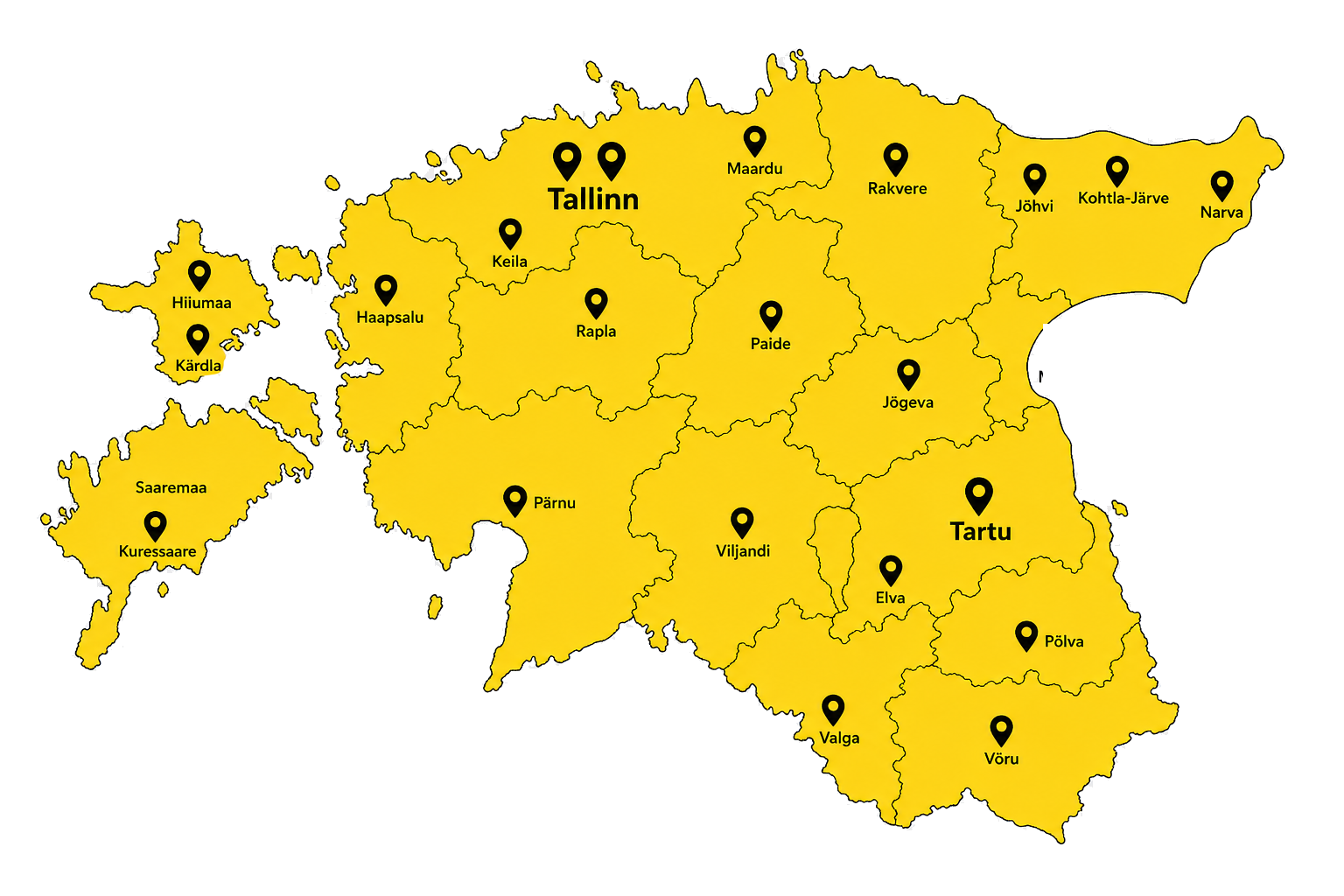
Our primary service area is Tallinn and Harjumaa, but we travel throughout Estonia. In Tallinn, we usually reach emergency call-outs within 30-60 minutes, and in Harjumaa within 1-2 hours.
Sõidame välja kogu Eestis. Avariitööd ööpäevaringselt, 7 päeva nädalas.