Thawing Frozen Pipes
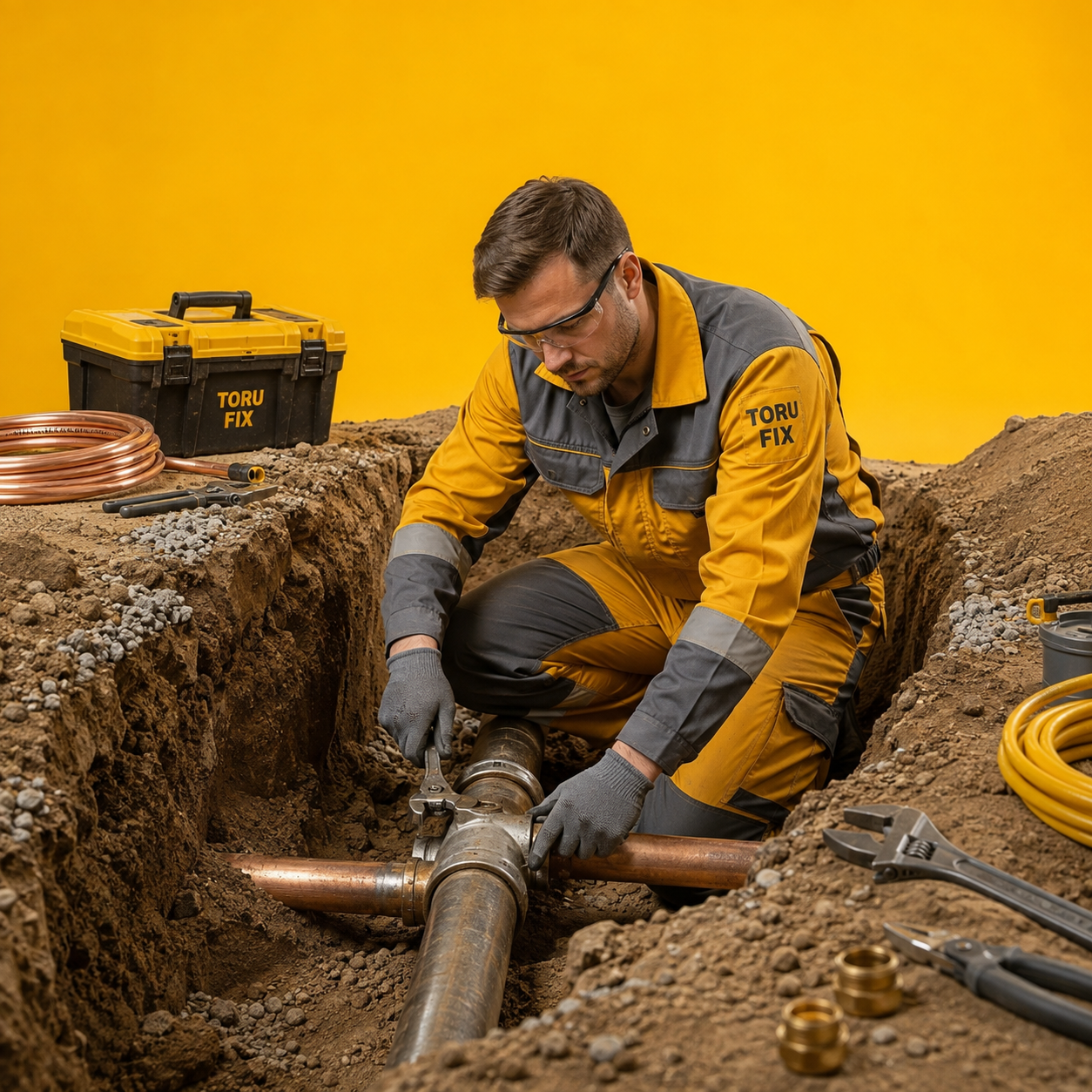
Emergency plumbing assistance for frozen drainage and water pipe systems.

In a plumbing emergency, every minute counts. ToruFix's emergency team is available 24/7: we stop further damage, locate leaks, and restore system operation. Our dispatcher answers calls day and night, including weekends and public holidays.
Emergency plumbing assistance for frozen drainage and water pipe systems.
24/7 leak resolution and emergency repairs for water mains.
Clearing blockages in sewage, pipework, and drainpipes.
Resolving heating main emergencies and urgent repairs for utility systems.
Pinpointing hidden leaks using a thermal camera and acoustic equipment, avoiding unnecessary demolition.
Stopping damage progression, temporary shut-off or bypass, followed by final repair.
Dispetšer vastab ööpäevaringselt. Peatame kahju leviku, lokaliseerime lekke ja sõidame välja ka öösel ning pühade ajal.
+372 58 024 47624-hour emergency plumbing means our dispatcher answers the phone at any time, and our emergency team is ready to respond at night, on weekends, and public holidays. In an emergency, response speed is crucial in determining the extent of the damage. A detached flexible hose or a burst riser can flood a floor below in an hour, and damage that started from one fitting can spread to the floor, wall, and ceiling structures of three flats.
We provide the following urgent services: plumbing assistance for frozen drainage and water pipe systems, emergency water main repairs, clearing sewage and pipework blockages, leak resolution, heating main emergency repairs, urgent utility system repairs, and clearing drainpipe blockages.
A plumbing emergency is not just a technical problem. It often involves an insurance claim, neighbourly liabilities, apartment association common property issues, and often drying works. On this page, we explain what to do within the first five minutes, how our emergency team works on-site, what are the most common types of emergencies in Tallinn apartment buildings and private houses, how to document damage for insurance, and what can be done to prevent the same emergency from recurring.
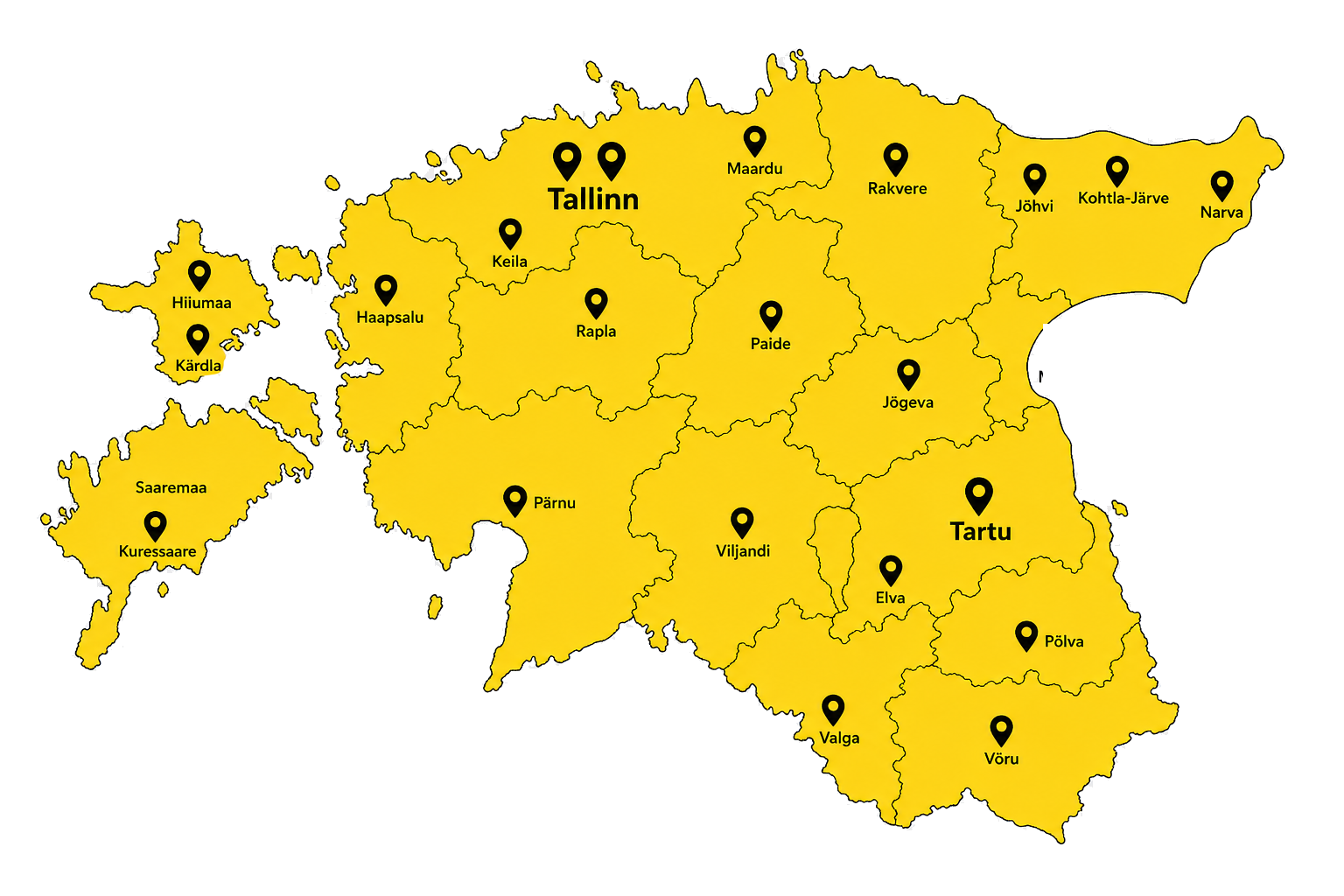
We operate in Tallinn and across Harjumaa, and elsewhere in Estonia if needed. For emergency call-outs in Tallinn, we typically arrive within 30–60 minutes, in Harjumaa within 1–2 hours, depending on the time of day, traffic, and team availability.
The first step is to shut off the water: turn off the main stopcock or the angle valve of the specific appliance. The second step is electricity – switch off the electrical circuit for the wet area from the fuse box. The third step is to inform neighbours if water might reach flats below.
Take photos of the damage before cleaning – these are necessary for filing an insurance claim. Our dispatcher will guide you by phone until the team arrives.
In an apartment building, it is advisable to immediately ascertain where the main stopcock for your flat is and where the riser shut-off valve for the building is located. In most Tallinn panel buildings, flat shut-off valves are in the bathroom or kitchen utility cabinet near the riser, while general apartment building shut-off valves are in the basement or ground floor utility room. If shutting off the flat's supply does not resolve the situation, it usually means the leak is in the riser or the building's main supply pipe, and the entire riser must be shut off – this is done either by a representative of the apartment association or by our team on-site.
If water has reached the ceiling or wall structure, do not attempt to paint over or cover the surface immediately. The wet structure must dry, and the extent of the damage should be assessed before finishing, otherwise, mould will develop later, the removal of which is many times more expensive than the initial repair.
In winter, one of the most common call-outs is a frozen pipe: water isn't coming out of the tap, or the drain isn't flowing. Freezing usually occurs in uninsulated basements, utility shafts, garages, and external supply lines.
We thaw pipes in a controlled manner, using the appropriate method according to the pipe material, and after thawing, we check if the pipe has cracked due to freezing. Often, a leak appears only after thawing – which is why we don't leave the site before pressure and leak checks.
A typical freezing pattern is as follows: severe frost persists for several days below -10 °C, water consumption is low (e.g., a summer house or rarely used flat), and the pipe is in an uninsulated zone. Water stands in the pipe, cools, and freezes at the narrowest or coldest point. The frozen section expands, pressure rises, and if the pipe material is rigid – galvanised steel, cast iron, old copper pipe – a crack forms. Plastic pipes tolerate freezing better, but even they can break at fittings.
Drain freezing primarily occurs in external lines and private houses where the pipe slope is too shallow or the pipe is above the freezing depth. In such cases, thawing alone is not enough – it's necessary to assess whether the line's slope and depth meet actual conditions, otherwise, the situation will recur with every cold snap.
Prevention is cheaper than thawing and considerably cheaper than repairing a burst pipe with water damage. The most important thing is to insulate pipes in cold zones and ensure water flows through the pipework.
The most common mistake is heating a pipe with a gas torch or a heat gun at too high a power. An open flame is a fire hazard, plastic pipes will melt, and rigid pipes can crack at the joints due to a sudden temperature change. Controlled thawing means using the correct method for the pipe material and subsequent pressure checks.
The most costly part is usually not the leak itself, but searching for it in the wrong place. We use acoustic equipment and a thermal camera to locate leaks, avoiding unnecessary demolition. Only after precise localisation do we open the structure and carry out repairs.
A hidden leak usually indicates itself indirectly: the water bill increases without a change in consumption, a floor tile is warmer in one spot, a damp patch appears on the wall, or there's a persistent mouldy smell in the room. A heating system leak manifests as a continuous pressure drop – water constantly needs to be added to the system.
In an emergency, the primary task is to stop the damage, not to carry out an immediate final repair. We often perform a two-stage job: at night, we shut off and isolate the leaking section, restore water supply to the rest of the house, and carry out the final repair the next day when materials and access are available. This prevents the entire stairwell from being without water overnight.
If the exact location of the leak remains unclear after the initial inspection, we use more thorough diagnostics – you can read about leak detection methods on a separate page.
Emergency call-outs follow surprisingly similar patterns. Most are related to material ageing, poorly executed previous installations, or neglected components. The following overview helps understand what is most likely to happen in your building and what should be preventively checked.
Washing machine, dishwasher, and tap flexible hoses are at the top of emergency statistics. The hose ages, the rubber inside loses elasticity, and the metal braiding rusts. If the hose bursts under pressure, hundreds of litres of water can flood the flat in an hour. Manufacturers recommend regularly replacing flexible hoses even if they look intact – this is one of the cheapest preventive measures overall.
In old panel and stone buildings, sewage risers are often cast iron and water risers are galvanised steel. Cast iron deteriorates at the joints, galvanised pipes corrode from the inside until the wall thickness can no longer withstand pressure. A riser emergency affects several flats at once and usually falls under common property, meaning the apartment association orders the work. If risers are on the verge of emergencies, it's wise to plan their phased replacement.
A blockage becomes an emergency when wastewater backs up from ground-floor or basement floor drains. The causes are usually grease and limescale deposits in the main, wet wipes flushed down the toilet, or external line subsidence and root ingress. In an emergency, we mechanically clear the blockage, then recommend cleaning the line with high-pressure jetting and, if necessary, checking with a video inspection to determine if the cause is deposits or a structural defect.
During the heating season, the most vulnerable points are radiator connections, old threaded joints, air vents, and heating unit valves. Heating system water is hot and under pressure, so leaks spread quickly. In winter, time pressure is added: the building cannot be left without heating for long. Therefore, we often implement a temporary solution – isolate the leaking branch and restore the rest of the system's operation – and agree on the final repair as soon as possible.
A water heater leak is usually caused by a rusted-through tank, a faulty safety valve, or worn fittings. In water meter units, old valves and threaded connections fail – especially if a valve hasn't been moved for years and is tried for the first time during an emergency. This is precisely why shut-off valves should be checked periodically to ensure they actually work in an emergency.
The value of an emergency service lies in its well-thought-out process, with every stage clear to the client. Work doesn't start on-site, but with the initial phone call: the more accurately the situation is described, the more appropriately equipped the team will arrive.
A blockage and a leak require completely different equipment. If the dispatcher knows in advance whether it's a cast iron riser, plastic pipework, underfloor heating circuit, or external line, the team can bring the correct fittings and equipment, and the work can be completed in one visit. Useful information includes: building type and age, floor number, where the water is coming from, whether the main stopcock is closed, and whether the problem also affects neighbours.
During a night-time emergency, a final repair is not always possible – for example, if a custom-made part is needed or if the structure needs to dry first. In such cases, the correct solution is to stop the damage, safely get the system running, and agree on the final work. It is important that the temporary solution is technically correct and that the client knows exactly what has been done and what still needs to be done.
Emergency assistance is needed by all building types, but situations and responsibilities vary significantly.
In flats, the most common emergencies are flexible hose bursts, toilet cistern leaks, tap or connection leaks, and floor drain backflow. The critical question is whether the leak is within private flat ownership or common property – this determines who orders and pays for the work. Clarity is usually provided by the location of the shut-off valve: everything from the riser towards the flat is generally the responsibility of the flat owner.
Private houses include external lines, their own pump station or septic tank, more frequent underfloor heating, and longer pipework. Emergencies are often discovered later because utility rooms are not in daily use. Private homeowners should know the locations of the main stopcock, water meter unit, and heating system shut-off valves, and keep them accessible.
For an apartment association, an emergency is also a legal and financial event: a correct report, photos, and description are needed, as these determine insurance compensation and cost allocation. Apartment associations with a maintenance contract with us have an emergency service with a fixed response time, and the team is already familiar with the building's systems.
In shops, offices, catering establishments, or production facilities, a water emergency means not only repairs but also downtime and lost revenue. Here, it is common for work to be done outside opening hours, and the top priority is to restart operations as quickly as possible – even with a temporary solution.
Insurance companies assess incidents based on documentation. The more thorough the evidence, the smoother the process. The most common mistake is quickly cleaning up and repairing damage before photographing it – then it's difficult to prove the actual extent of the damage later.
We document the work performed: describing the cause of the leak or blockage, what work was done, what materials were used, and adding photos if necessary. We issue a proper invoice suitable for submission to both the apartment association and the insurance company.
We do not provide insurance legal assessments or decide on compensation – that is done by the insurance company. Our role is to provide a technically accurate description of what happened, which serves as the basis for the proceedings.
A large proportion of emergencies are foreseeable. Pipework usually doesn't burst unexpectedly – there are often prior signs that are simply not noticed or considered important. Regular inspections cost a fraction of resolving the aftermath of an emergency.
In an apartment building, the most sensible prevention is a planned assessment of the condition of risers and basement mains, and their phased replacement before recurrent emergencies begin. In a private house, the condition of external lines, the reliability of the pump station, and monitoring of heating system pressure are equally important.
The price of emergency work is determined by the time of day, the scope of work, and the equipment and materials used. Night, weekend, and public holiday call-outs have a higher tariff than weekday visits. However, prompt intervention is almost always cheaper than waiting until morning, as water damage increases hourly and eventually reaches structures and neighbouring flats.
We will state the estimated scope and price of the work before starting. If during the work it becomes apparent that more extensive intervention is needed – for example, opening up structures or additional diagnostics – we will agree this separately with the client. Valid prices are listed in the price list; we do not change them based on this page.
In an emergency service, it's not just about how quickly someone arrives, but also whether the true cause of the problem is identified. If an emergency is only resolved at the symptom level, it will recur in a few months – usually at a worse time.
ToruFix performs emergency work with diagnostics: we use leak detection equipment and pipe video inspections to avoid unnecessary demolition and repeat call-outs. We provide a guarantee for both the work performed and the materials installed, and we prepare documentation suitable for both apartment associations and insurance companies.
Oleme 24/7/365 kõikjal Tallinnas ja Harjumaal.
Tuleme kohale kiiresti ja lahendame probleemi kohapeal.
Teeme tööd korrektselt ja anname garantii.
Selge hinnainfo enne tööde algust, üllatusi ei tule.
Aitame vormistada kahjujuhtumeid kindlustusseltsidele.
Helista või kirjuta – kirjelda probleemi paari lausega.
Ütleme tunnihinna ja eeldatava mahu enne kohalesõitu.
Tallinnas tavaliselt 30–60 minutiga, oma tehnika ja varuosadega.
Teeme töö, kontrollime süsteemi ja anname garantii.
Water supply plumbing works: pipework replacement, risers, valves, and leak repair.
veetorude vahetusLocalising hidden leaks with thermal cameras and acoustic equipment, avoiding unnecessary demolition.
lekkeotsingClearing sewage and drainpipe blockages mechanically and with high-pressure jetting.
ummistuste likvideerimineReplacing water and sewage risers in apartment buildings before recurrent emergencies begin.
püstikute vahetusApartment association utility maintenance with fixed response times for 24h emergency service.
hooldusleping korteriühistuleCamera inspection shows if the cause of a blockage is deposits or a structural defect in the pipework.
torustiku videouuringYes. Our dispatcher answers calls 24/7, and our emergency team responds day and night, on weekends, and public holidays.
In Tallinn, usually within 30–60 minutes; in Harjumaa, 1–2 hours, depending on traffic and team availability.
Yes. We document the work with photos and a description, and prepare a report detailing the cause of the damage and the work performed – this is essential material for submission to the insurance company. Compensation is decided by the insurance company.
Shut off the water at the main stopcock or appliance angle valve, switch off the electrical circuit for the wet area, inform neighbours, and photograph the damage before cleaning. Then call our dispatcher and describe the situation.
Yes. We thaw pipes in a controlled manner according to the pipe material, and after thawing, we pressure-test to check if the pipe has cracked due to freezing.
Generally, it depends on whether the leak is in common property (riser, main) or private flat ownership (pipework and appliances from the riser into the flat). The precise boundary is defined by the building's documentation and the apartment association's rules.
Whenever possible, yes. If a necessary part or access is unavailable, or if the structure needs to dry, we implement a safe temporary solution and agree on the final work as soon as possible.
Night, weekend, and public holiday call-outs have a higher tariff than weekday visits. Exact prices are listed in the price list, and we will communicate the cost before starting work.
Yes. We will clear the blockage and, if necessary, inspect the line with a camera to determine if the cause is deposits, subsidence, or root ingress.
Sõidame välja kogu Eestis. Avariitööd ööpäevaringselt, 7 päeva nädalas.