Flat Water Pipe Replacement
Replacement of cold and hot water piping in bathrooms, kitchens, and WCs, including new shut-off valves and connections.

We replace and repair cold and hot water piping in flats, apartment buildings, private homes, and commercial premises. We locate leaks, replace worn-out pipes, upgrade shut-off valves and connections, and provide a warranty for our work. Available in Tallinn and Harjumaa, and throughout Estonia if required.
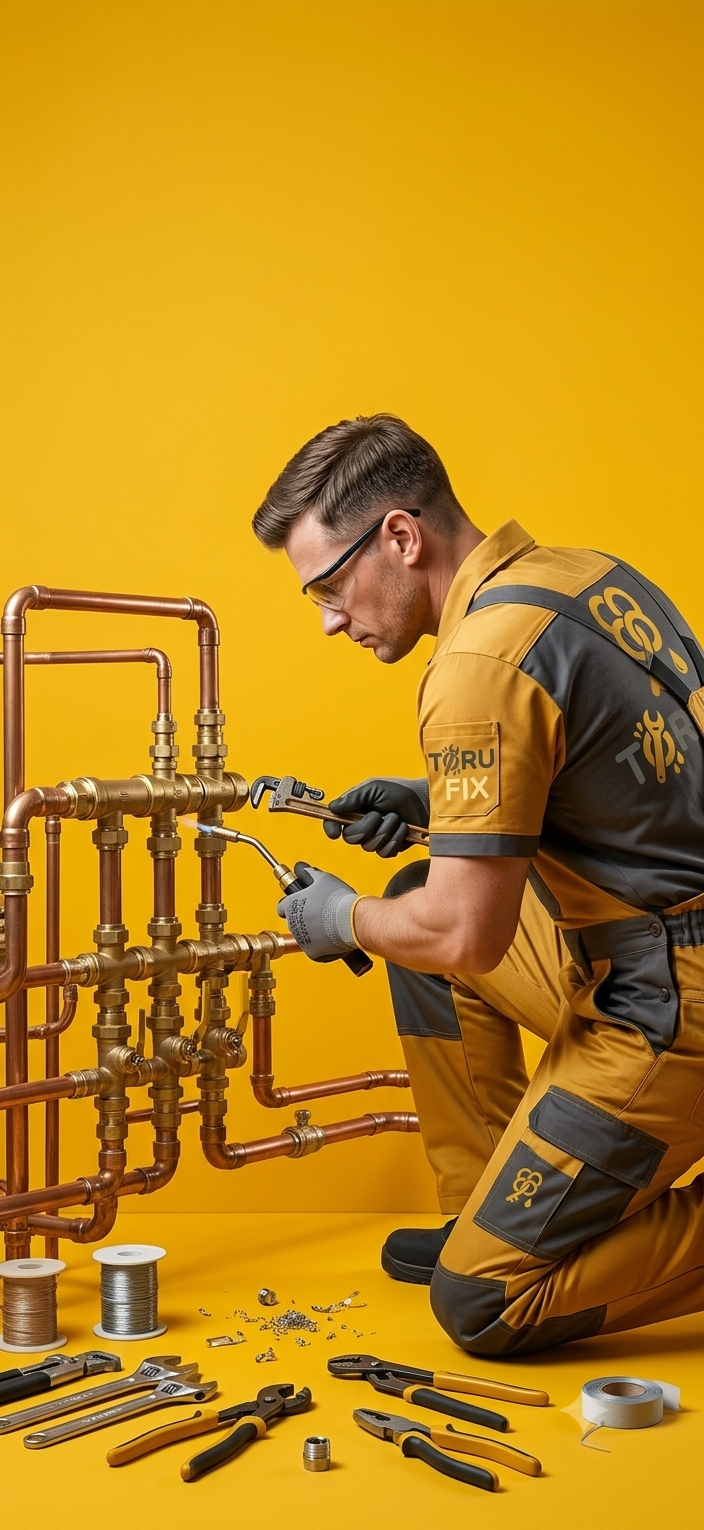
Replacement of cold and hot water piping in bathrooms, kitchens, and WCs, including new shut-off valves and connections.
Upgrade of cold and hot water risers and circulation pipes in apartment buildings, floor by floor, according to the apartment association's schedule.
Swift localisation and repair of a leaking pipe, fitting, valve, or joint without unnecessary demolition.
Installation and replacement of incoming water pipes, post-water meter unit piping, distribution manifolds, and outdoor taps.
Dispetšer vastab ööpäevaringselt. Peatame kahju leviku, lokaliseerime lekke ja sõidame välja ka öösel ning pühade ajal.
+372 58 024 476The water supply system is a part of a building whose existence is only noticed when something has already broken. Unlike drainage, the water piping operates under constant pressure, meaning that a small defect doesn't manifest as a slow blockage but as a leak – and a leak spreads rapidly throughout the building. This is precisely why water pipe replacement is a job worth planning before an emergency, not after.
ToruFix OÜ performs water supply plumbing works in Tallinn and Harjumaa in flats, apartment buildings, private homes, and commercial properties. We replace internal cold and hot water piping in flats, upgrade apartment building water risers, repair leaks, replace worn-out shut-off valves, and build new distribution systems in private homes. Every job begins with an inspection of the existing piping and concludes with pressure testing and proper handover.
On this page, we explain when water pipe replacement is truly necessary, how modern materials differ, how the work proceeds step-by-step, what homeowners, apartment associations, private home owners, and commercial property managers need to consider, and how to keep a new piping system operational for decades. The text is written from practice, not a catalogue – these are situations our experts encounter every week on sites in Tallinn and Harjumaa.
Water piping doesn't suddenly fail. Before a pipe bursts or a fitting comes loose, the system usually gives signs for months or even years. The clearest signal is a recurring leak: if the same pipe or joint needs inspecting multiple times within a short period, it's not a coincidence but material fatigue. A spot repair is merely a temporary solution.
Another indicator is a change in water quality. If brown or rusty water comes out first when opening the tap in the morning, the internal surface of a galvanised steel pipe has corroded. The same process gradually reduces the diameter and thus the pressure – a typical complaint is that the water in the shower turns hot or cold as soon as someone else opens a tap.
Thirdly, the piping should be inspected if the shut-off valves are not working. If the main stopcock in a flat cannot be fully closed, or if the valve starts dripping after being moved, the damage in an emergency will always be greater because the water cannot be quickly shut off. Old ball valves and gate valves should be replaced even before updating the pipework.
The fourth and most sensible timing is during renovation. If a bathroom or kitchen is being demolished anyway, replacing the water pipes is considerably cheaper than later opening up finished surfaces. The same logic applies to apartment buildings: if the apartment association plans to renovate bathrooms or stairwells, the condition of the risers should be assessed before work begins.
The choice of material is not a matter of taste. It depends on whether the pipe will be visible or hidden in a wall, the length of the section, the water temperature and pressure, and whether it's internal flat piping, a riser, or a private home distribution system. Below is a summary of the solutions actually used on Estonian sites.
Cross-linked polyethylene pipe is currently the most common solution for internal piping in flats and private homes. The pipe is flexible, withstands temperature fluctuations well, and does not corrode. Press-fit connections are made with a special pressing tool, and a correctly pressed joint is maintenance-free – it can also be installed inside walls or floors.
The biggest advantage of PEX is the number of connections: the pipe is generally run continuously from the manifold to the consumer, meaning no potential leak points are left inside the wall. This is why we always prefer a manifold system when the pipework is to be hidden beneath finishes.
Metal-plastic pipe is a combination of PEX and an aluminium layer. It holds its bent shape, making it convenient to install in visible areas and narrow shafts. Suitable for both cold and hot water and connected with press-fit connectors.
For visible pipework, metal-plastic often provides the cleanest result because the pipe doesn't sag, and the fixings remain uniform.
Stainless steel press systems are often used in apartment building risers, boiler rooms, and commercial properties. Their advantage lies in mechanical strength, long lifespan, and fire safety – no soldering is required for connections, meaning flame-free installation in occupied buildings.
Stainless steel is a more expensive material, but in shared piping systems that cannot be opened every few years, it's an investment that pays off.
Copper pipe remains a high-quality solution, especially for visible pipework and plant rooms, but requires skilled soldering and is more expensive. Galvanised steel pipe is a common original material in old buildings, which we no longer use for new pipe installations: its internal surface corrodes, the diameter decreases, and threaded joints tend to leak over time.
If part of the pipework in an old building is still galvanised steel, it is not wise to connect new PEX to old steel for the long term – the transition point usually becomes the next problem. In such cases, we recommend renewing the entire section.
Most water supply failures boil down to five or six recurring reasons. If the cause is correctly identified, repair is quick and inexpensive. If only the symptom is treated, the same plumber will be back in a few months.
The most common leak doesn't occur in the middle of a pipe, but at a joint: at a thread, coupling, flexible connection hose, or valve. The cause is usually incorrect installation, a worn seal, or vibration. Flexible connection hoses are a particular risk area – their actual lifespan is about five to eight years, but they are rarely replaced.
If the water meter reading moves even when no water is being consumed, or if there's a persistent damp patch on the wall without visible water, it's a hidden leak. In such a case, the leak must be localised before demolition – we offer a leak detection service that usually saves more than it costs.
Pressure drop can be due to a blocked aerator, a calcified steel pipe, a partially closed valve, or a problem with the building's main connection. Diagnosis always starts with the simplest point: if pressure is weak in only one tap, the pipework is not to blame.
A banging sound when closing a tap indicates water hammer, which shortens the lifespan of fittings. The cause is usually a poorly secured pipe or a missing shock absorber. The problem can be solved by tidying up fixings and installing an absorber, not by replacing the pipework.
If waiting for hot water takes minutes, circulation is either absent or not working. In an apartment building, the cause is usually in the circulation pipework or incorrectly adjusted valves; in a private home, it's a missing circulation loop.
In a flat, water pipe replacement usually means three things: new cold and hot water distribution starting from the riser or water meter unit, new shut-off valves, and new connections to appliances – sink, WC, bath or shower, washing machine, and dishwasher.
Work begins with an inspection: we check where the flat's shut-off valve is located, the condition of the riser, and whether the pipework is to be left visible or hidden. This determines both the material and the scope. Visible pipework is cheaper and easier to maintain later, hidden pipework is visually cleaner but requires a manifold system and continuous pipes.
In most Tallinn flats, replacing the pipework for one bathroom and kitchen takes one to two working days, provided demolition and finishing are not our responsibility. Water is shut off for only part of this time – we plan the interruption to be as short as possible and notify in advance, as closing a riser usually affects neighbours too.
In old buildings, the transition from the riser is a separate issue. If the riser is galvanised steel and remains unchanged for now, we make the transition with proper fittings and leave the valve in an accessible location. This is a small detail that saves a lot of work during the next renovation.
The riser is a common part of the building, and its replacement affects several flats simultaneously. Therefore, the most crucial part of an apartment association project is not the plumber's skill, but the preparation: access to flats, schedule, notification, and agreement on where the association's responsibility ends and the flat owner's begins.
In practice, work proceeds by replacing the riser one vertical section at a time, floor by floor. In each flat, the shaft or box structure needs to be opened, the old pipe dismantled, and a new one installed with the flat's shut-off valve. If a flat cannot be accessed, the riser on that floor remains unchanged, and the work must be rescheduled later – this is the most common reason why apartment association projects are delayed.
We recommend that apartment associations replace the cold water, hot water, and circulation pipes simultaneously. Replacing one pipe at a time means the shaft is opened and closed multiple times, which is ultimately more expensive and inconvenient for residents.
We provide a written quote to the apartment association, which can be presented at the general meeting, and agree on a work schedule that accommodates residents' daily routines. For regular collaboration, a maintenance contract is also suitable, under which we periodically inspect the building's technical systems.
In a private home, the water supply begins at the connection point or borewell and flows through the water meter unit, filter, and, if necessary, a hydrophore into the house's distribution system. Every part of this chain affects the others: if the filter is clogged, the problem appears to be in the pipework, even though the pipework is fine.
For a new or renovated house, we build the pipework as a manifold system – there is a distribution manifold in the plant room, from which each consumer receives its own continuous pipe. This solution allows one tap's water to be shut off without leaving the entire house without water and minimises the risk of leaks, as no connections are left inside the wall.
In older private homes, the most common work is the replacement of galvanised steel piping and the reconstruction of frost-prone sections. Freezing is a real risk in the Estonian climate wherever a pipe passes through an unheated space, garage, porch, or crawl space. Such sections must either be relocated, insulated, or fitted with a heating cable.
For an outdoor tap, a simple rule applies: it must have a separate shut-off valve located indoors and a draining facility, otherwise, the first severe frost will be its last, as well as the pipe's.
In commercial premises, water supply work has two additional conditions not present at home: work must not disrupt service, and water interruption must fit precisely within an agreed-upon window. Therefore, for retail and catering premises, we often plan work for evenings or nights and prepare all components before shutting off the water.
In kitchen and production areas, the load on the piping is significantly higher than at home. We use stronger materials there, install a separate shut-off valve for each piece of equipment, and, if possible, leave the pipework accessible for maintenance – this way, one faulty tap doesn't halt the entire kitchen operation.
In an office building, the most common work is updating sanitary unit pipework during renovation and replacing old connection hoses. We issue a proper invoice and work overview suitable for submission to property management companies and insurance providers.
In a water emergency, time is critical. Before a plumber arrives, everyone can take three actions that will reduce damage manifold.
First, turn off the water. In a flat, the main stopcock is usually in the bathroom or WC shaft; in a private home, it's near the water meter unit. If the valve cannot be closed, the building's main stopcock must be shut off – in an apartment building, this is in the cellar, and its location should be known before an emergency occurs.
Second, switch off the electricity in the area where water is flooding if the water has reached near sockets, lights, or the electrical panel. Third, notify downstairs neighbours and take photos of the damage – these will be needed for insurance later.
Our dispatcher answers 24/7, and in Tallinn, we usually respond to emergency calls within 30–60 minutes; in Harjumaa, within 1–2 hours. The emergency crew will stop the leak, perform a temporary or permanent repair, and agree on which part of the pipework requires planned replacement.
A clear process is why plumbing work doesn't turn into endless construction. Our work is divided into six stages, and for the client, each stage has a clear outcome.
We inspect the pipework, identify materials, measure pressure, and assess which part needs replacement and which can remain. For hidden leaks, we use leak detection to avoid unnecessary demolition.
We propose a solution, including material selection, and provide an estimate of the scope and time required. For larger jobs and apartment association projects, we provide a written quote.
We cover surfaces, prepare components, and agree on when and for how long the water will be shut off. In apartment buildings, we notify of the interruption in advance.
We remove old pipework, install new pipes, fittings, fixings, and shut-off valves, and connect appliances. For hidden pipework, connections are made so that no joints are left inside the wall.
We fill the system, pressure test it, bleed air, and ensure no joints are leaking and pressure holds. Only then are structures closed up.
We clean the worksite, remove old pipework, explain system operation and valve locations, and issue an invoice with a warranty.
The cost of water work doesn't just depend on the metres of pipe. The biggest impact is accessibility: work on visible pipework is considerably faster than replacing pipework hidden within a wall or box structure, which requires opening and later restoring.
Another factor is the number of appliances – each sink, WC, bath, washing machine, and water heater means a separate connection and valve. Third is the material: PEX, metal-plastic, stainless steel, and copper differ in price and installation time. Fourth is the working hours: an emergency call at night or during holidays is more expensive than a planned weekday visit.
We provide an estimate before work begins, and if the scope changes during the job, we discuss it rather than presenting a surprise on the bill. The current hourly rate and prices for standard jobs are listed in the price list – this page does not change prices but explains what influences them.
New pipework doesn't require much maintenance, but a few simple habits will significantly extend its life and prevent most emergencies.
Turn shut-off valves a few times a year – a valve never moved tends to seize up during an emergency. Replace flexible connection hoses approximately every five to eight years, even if they aren't leaking. Periodically check washing machine and dishwasher connections and the water heater's safety valve.
If leaving home for an extended period, close the main stopcock. This is free insurance: most major water damages occur when no one is home to notice a leak in time.
Monitor your water meter reading. If the reading moves when no one is using water, there's a leak in the system – the sooner it's found, the cheaper the repair.
We perform plumbing works in Tallinn and Harjumaa every day, and water supply is one of our core specialities. This means that most situations we encounter on site are familiar to us, and solutions are not found through trial and error.
Our plumbers carry press tools, leak detection equipment, and common fittings, allowing a large proportion of jobs to be completed in a single visit. If a job requires preparation or material ordering, we state this immediately, not after demolition.
We provide a warranty for both the work performed and the materials we install, and we issue a proper invoice suitable for submission to apartment associations, property management companies, or insurance companies. The dispatcher answers 24/7, including weekends and public holidays.
Our primary service area is Tallinn and Harjumaa. In Tallinn, we serve all districts – Kesklinn (City Centre), Lasnamäe, Mustamäe, Õismäe and Haabersti, Kristiine, Põhja-Tallinn, Pirita, and Nõmme – and each area has its typical building stock, which affects the work.
In Soviet-era panel buildings in Lasnamäe and Mustamäe, the most common work is updating galvanised steel pipework and risers in narrow shafts. In the old stone and wooden houses of Kesklinn and Põhja-Tallinn, pipework has often been rebuilt in multiple layers, and before work, it's essential to ascertain where the pipes actually run. In Nõmme, Pirita, and private housing areas of Harjumaa, the main focus is on the house's distribution pipework, plant rooms, and sections at risk of freezing.
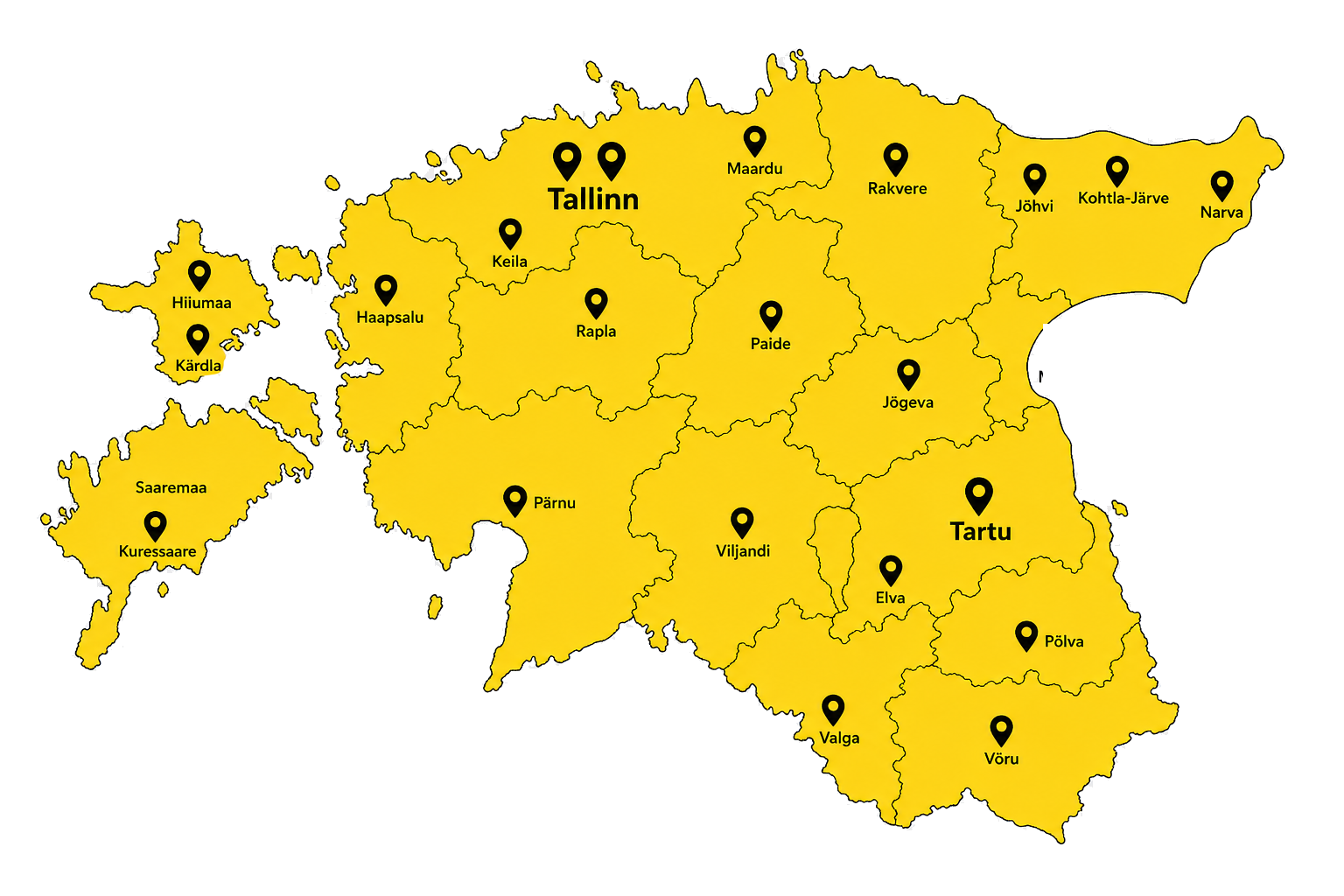
In Harjumaa, we serve areas including Saue, Laagri, Keila, Saku, Kiili, Viimsi, Maardu, Jüri, Kose, Kehra, and Paldiski. More remote regions of Estonia are also possible by agreement – for larger projects and planned works, we travel across Estonia.
Oleme 24/7/365 kõikjal Tallinnas ja Harjumaal.
Tuleme kohale kiiresti ja lahendame probleemi kohapeal.
Teeme tööd korrektselt ja anname garantii.
Selge hinnainfo enne tööde algust, üllatusi ei tule.
Aitame vormistada kahjujuhtumeid kindlustusseltsidele.
Helista või kirjuta – kirjelda probleemi paari lausega.
Ütleme tunnihinna ja eeldatava mahu enne kohalesõitu.
Tallinnas tavaliselt 30–60 minutiga, oma tehnika ja varuosadega.
Teeme töö, kontrollime süsteemi ja anname garantii.
We build and reconstruct water meter units and replace water meters, including fittings and filters.
water meter unit installationInstallation of WC pans, basins, taps, shower enclosures, and baths after pipework replacement.
sanitaryware installationLocating hidden water and heating leaks using a thermal camera and pressure testing without unnecessary demolition.
leak detectionHot water solution: new water heater installation, old unit replacement, safety valve, and expansion tank.
water heater installationOther plumbing works in flats, apartment buildings, private homes, and commercial properties.
plumbing works and plumberIf a water pipe has already burst, start with emergency assistance – the dispatcher answers 24/7.
24/7 plumbing emergency serviceWork related to water meter units and meters, and verification requirements.
water meter installationWhen drain pipes and risers are also updated during renovation.
sewer pipe replacementPlanned riser upgrades and maintenance of building technical systems according to schedule.
apartment association maintenance contractReplacing the pipework for one bathroom and kitchen usually takes one to two working days, provided demolition and finishing are not our responsibility. Water is shut off for only part of this time, and we agree on the interruption time in advance.
If the pipework is visible or in a box structure, then yes. For pipework cast into a wall or floor, opening it is unavoidable, but leak detection can limit the area to be opened to the minimum necessary section.
For hidden pipework, we recommend PEX pipe in a manifold system, as no joints are left in the wall. For visible pipework, multi-layer metal-plastic pipe with press-fit connectors is also suitable.
We do both. If the pipework is generally sound and it's a single joint or valve, we perform a spot repair. If the same section leaks repeatedly, replacement is cheaper in the long run, and we'll tell you that honestly.
We use leak detection methods: pressure testing, acoustic listening, and moisture measurement, and a thermal camera if necessary. The goal is to locate the leak before demolition, so only the necessary spot is opened.
Generally, the riser is a common part of the building and falls under the apartment association's responsibility; internal flat pipework from the shut-off valve is the flat owner's responsibility. The exact boundary stems from the association's agreements, and we clarify this before work begins.
Yes. We use press technology, which doesn't require an open flame, and we plan the work floor by floor so that water interruption is as short as possible.
We renew the water meter unit piping and valves during plumbing works. Work related to meter installation and verification is described on a separate page, which also outlines sealing requirements.
Turn off the main stopcock, switch off electricity in the affected area, and call our dispatcher. The emergency service operates 24/7, and in Tallinn, we usually arrive within 30–60 minutes.
Yes, always. The system is filled, bled, and pressure tested before structures are closed up. We do not hand over work without a pressure test.
Most often, the cause is corroded galvanised steel pipework or the condition of the water heater. If rust only appears with hot water, the water heater should be checked first; if with both, then the pipework.
Yes, we provide a warranty for both the work performed and the materials we install, and we issue a proper invoice suitable for submission to the apartment association or insurance company.
Our primary service area is Tallinn and Harjumaa, including Saue, Laagri, Keila, Saku, Kiili, Viimsi, Maardu, and Jüri. For larger projects, we travel across Estonia by agreement.
Sõidame välja kogu Eestis. Avariitööd ööpäevaringselt, 7 päeva nädalas.