Foundation Drainage Construction
Installation of drainage pipes around the foundation at the correct depth and gradient, complete with a filter layer and geotextile.

We build effective drainage systems around your building: excavation, drainage piping with filter layer and geotextile, inspection and collection chambers, a pump station if needed, and discharge. We also fix issues with existing drainage that cause damp basements even after previous work.
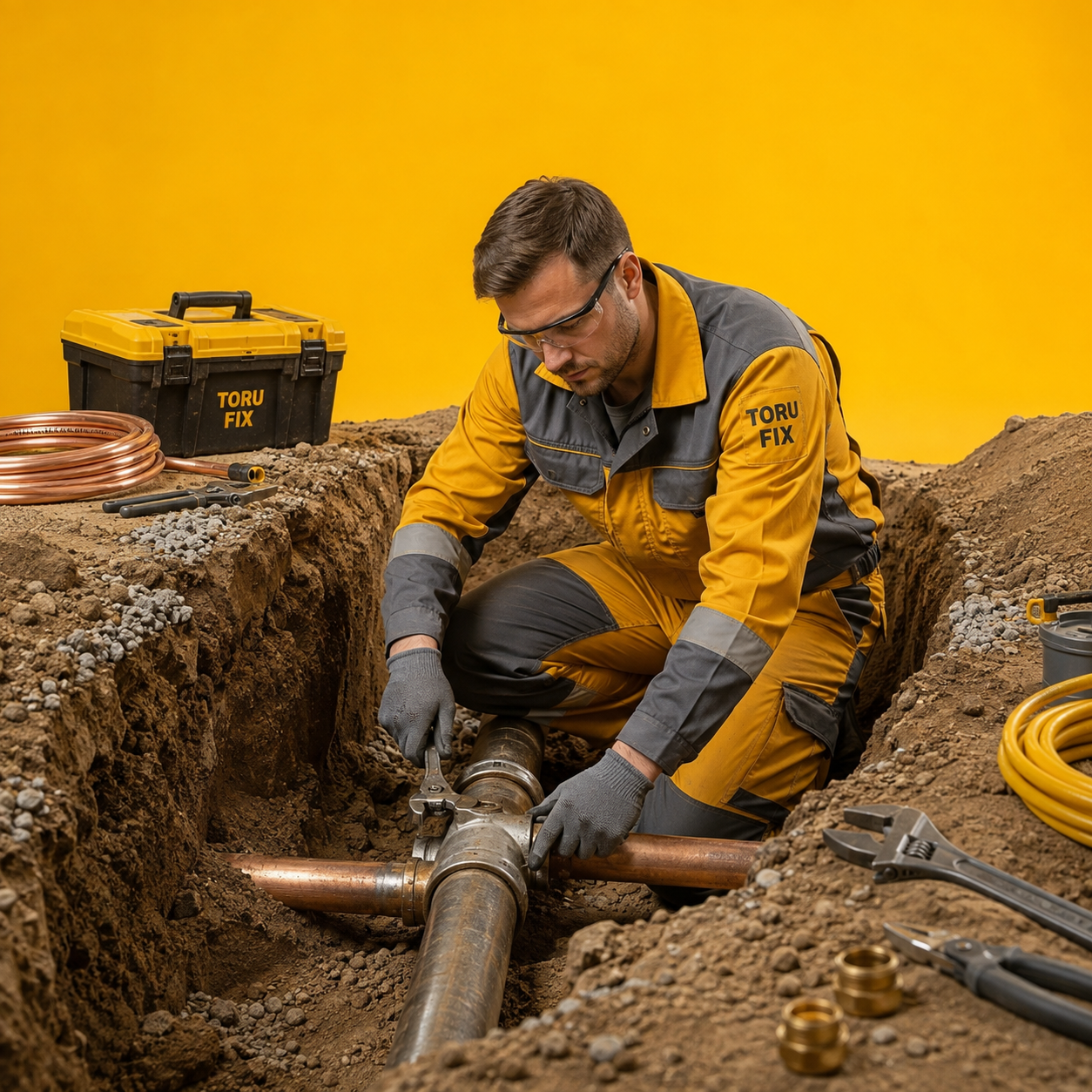
Installation of drainage pipes around the foundation at the correct depth and gradient, complete with a filter layer and geotextile.
Installation of inspection chambers at corners and changes in pipe direction, allowing for future cleaning and camera inspection of the system.
Pump station installation if gravity drainage is not possible due to elevation differences, complete with automation and a non-return valve.
Cleaning of the exposed foundation wall and restoration of the waterproofing layer before backfilling the trench.
High-pressure jetting of blocked or subsided drainage pipes, video inspection, and replacement of problematic sections.
Layered backfilling and compaction of the trench, and restoration of lawn, paving, or asphalt to an agreed extent.
Dispetšer vastab ööpäevaringselt. Peatame kahju leviku, lokaliseerime lekke ja sõidame välja ka öösel ning pühade ajal.
+372 58 024 476Drainage is one of the most invisible yet crucial systems of any building. It only makes itself known when something goes wrong: the basement becomes damp, salt stains appear on the plinth, skirting boards become mouldy, or spring meltwater sits around the house for weeks. Unlike a pipe leak, a drainage problem doesn't have a single, specific point of failure – it's a slow process that damages the building for years before the owner notices.
The purpose of drainage is simple: to lower the groundwater level around the foundation and divert water away from the building in a controlled manner, before it reaches the structure. If the soil around the house is clayey and doesn't absorb water, the area around the foundation collects water like a bath. Without drainage, this water presses against the foundation wall and under the floor, eventually finding its way in – any waterproofing is only as good as the water load behind it.
On this page, we explain what a proper drainage system consists of, how to distinguish a drainage problem from a stormwater or pipe leak issue, how installation is actually carried out, why previously installed drainage often fails to work, how to maintain the system, and what affects the cost of the work. We carry out drainage works in Tallinn and Harjumaa for private homes, apartment associations, and commercial properties.
Drainage is not just a pipe in the ground. It's a layered system where each part fulfils a specific function – if one component is missing, the system will stop working within a few years, even if the pipe itself is intact.
The most common and most expensive mistake is confusing these two systems. Drainage collects water present in the soil around the foundation. A stormwater system drains surface water – from roofs, driveways, and yards. They have different depths, different water volumes, and different operating modes.
If a rainwater downpipe is connected directly to the drainage system, the drainage will become pressurised with water during heavy rain and start to work in reverse: instead of taking water away from around the foundation, it will leach water directly towards the foundation. The result is a damp basement in a house where drainage formally exists and is intact.
The correct solution is to keep the systems separate along the route and connect them only at a collection chamber or discharge point, if technically feasible and permitted. If you don't know how these systems are connected at your house, it can be checked with a camera before implementing a new solution.
Drainage is not required on every plot. A house located on high ground with sandy, well-draining soil might only need proper gradients and a stormwater system. The need arises when water stagnates in the soil or when the groundwater level seasonally rises to the foundation level.
A damp basement doesn't automatically mean a lack of drainage. The same symptoms can be caused by a leaking water pipe, a broken sewer, condensation in a poorly ventilated basement, and incorrect grading around the house. Excavation is expensive and irreversible, so it's worth identifying the cause first.
We inspect ground gradients, rainwater downpipe outlets, plinth condition, basement moisture distribution, and existing chambers. The moisture pattern reveals a lot: uniform dampness along the entire perimeter indicates groundwater, while a single wet spot points more towards a leak or one incorrectly routed rainwater pipe.
If drainage exists, we open inspection chambers and check for water flow. A video inspection of the pipework shows whether the pipe is clogged with sediment and roots, subsided, or compressed. Very often, it turns out that the system is present and intact but completely filled with sand – in which case, high-pressure jetting is sufficient, and new drainage is not needed.
If a pipe leak is suspected, we perform leak detection before excavation. A warm water leak from under the foundation creates the same wet patch in the basement as groundwater, but its solution is entirely different and significantly cheaper than installing drainage.
Drainage installation involves excavation around the entire perimeter of the building, making it the most extensive plumbing work carried out at a private residence. Proper preparation reduces work duration and later surprises.
We determine the drainage route, depth, chamber locations, gradient direction, and discharge point. The depth is based on the foundation footing: the drainage pipe must be below the level we want to keep dry, but without compromising the foundation's load-bearing capacity. We also identify existing utility lines to avoid damaging them.
We excavate the trench along the foundation, usually in sections, so that the ground is not exposed for too long. Landscaping, paving, and terraces are carefully removed for later restoration. In tight spaces and near fences, we excavate manually.
The exposed foundation wall is cleaned of soil, and waterproofing is restored if necessary. This is a one-time opportunity – if the wall remains uninsulated, the drainage's sole task will be to lower the water level, even though the same excavation could have solved capillary moisture rise.
A crushed stone base with a uniform gradient is created at the bottom of the trench, the drainage pipe is installed on it, and the pipe is surrounded by washed crushed stone. The entire filter layer is wrapped in geotextile. The omission of geotextile or the use of incorrect material is why many drainage systems stop working within five to ten years.
We install inspection chambers at building corners and turning points, and a collection chamber before the discharge. If gravity drainage is not possible, we install a pump station with automation and a non-return valve to prevent water from flowing back into the system.
Before closing the trench, we test with water to ensure it flows towards the chambers everywhere. Then, we backfill the trench in layers and compact it to prevent future subsidence, and restore landscaping or paving to the agreed extent. We provide chamber locations and explain maintenance procedures.
A large portion of plots in Tallinn and Harjumaa are flat and low-lying. If there's nowhere to discharge water below the drainage pipe level, the only solution is a collection chamber with a pump station that elevates the water to a higher discharge point.
The pump station must be correctly sized: a chamber that is too small means the pump starts constantly and wears out quickly; a pump that is too weak cannot handle peak loads during snowmelt. A non-return valve is mandatory, otherwise pumped water flows back into the system, and the pump operates in an endless cycle.
A system with a pump station has one significant weakness: it relies on electricity. If power outages are frequent in the area and the basement is a critical space, it's worth considering an alarm sensor that signals rising water levels before water reaches the floor.
The scope and organisation of drainage work vary more depending on the property than any other plumbing job.
For a private home, typical work involves drainage around the entire perimeter with inspection and collection chambers. Often, the stormwater system is also addressed at the same time, as the trench is already open – this is significantly cheaper than two separate excavation jobs in different years.
If the problem is only on one side, such as a wall facing a slope, a partial solution might suffice. In such cases, we honestly explain what a partial drainage system will and will not solve.
For apartment buildings, the purpose of drainage is usually to keep basements and plant rooms dry and to protect the plinth. Work is planned to keep entrances, refuse sheds, and parking accessible – we excavate in stages and restore passages.
Documentation is also important for apartment associations: chamber locations, discharge solutions, and an overview of completed work remain with the building even if the board changes.
For larger buildings, the water volume and excavation scope are significantly greater, and phased planning of work becomes crucial to keep the site operational. Manhole covers under car parks and traffic areas must meet the appropriate load class.
We often arrive at a site where drainage is present, but the basement is still damp. The reasons are repetitive and almost always related to installation, not the material.
Drainage is a filtering system, and every filtering system collects dirt over time. A well-maintained drainage system works for decades; an unmaintained one will stop working even if it was perfectly installed.
The snowmelt period is the most challenging time of year for drainage. The soil is still frozen and doesn't absorb water, while snow melts rapidly, and all water moves in the near-surface layer. This is when all system deficiencies, which go unnoticed in summer, become apparent.
If the discharge or collection chamber is frozen, the drainage has nowhere to discharge water, and water rises back into the soil. The same happens if the pump station's float switch is stuck with sediment. Therefore, it's advisable to inspect the pump station and discharge in autumn, not in spring.
If the basement is already flooded, the water must first be removed, and only then should the cause be investigated. A snowmelt emergency doesn't always mean the drainage needs rebuilding – very often, the cause is a specific blocked section or a stagnant discharge point.
Excavation accounts for the largest portion of the cost. An easily accessible perimeter with lawn is quick; excavation near paving, terraces, landscaping, or a narrow neighbour's boundary means additional work in both demolition and restoration. Soil type also affects the scope – stony or heavily clayey soil is slower.
Another factor is depth. A deep foundation means a deeper trench, a larger volume of soil, and often trench shoring. The third is the discharge solution: gravity discharge is considerably cheaper than a pump station with electrical work.
The fourth factor is the extent of restoration. If paving, terraces, or landscaped areas are to be restored to their original condition, this is a separate task that must be agreed upon before excavation, not afterwards.
We provide a price quote after site inspection, once the actual route, depth, and restoration scope are clear. This prevents situations where the initial quote and final bill differ significantly.
We perform both excavation and plumbing works, meaning drainage, stormwater, and external utility lines are handled by a single contractor. This avoids situations where the excavator operator and plumber point fingers at each other if problems arise.
Oleme 24/7/365 kõikjal Tallinnas ja Harjumaal.
Tuleme kohale kiiresti ja lahendame probleemi kohapeal.
Teeme tööd korrektselt ja anname garantii.
Selge hinnainfo enne tööde algust, üllatusi ei tule.
Aitame vormistada kahjujuhtumeid kindlustusseltsidele.
Helista või kirjuta – kirjelda probleemi paari lausega.
Ütleme tunnihinna ja eeldatava mahu enne kohalesõitu.
Tallinnas tavaliselt 30–60 minutiga, oma tehnika ja varuosadega.
Teeme töö, kontrollime süsteemi ja anname garantii.
Rainwater drainage from roofs and properties – a separate system from drainage.
stormwater system installationConstruction of external utility lines and sewerage, including excavation works.
sewer system constructionInspection of existing drainage and chambers with a camera before excavation.
video inspectionCleaning of blocked drainage and stormwater pipework, and emptying of chambers.
high-pressure jettingWhen the cause of dampness might be a pipe leak, not groundwater.
leak detectionNo. The same symptoms can be caused by a pipe leak, incorrect ground grading, a misdirected rainwater downpipe, and condensation in a poorly ventilated basement. Therefore, we start by identifying the cause, and only then decide if excavation is necessary.
Drainage collects water in the soil around the foundation and lowers the water table. A stormwater system drains surface water from roofs and yards. They must not be incorrectly connected, as this would cause stormwater to overwhelm the drainage.
The depth is determined by the foundation footing and the desired dry level, and is specified on-site. A uniform gradient towards the chambers, without water pockets, is crucial.
In some cases, yes, for example, if water clearly flows from one slope. A partial solution is cheaper but does not yield the same results as a full perimeter system – we explain what it will realistically solve for your property before commencing work.
A system properly installed with a filter layer and geotextile, and periodically cleaned, will last for decades. Without maintenance, any drainage system will eventually clog with sediment and roots.
Yes. If the pipework is intact, high-pressure jetting combined with video inspection helps. Very often, it turns out that the system exists and is functional but filled with sand and sediment – in such cases, new drainage does not need to be installed.
Yes, to the agreed extent. The scope of restoration is agreed upon before work begins, as it significantly affects both the timeline and cost.
Yes. Our emergency service operates 24/7/365, including public holidays. Night-time and holiday call-outs are subject to a higher tariff than weekday visits, but rapid intervention is almost always cheaper than the consequences of waiting until morning.
Yes, we provide a warranty for both the work performed and the materials we install. We issue a proper invoice suitable for submission to apartment associations and insurance companies alike.
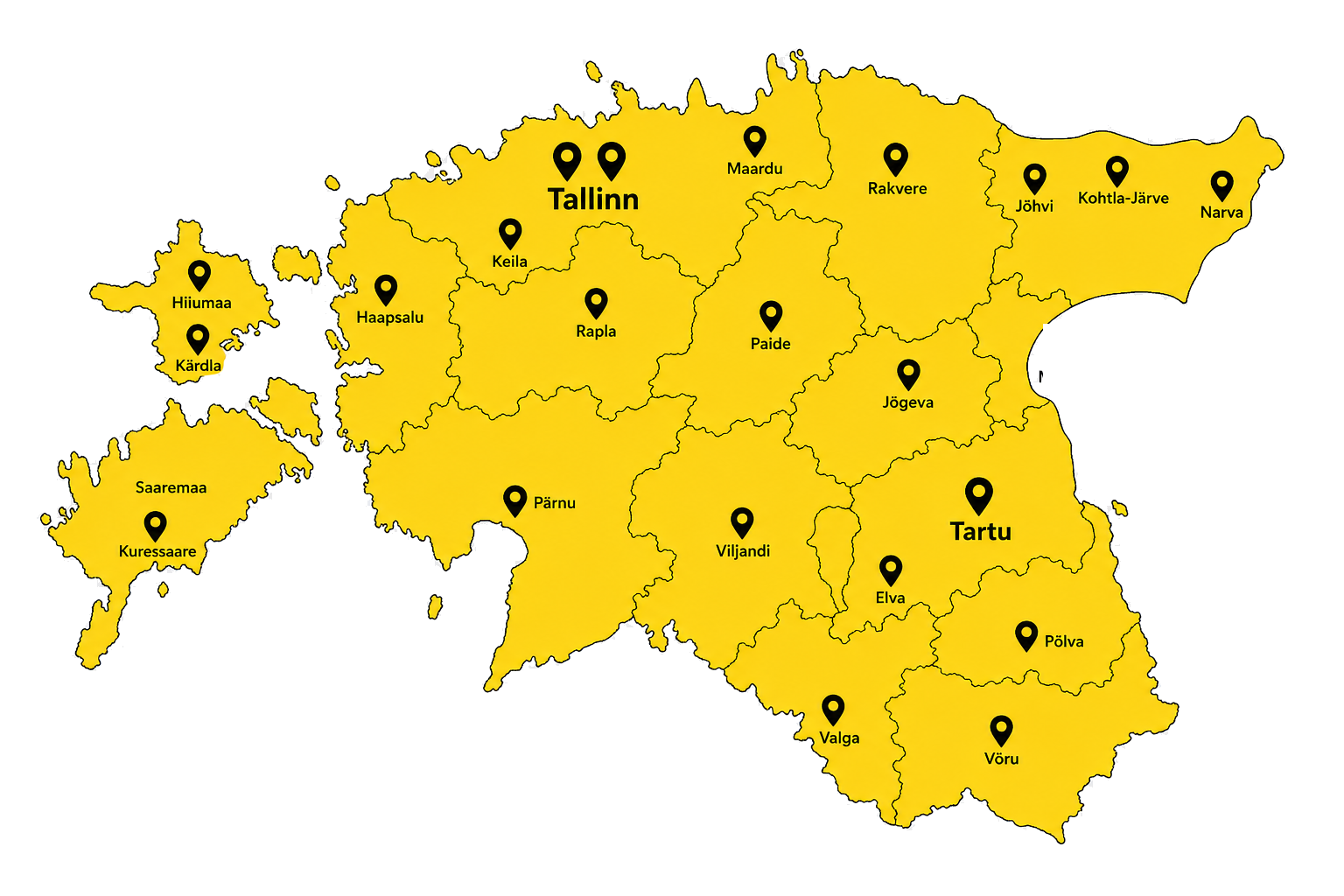
Our primary service area is Tallinn and Harjumaa, but we travel across Estonia. In Tallinn, we usually reach emergency call-outs within 30–60 minutes; in Harjumaa, within 1–2 hours.
Sõidame välja kogu Eestis. Avariitööd ööpäevaringselt, 7 päeva nädalas.