Drainage Riser Replacement
Replacing old cast iron or plastic pipework with modern sound-dampening drainage risers, from basement to roof.

We offer planned replacement of water, drainage, and heating risers in apartment buildings: with agreed timeframes, resident notifications, and the shortest possible water disruption. We undertake projects for single risers or entire stairwells, providing a warranty for both workmanship and materials.
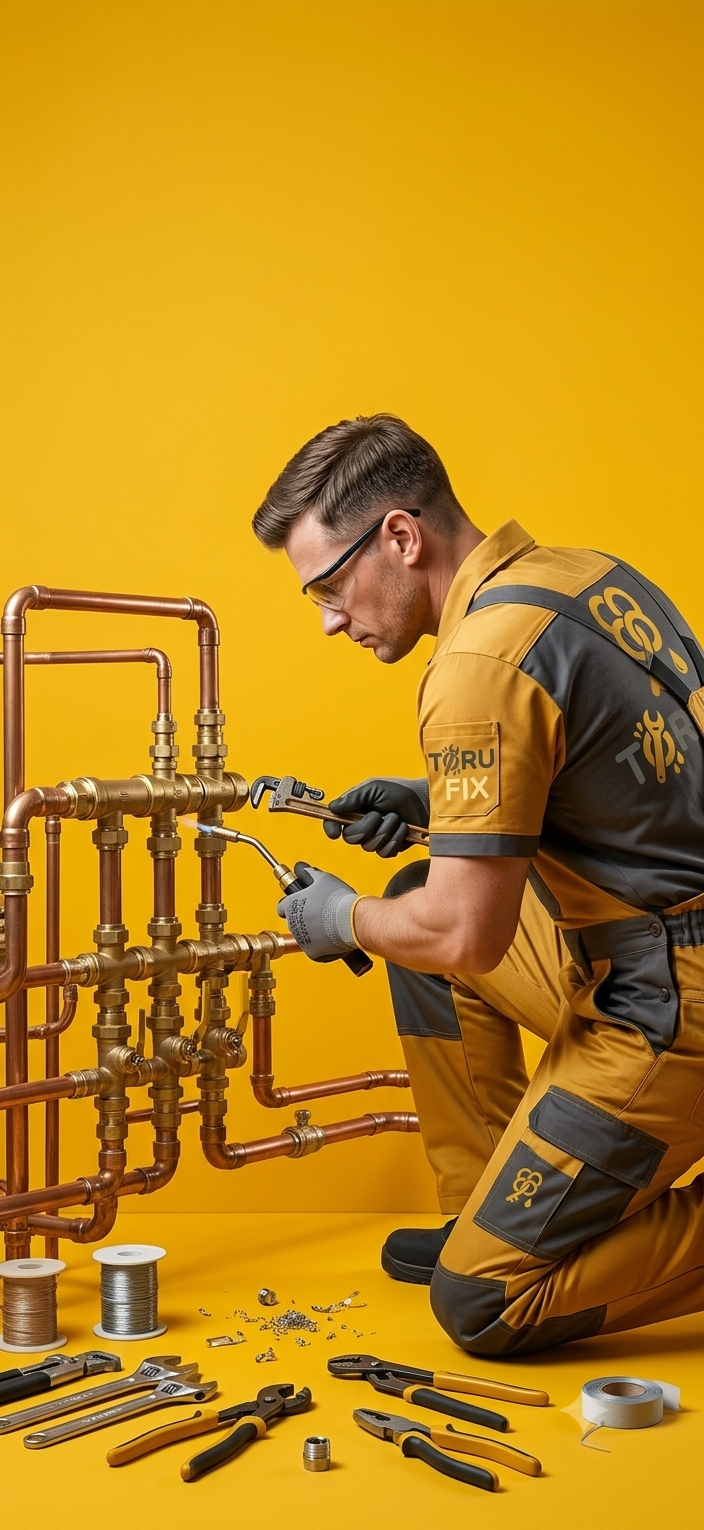
Replacing old cast iron or plastic pipework with modern sound-dampening drainage risers, from basement to roof.
Replacement of cold and hot water risers, and circulation pipes, including in-apartment shut-off valves and connections.
Upgrading heating risers and reconstructing radiator connections outside the heating season or with minimal disruption.
Replacement of main pipelines, horizontal runs, and connections in the basement, complete with insulation.
Proper installation of inspection hatches, ventilation, and roof outlets to ensure the system operates silently and odour-free.
If it's not possible to access all apartments simultaneously, we plan the work in stages to ensure the building remains functional.
Dispetšer vastab ööpäevaringselt. Peatame kahju leviku, lokaliseerime lekke ja sõidame välja ka öösel ning pühade ajal.
+372 58 024 476The riser is the backbone of an apartment building's plumbing system. Water reaches apartments and wastewater exits the building through risers, and it's these pipes whose failure affects multiple apartments simultaneously. If an in-apartment pipe leaks, one home suffers. If a riser leaks, an entire vertical stack is affected – typically at the worst possible time.
Most apartment buildings in Tallinn and Harjumaa were constructed when drainage risers were made of cast iron and water risers of galvanised steel. The lifespan of these materials is either over or nearing its end. The inner surface of cast iron pipes becomes rough and collects sediment, while steel pipes corrode from the inside, reducing their diameter. The result is recurring blockages, decreased water pressure, rusty-coloured water upon first opening the tap in the morning, and increasingly frequent emergency call-outs.
Riser replacement is a significant but one-time decision for an apartment association that solves these problems for decades. On this page, we explain when riser replacement is necessary, how the work actually proceeds, how long the water will be off, what apartment owners need to prepare, how responsibility is divided between common property and apartment property, and what common mistakes are made during riser replacement.
Risers are not replaced according to a calendar, but according to their condition. However, there are clear signs that, when accumulated, mean that repair is no longer postponable, and every subsequent emergency call-out is just an expense without a solution.
The most important signal is recurrence. A single blockage is an incident. Three blockages in the same riser within a year means the pipe's interior is no longer in good condition, and cleaning will only provide a temporary solution.
An apartment building typically has three to four types of risers, each with its own logic, risks, and replacement material. Differentiating them is important because the scope of work, cost, and duration of disruption vary for each type.
Old drainage risers are mostly cast iron. Cast iron is durable and quiet, but its inner surface becomes rough over time, collecting grease and sediment, and joints start to leak. Cutting and dismantling cast iron pipes is also the dustiest and noisiest part of the job.
Today, plastic pipework is typically used as a replacement material. In an apartment building, it's advisable to use a sound-dampening solution or pipe soundproofing, as thin plastic pipes transmit the sound of flowing water into apartments more clearly than old cast iron. This is one of the most common causes of complaints after a cheaply executed riser replacement.
Water risers are under pressure, so their failure is always quicker and more noticeable. Old galvanised steel pipes corrode from the inside, reducing diameter and causing pressure drops, especially on upper floors.
New water risers are typically made of suitable plastic, composite material, or stainless steel, depending on the building's system and design. During replacement, a separate shut-off valve is installed in each apartment's branch – this is the most crucial single component, as future work in an apartment can then be done without disturbing neighbours.
If the building has hot water circulation, it should also be checked during riser replacement. Functional circulation means hot water doesn't have to be run for minutes from the tap – this is a direct saving on water bills for all residents.
Heating risers are usually replaced in summer, outside the heating season, as the work requires system drainage. It's sensible to also address radiator connections and shut-off valves during the same work, so that subsequent radiator replacement doesn't require draining the entire riser again.
Riser replacement is the only plumbing job where success depends as much on organisation as on practical skill. The work affects multiple homes simultaneously, and every hour of water disruption is a real inconvenience for residents. Our process is designed to ensure the disruption is as short as possible and communicated in advance.
We inspect the basement, apartments, and roof space to assess the actual condition and route of the risers. We identify where pipework is bricked in, where sections have already been partially replaced, and where access is difficult. Based on this, the apartment association receives a realistic scope and schedule.
We agree on working days and water shut-off timeframes. The apartment association notifies residents, and we specify exactly which day our plumber will visit which apartment and what timeframe to expect. Residents need to know three things: when the water will be turned off, when it will be restored, and if someone needs to grant access to the apartment.
The apartment owner must clear access to the riser – empty the cupboard, remove shelves, or loose finishes in front of the riser shaft. If the riser is boarded up, we agree on who will open it and who will restore it later.
Water is shut off, the system is drained, and the old pipe is cut out. The work area is covered, dust is contained, and dismantled material is immediately removed from the apartment. For cast iron pipes, this work stage is the noisiest, which is why we carry it out during the day.
New pipework is installed with correct fixings, compensation, and gradients, connected to apartment branches and inspection points, and in-apartment shut-off valves are added to water risers. For drainage risers, ventilation and roof outlets or internal air valves are also addressed according to the building's solution.
The water system is pressurised, and joint integrity is checked; the drainage system is tested with water. Only then is the shaft closed and the finish restored to the agreed extent. The apartment association receives proper documentation and a warranty for the work completed.
The most common question before riser replacement is how long the water will be off. The answer depends on whether one riser or the entire building is being replaced, and whether all apartments are accessible on the same day.
Replacing a single riser in one vertical stack typically means a one to two working day process, where water is off during the workday and restored by evening. Drainage is unusable only while work is being carried out in that specific apartment.
The biggest cause of delay is not technical, but when an apartment is not accessible. In such cases, the vertical stack remains incomplete, and water must be shut off again later. Therefore, we always emphasise to the apartment association that access to all apartments in the vertical stack must be available on the agreed day – this is the most crucial condition for the entire project.
During riser replacement, the question of who pays for what almost always arises. The general rule is simple: the riser itself and the common pipework attached to it are common property; the branch within the apartment from the riser onwards is the apartment owner's responsibility. The exact boundary is specified in the building's documents and apartment association agreements, which is why we clarify this for each project before work begins.
In practice, this means the riser and the shut-off valve installed on it are part of the apartment association's work, while the in-apartment pipework and sanitary connections are the apartment owner's responsibility. Very often, it makes sense to do these simultaneously: if the riser is already open and the water is off, renovating the in-apartment pipework is significantly cheaper and quicker than doing it separately later.
We recommend that the apartment association formally agree on this principle in writing before work begins, as it prevents most subsequent disputes. We issue a proper invoice and documentation for the work completed, suitable for both the apartment association's accounting and, if necessary, insurance companies.
Riser replacement is primarily relevant to apartment buildings, but we also carry out similar work elsewhere.
Most of our work is in panel and brick buildings where risers run through bathroom or kitchen shafts. Planning is crucial here: scheduling, notification, access, and clear agreements on finish restoration.
For apartment associations, we also offer a phased solution, where replacement is carried out by stairwells or vertical stacks over several years if replacing the entire building at once is not budgetarily feasible.
In a smaller building, the riser is shorter and the work is quicker, but the principle is the same: gradients, fixings, ventilation, and shut-off valves must be in order, otherwise the same problems will recur.
If the building has a shop, office, or restaurant on the ground floor, work must be planned to minimise disruption to business operations. A riser serving catering facilities is usually burdened with grease and requires regular maintenance after replacement.
Poorly executed riser replacement is costly twice over: first the work, then its rectification. Below are the mistakes we see most often.
The most tangible change is the cessation of emergency call-outs. An apartment association that has paid for recurring blockages and leaks for years will see a disappearance of these costs in the first year.
Another change is water quality and pressure. A new water riser will not release rust sediment or reduce pressure on upper floors. A third is noise and odour: a properly installed drainage riser with functional ventilation will not bring odours into the bathroom and will not transmit sound between apartments.
The fourth, often underestimated benefit, is flexibility. If each apartment has its own shut-off valve, the apartment owner can have a mixer tap or toilet replaced without affecting neighbours. This makes all subsequent work cheaper and easier.
The cost is primarily influenced by the number and length of risers, i.e., the number of floors, as well as whether only drainage or also water and heating risers are replaced simultaneously. Doing them all at once always results in a more favourable unit price than separate projects.
Another factor is access. If the riser is freely visible in a shaft, the work is quick. If it's bricked in, tiled, or covered by kitchen furniture, the scope of opening and restoration increases. This is where the biggest differences in quotes arise – always check whether the quote includes finish restoration or not.
The third factor is material selection: sound-dampening drainage pipework is more expensive than standard, but in an apartment building, it pays off, as rectifying noise issues later is many times more costly.
Based on the inspection, we provide the apartment association with a concrete quote, including scope and schedule, so that the general meeting can make a decision based on real figures, not estimates.
The better an apartment is prepared, the quicker the work will be completed, and the shorter the water disruption for the entire vertical stack. Preparation usually takes less than an hour but can save an entire workday.
If the riser is covered by a panel, plasterboard, or furniture, inform the apartment association and the plumber in advance. This way, we can plan the opening and restoration correctly, and you won't have to rush to decide how to open the shaft on the day of the work.
We carry out plumbing works in apartment buildings in Tallinn and Harjumaa daily and are familiar with the local housing stock – shaft solutions in panel buildings, risers in old brick buildings, and systems in 2000s buildings. This means fewer surprises during work and a more realistic schedule already at the quotation stage.
Oleme 24/7/365 kõikjal Tallinnas ja Harjumaal.
Tuleme kohale kiiresti ja lahendame probleemi kohapeal.
Teeme tööd korrektselt ja anname garantii.
Selge hinnainfo enne tööde algust, üllatusi ei tule.
Aitame vormistada kahjujuhtumeid kindlustusseltsidele.
Helista või kirjuta – kirjelda probleemi paari lausega.
Ütleme tunnihinna ja eeldatava mahu enne kohalesõitu.
Tallinnas tavaliselt 30–60 minutiga, oma tehnika ja varuosadega.
Teeme töö, kontrollime süsteemi ja anname garantii.
Replacement of apartment and building drainage pipework, including gradient and connection adjustments.
kanalisatsioonitorude vahetusReplacement of old water pipes, valves, connections, and leak repairs.
veetorude vahetusRegular maintenance and agreed response times for apartment associations.
korteriühistu hoolduslepingMechanical and high-pressure jetting cleaning of blocked risers and in-apartment pipework.
ummistuste likvideerimineCamera assessment of riser and horizontal pipework condition before making repair decisions.
videouuringAll building water, heating, and drainage system works from a single source.
torutöödReplacing one vertical stack usually takes one to two working days, with the work in a single apartment typically fitting within one workday. We provide a precise schedule after inspecting the site.
No. Water is only shut off during the agreed timeframe on a working day and restored by evening. Residents are informed of the disruption in advance.
Then the vertical stack remains incomplete, and work will have to be repeated later, which means a new water disruption and additional cost. Therefore, access to all apartments in the vertical stack on the agreed day is the most crucial condition for the entire project.
As a general rule, the riser is common property, and the in-apartment branch from the riser onwards is the apartment owner's responsibility. The exact boundary is derived from the building's documents and apartment association agreements, and we clarify this for each project before work begins.
Standard thin-walled plastic pipes transmit the sound of flowing water more than cast iron. Therefore, in apartment buildings, we use sound-dampening pipework or sound insulation, which solves the problem.
We agree on this before work begins and include it in the quote. The plumbing work covers the pipework and testing; the extent of shaft closure and finish restoration depends on the agreement with the apartment association.
Yes. If replacing the entire building at once is not budgetarily feasible, we plan the work by vertical stacks or stairwells so that the building remains usable throughout.
Yes. Our emergency service operates 24/7/365, including public holidays. Night-time and holiday call-outs are more expensive than weekday visits, but quick intervention is almost always cheaper than the consequences of waiting until morning.
Yes, we provide a warranty for both the work completed and the materials we install. We issue a proper invoice suitable for submission to both the apartment association and the insurance company.
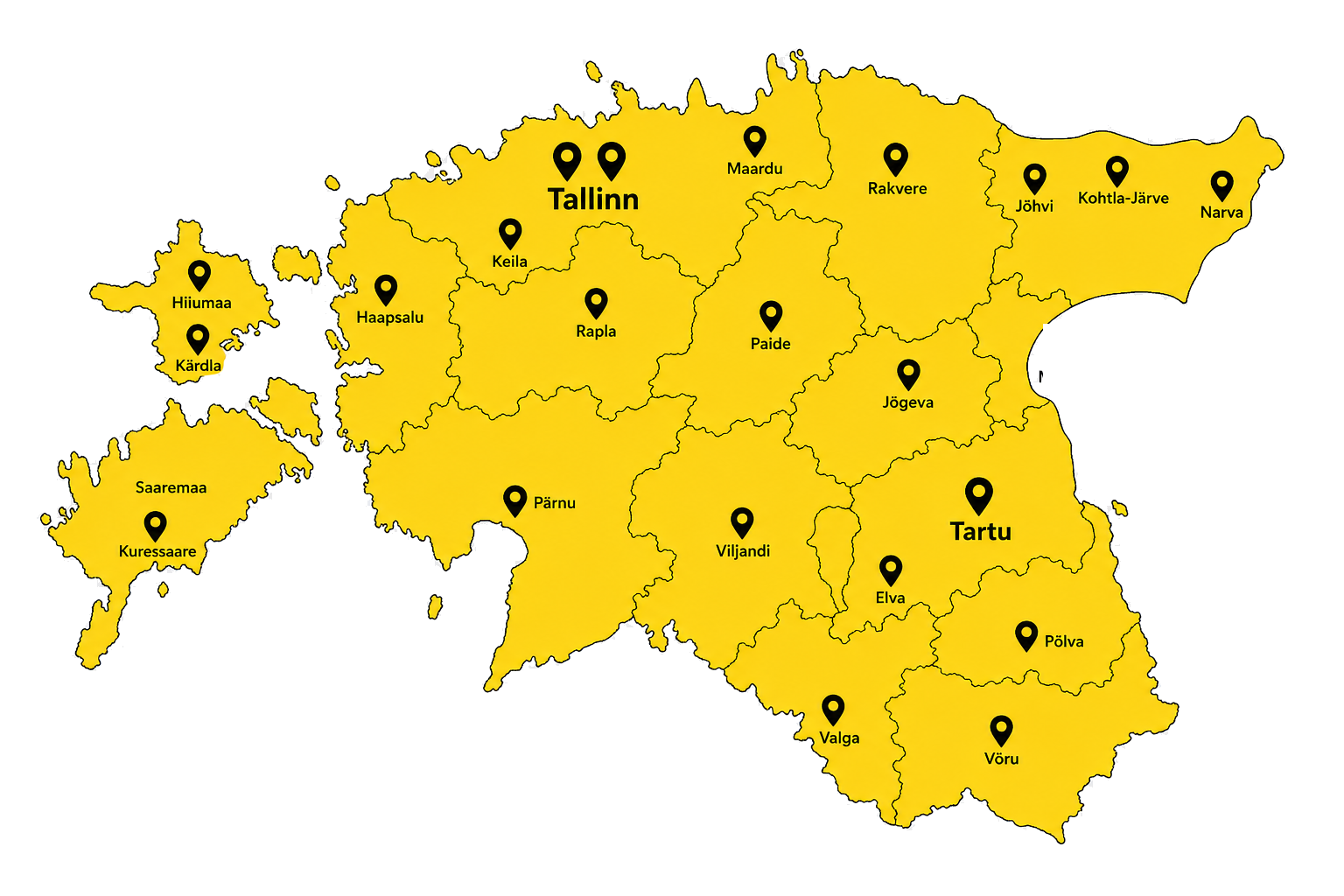
Our primary service area is Tallinn and Harjumaa, but we travel throughout Estonia. In Tallinn, we usually reach emergency call-outs within 30–60 minutes; in Harjumaa, within 1–2 hours.
Sõidame välja kogu Eestis. Avariitööd ööpäevaringselt, 7 päeva nädalas.